
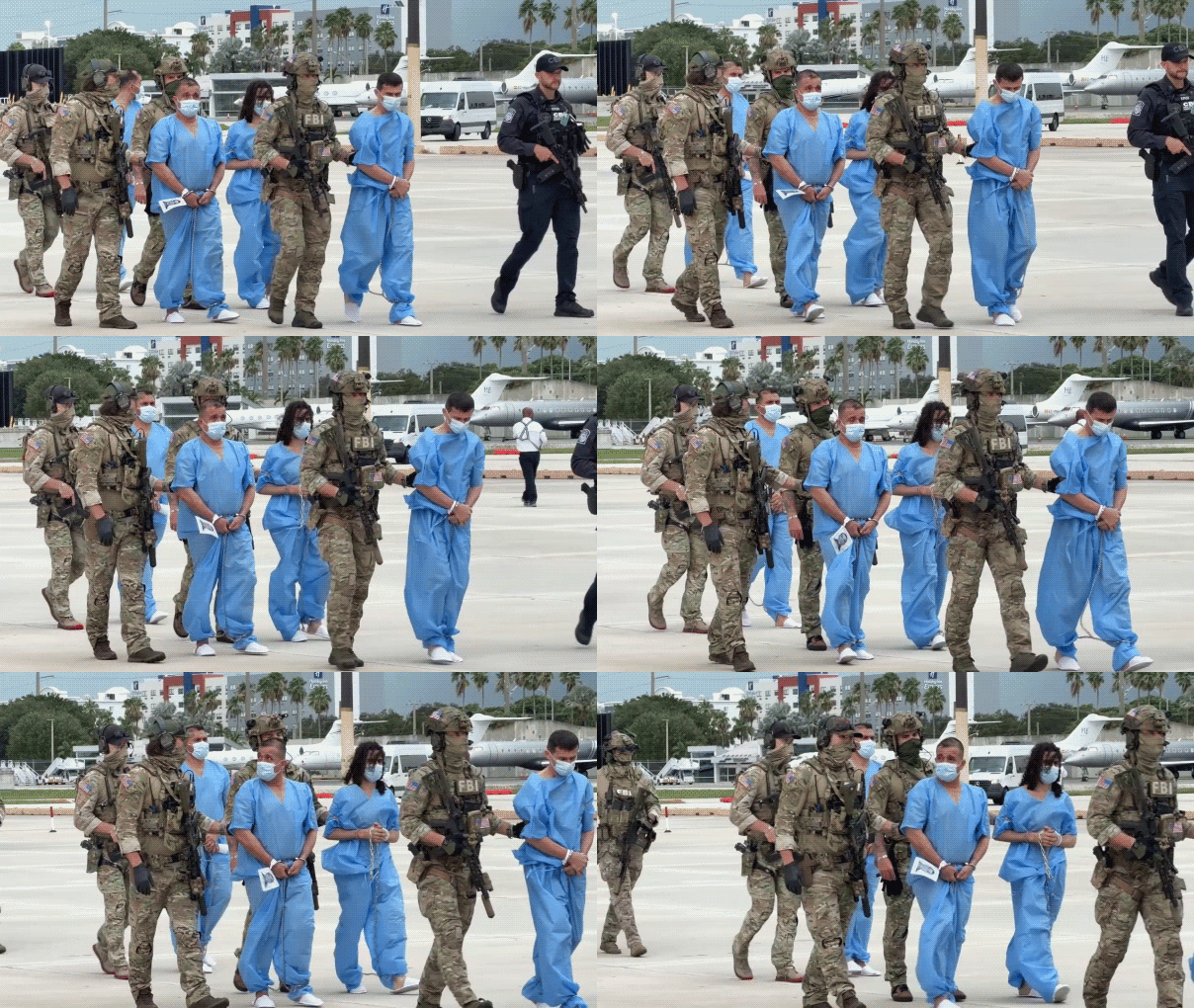
Eighteen suspects allegedly connected to the 2021 assassination of Haitian President Jovenel Moïse were transferred from Haiti to Miami to face federal charges. Prosecutors allege that fraudulent COVID-19 Paycheck Protection Program loans obtained through Florida businesses helped fund weapons, tactical equipment and Colombian mercenaries. The defendants are accused of participating in a conspiracy that began as a plan to overthrow Haiti’s president and later escalated into his killing. Their transfer comes as the U.S. case advances while proceedings in Haiti remain stalled.
| 1) | Suspects arrive in Miami under federal custody |
| 2) | The 2021 assassination and its aftermath |
| 3) | COVID loan fraud allegedly financed the operation |
| 4) | Federal prosecutors describe a profit-driven conspiracy |
| 5) | U.S. progress contrasts with Haiti’s stalled case |
Suspects arrive in Miami under federal custody
The 18 defendants were transferred from Haitian custody to the United States on Sunday and escorted from a military aircraft in Miami by FBI and Department of Homeland Security agents. The group includes alleged operatives from Haiti and Colombia. They were scheduled to make their first appearances in federal court in Miami on Monday at 10 a.m. Eastern time.
The defendants face charges including conspiracy to kill or kidnap a person abroad and wire fraud. Federal prosecutors say U.S. jurisdiction is established because much of the alleged conspiracy was organized and financed in South Florida. The transfer places the suspects in the U.S. justice system as prosecutors unsealed an indictment describing the alleged plot.
The 2021 assassination and its aftermath
President Jovenel Moïse, 53, was shot dead in July 2021 at his private residence in the hills above Port-au-Prince. The assassination created a major political vacuum in Haiti and was followed by increased influence for armed groups in the country.
Prosecutors allege that some attackers posed as agents of the U.S. Drug Enforcement Administration to gain entry to the presidential residence. The original objective, according to court documents, was a violent overthrow of the president, but the plan ultimately developed into an assassination.
COVID loan fraud allegedly financed the operation
Federal prosecutors allege that Florida business owners used fraudulent COVID-19 Paycheck Protection Program loans to obtain money for the operation. The funds allegedly supported the purchase of firearms, ammunition, tactical vests and other equipment, as well as the recruitment of former Colombian soldiers.
The allegations emerged from a five-year federal investigation involving 30 people charged with crimes connected to the broader conspiracy. The defendants transferred to Miami are expected to contest the charges through the federal court process. The allegations remain subject to the presumption of innocence unless established in court.
Federal prosecutors describe a profit-driven conspiracy
Authorities say the alleged motive extended beyond political change. Miami Special Agent in Charge Brett Skiles said the suspects were motivated by business interests and expected to benefit from government contracts in Haiti after a change in leadership.
“These were people that owned business interests in the United States that were looking to get lucrative contracts from the government of Haiti and believed that if they could initiate a regime change to the assassination, that those contracts could then come their way, and they would profit off of it.”
U.S. Attorney for the Southern District of Florida Jason Reding Quiñones said the case addresses both the alleged killing and the alleged misuse of government funds to facilitate it. Four alleged ringleaders were convicted in Miami in May after a nine-week trial and face possible life sentences.
U.S. progress contrasts with Haiti’s stalled case
FBI Director Kash Patel described the transfer as part of an 18-month international effort to locate and bring high-value suspects to the United States. Haitian Justice Minister Patrick Pelissier confirmed the transfer and said the Haitian judicial proceedings had been delayed.
According to Patrick Pelissier, the U.S. proceedings have produced arrests, prosecutions and convictions, while Haiti’s case has not reached trial after five years. Haitian human rights activist Pierre Espérance called the situation a disgrace for Haiti’s justice system and urged reforms that would allow complex cases to be tried domestically.
| Number | Key Point |
|---|---|
| 1 | Eighteen suspects were transferred from Haiti to Miami. |
| 2 | The charges include conspiracy to kill or kidnap abroad and wire fraud. |
| 3 | Prosecutors allege fraudulent PPP loans funded equipment and personnel. |
| 4 | The alleged plot targeted Haitian President Jovenel Moïse in July 2021. |
| 5 | Four alleged ringleaders were convicted in Miami in May. |
Summary
The transfer places 18 alleged participants in the assassination of Jovenel Moïse before a U.S. court, where prosecutors will present claims involving murder, foreign conspiracy and COVID loan fraud. The case combines Haiti’s political crisis with alleged financial misconduct in Florida. It also highlights the gap between the progress of the U.S. prosecution and the lack of a trial in Haiti.
Frequently Asked Questions
Who was killed in the case?
Haitian President Jovenel Moïse was shot dead at his private residence near Port-au-Prince in July 2021.
Why are the suspects being prosecuted in the United States?
Prosecutors say the alleged conspiracy was largely organized and financed in South Florida, providing a basis for federal jurisdiction.
What financial misconduct is alleged?
Prosecutors allege that fraudulent Paycheck Protection Program loans were used to buy weapons and tactical gear and to recruit Colombian mercenaries.
What happened in the Haitian proceedings?
Haitian officials said the domestic case has been delayed and has not reached trial after five years of proceedings.