
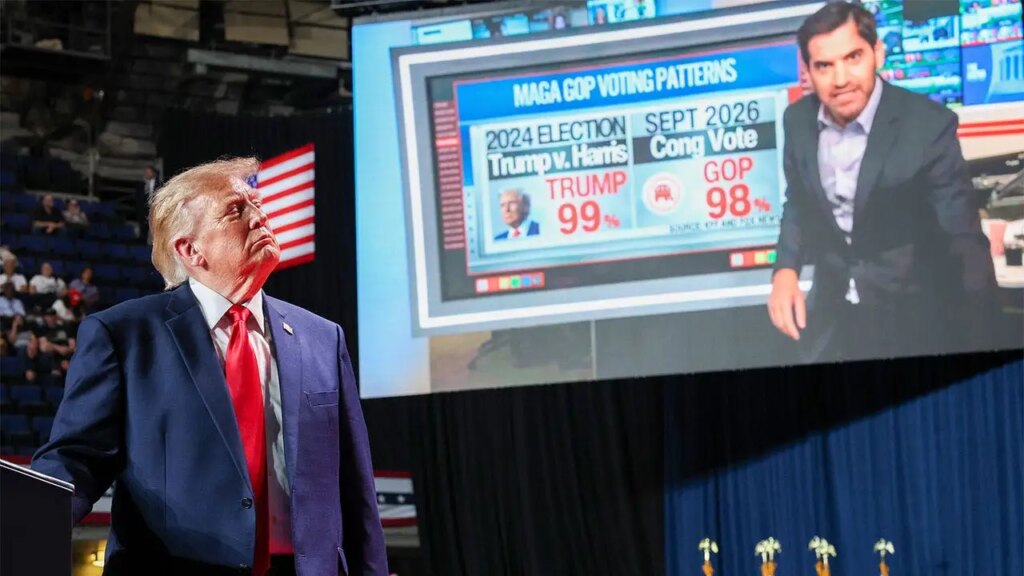
As the midterm elections approach, American voters find themselves amid a whirlwind of campaigning, polls, and party strategies. Political landscapes are shifting as Democrats and Republicans gear up for what many believe will be a battle for control of the House and Senate. With significant races intensifying across the country, the potential for historic outcomes looms large, making the stakes higher than ever for both parties. Candidates like Texas Attorney General Ken Paxton and his opponent, James Talarico, are at the forefront of these contests, alongside other critical races in states like Michigan and Maine.
| Article Subheadings |
|---|
| 1) Tensions Rise in Key Senate Race |
| 2) The Blue Wave: Myth or Reality? |
| 3) Michigan’s Senate Debate Heats Up |
| 4) Future of the Democratic Party in Question |
| 5) The Road to 2028: Early Speculations Start |
Tensions Rise in Key Senate Race
The race for the Senate seat in Texas has gained national attention, particularly due to the candidacy of Ken Paxton, the state’s attorney general. Weighing heavily on his campaign are the multiple controversies and legal troubles he has faced, including impeachment by his own party. Despite these hurdles, Paxton continues to receive substantial support from Republican donors, including a recent surge of $30 million dedicated to bolstering his campaign. This investment highlights the stakes in the midterm elections, as the GOP sees Texas as a key battleground for maintaining a majority in the Senate.
Opposing Paxton is James Talarico, a rising star in the Texas Democratic Party. However, his campaign faced a temporary setback when he contracted the flu, leading to speculation about his preparedness to face Paxton in the upcoming debates. While Talarico’s absence from the front lines may benefit Paxton in the short term, analysts suggest that the impact on voters could be minor, given Texas’s historical inclination towards Republican candidates. Nonetheless, both parties are closely monitoring voter sentiment as Election Day draws near, making this race a focal point for political strategists.
The Blue Wave: Myth or Reality?
As experts analyze the potential for a Democratic “blue wave” across the country, various factors come into play. The Democrats need to secure a net gain of four seats in the Senate to achieve control, a feat some analysts believe is possible, while others are skeptical. Recent polls have indicated a tightening race in many key districts, and some Republican candidates are expressing concern about their chances due to low approval ratings for President Donald Trump, who has been actively campaigning for candidates across the nation.
Amid these shifting dynamics, the Democratic Party grapples with an internal debate about strategy and messaging. Some Democratic donors appear reluctant to open their wallets, causing worry among party leaders who fear losing ground in a highly polarized environment. The uncertainties present ripe opportunities for both parties, and recent primary contests have left many eager to see how these early results will influence general election outcomes. Analysts caution that while optimism may run high among Democrats, the reality on the ground remains difficult to predict.
Michigan’s Senate Debate Heats Up
In Michigan, the Senate race has taken on a fierce energy through heated debates and contrasting campaign strategies. Abdul El-Sayed, a Democratic socialist, has been engaging with former Congressman Mike Rogers amid a backdrop of personal attacks and policy critiques. Observers noted that El-Sayed demonstrated a polished debate style, attacking Rogers’ support for controversial measures such as the Iraq War while also critiquing his wealth.
The debate unveiled personal attacks, such as Rogers branding El-Sayed a “con man” and attempting to associate him with extremist groups. Both candidates are working to address critical issues like healthcare and foreign policy, but their approach significantly differs. El-Sayed advocates for progressive solutions, including Medicare for All, while Rogers has shifted from previous positions in an attempt to cater to centrist voters.
This contentious atmosphere reflects a wider trend in American politics where debates are less about ideas and more about character assassinations and personal grievances. Yet, many voters express fatigue over such tactics, hoping for a more policy-driven discourse as the election date approaches.
Future of the Democratic Party in Question
As the midterms nears, the Democratic Party finds itself in a precarious position, facing challenges that may dictate its future direction. Party leaders must navigate the delicate balance of managing progressives and moderates while simultaneously appealing to swing voters in key districts. The large campaign contributions and the mobilization of grassroots movements appear to signal that a significant portion of voters are ready for change.
However, the disconnect between the party’s established donors and its grassroots supporters could cause rifts as they push for different priorities ahead of the elections. Observers fear that failure to unify might lead to missed opportunities for gains in the House and Senate, hampering the party’s long-term viability in American politics. The stakes are high, and internal debates over direction will undoubtedly play a significant role in shaping the party’s future.
The Road to 2028: Early Speculations Start
While the focus remains on the 2022 midterms, speculation regarding the 2028 presidential election is already surfacing. As political analysts sift through emerging trends and demographics, potential candidates are beginning to take form. Current Vice President Kamala Harris leads some early polls, garnering interest and support among various factions of the Democratic base. However, her viability as a candidate will hinge on her performance in the upcoming midterm elections and the ability to galvanize a broader coalition of supporters.
Complicating her candidacy prospects is a reported lack of support from her spouse, creating uncertainty about her aspirations. Regardless, the groundwork laid in the midterms will be critical in setting the stage for potential candidates in 2028. How the parties respond to the outcomes of these races will impact their messaging and strategy for the upcoming presidential election cycle.
| No. | Key Points |
|---|---|
| 1 | The Texas Senate race is pivotal with Paxton’s legal issues and Talarico’s health challenges impacting the outcome. |
| 2 | Democrats require a net gain of four Senate seats to take control; voter sentiments may shift during the campaign. |
| 3 | The Michigan Senate race heats up with El-Sayed and Rogers engaging in fierce debates. |
| 4 | The Democratic Party grapples with internal divides that may affect its long-term viability. |
| 5 | Speculation for the 2028 presidential election begins, highlighting potential candidates like Kamala Harris. |
Summary
As the nation gears up for the midterm elections, high-stakes races across key battlegrounds are shaping the landscape of American politics. With critical contests in Texas and Michigan, along with the looming question of party loyalty and direction, these elections may determine not only control of Congress but also the future trajectory of both major parties leading up to 2028. The political environment is dynamic and fraught with uncertainty, making voter turnout and grassroots engagement more essential than ever.
Frequently Asked Questions
Question: What are the key races to watch in the midterms?
Key races include the Senate race in Texas between Ken Paxton and James Talarico, as well as the Michigan Senate race featuring Abdul El-Sayed and Mike Rogers. Both races could significantly impact party control in Congress.
Question: How many seats do Democrats need to gain control of the Senate?
Democrats need a net gain of four seats in the Senate to take control. This is a critical target as they strategize for the midterm elections.
Question: What challenges is the Democratic Party currently facing?
The Democratic Party is facing internal divisions between moderates and progressives, along with the need to unify to maximize their chances of success in the midterm elections.