
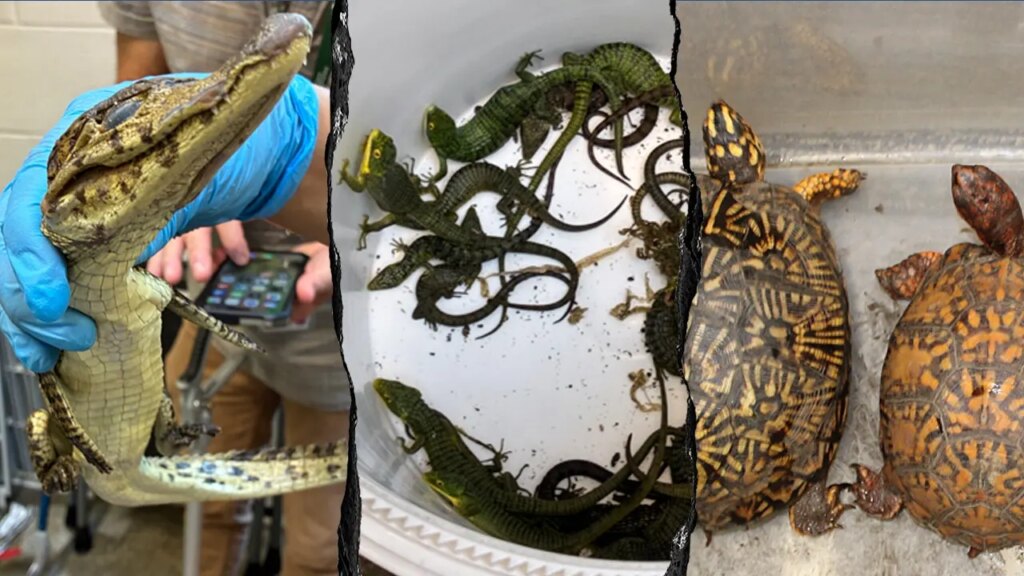
In a recent incident at the U.S.-Mexico border, federal officials arrested a 66-year-old woman for allegedly attempting to smuggle 69 live animals, including venomous snakes and baby crocodiles, hidden inside her vehicle. The suspect, identified as Georgina Bribiesca Chavez, was caught when U.S. Customs and Border Protection officers conducted a routine check at the San Ysidro Port of Entry on August 10. This case is part of a broader wildlife trafficking investigation that has revealed alarming details about the illegal exotic pet trade affecting various endangered species.
| Article Subheadings |
|---|
| 1) Discovery and Arrest at the Border |
| 2) Contents of the Hidden Compartment |
| 3) The Aftermath for the Animals |
| 4) Background and Allegations of Wildlife Trafficking |
| 5) Legal Consequences and Future Implications |
Discovery and Arrest at the Border
On August 10, 2023, Georgina Bribiesca Chavez, a resident of Tijuana, Mexico, was apprehended by U.S. Customs and Border Protection (CBP) as she attempted to cross into the United States at the San Ysidro Port of Entry. According to officials, Chavez initially claimed to have nothing to declare, prompting standard procedure that included a background check. This check revealed that she had an outstanding warrant associated with a wildlife trafficking investigation.
Following her arrest, CBP officials seized her Volkswagen vehicle. However, the shocking revelation of live animals contained within did not occur until the next day when the vehicle underwent a detailed inspection. Multiple layers of concealment were found within the vehicle, illustrating the lengths to which smugglers may go to evade detection.
Contents of the Hidden Compartment
The investigation took a dramatic turn when officers discovered a factory compartment located behind the rear seat of the Volkswagen. Within this concealed space were two taped-shut, knotted pillowcases that were showing signs of life — one of them was visibly moving. Upon examination at the San Diego Zoo, workers discovered a total of 69 live animals inside the bags. This included 60 abronia lizards, four yellow-blotched palm pit vipers, three caimans, a baby crocodile, and an indigo snake.
The conditions surrounding the transport of the animals raised significant concerns, especially regarding their treatment during the nearly 24 hours they spent inside the vehicle in high temperatures before being discovered. Such conditions illustrate the risks faced by animals involved in illegal trafficking operations, as they are often subjected to dangerous and inhumane circumstances.
The Aftermath for the Animals
Tragically, not all of the animals survived the ordeal. Reports indicate that all three caimans died as a result of the conditions they endured inside the vehicle. In contrast, the other animals have been reported as stable and under the care of the San Diego Zoo since their rescue. Wildlife experts speculate that the trauma and stress from the smuggling attempt were detrimental to the animals’ health, underscoring the threats they face in captivity and during transport.
Cases like Chavez’s reflect broader issues related to wildlife trafficking, where the survival of endangered species is often jeopardized by illegal trade. Advocates for animal welfare have called for stricter penalties and enhanced measures to prevent similar occurrences in the future, highlighting the responsibility of authorities in protecting these vulnerable creatures.
Background and Allegations of Wildlife Trafficking
The arrest of Georgina Bribiesca Chavez and her alleged accomplice, Salvador Pelayo, is part of a larger ongoing investigation by the U.S. Fish and Wildlife Service. Officials believe that Chavez and Pelayo have been involved in wildlife trafficking since at least 2023, with estimates suggesting they made tens of thousands of dollars by unlawfully selling exotic animals. The operation has its roots in an undercover investigation that has been unfolding for approximately 18 months.
During earlier covert operations, Chavez was recorded delivering protected Mexican box turtles to an undercover agent for a substantial sum of cash, further implicating her in wildlife trafficking activities. Unfortunately, the turtles later perished after being transferred to the Oakland Zoo, as preliminary assessments suggested they were already in poor health due to being wild-caught and suffering from respiratory diseases.
Legal Consequences and Future Implications
Both Chavez and Pelayo now face serious legal repercussions stemming from their alleged involvement in wildlife trafficking. They have been charged under the Lacey Act, which prohibits the trafficking of endangered species. The maximum penalty for each charge includes five years of imprisonment and a fine that can reach up to $250,000.
The implications of this case extend beyond the immediate legal issues faced by the accused. As public awareness of illegal wildlife trafficking increases, there is growing pressure on legislative bodies to implement stricter laws and enforcement measures to protect endangered species. The hope is that high-profile arrests like this one will act as a deterrent against future trafficking, preventing further damage to wildlife populations and ecosystems.
| No. | Key Points |
|---|---|
| 1 | A woman was arrested at the U.S.-Mexico border for attempting to smuggle 69 live animals. |
| 2 | The animals were found in a concealed compartment inside her vehicle, including venomous snakes and caimans. |
| 3 | The conditions led to the death of all three caimans, while the rest of the animals survived and were placed in care. |
| 4 | The case is part of a larger wildlife trafficking investigation, implicating other individuals in similar crimes. |
| 5 | Chavez and her partner face serious legal consequences under the Lacey Act for their actions. |
Summary
The incident involving Georgina Bribiesca Chavez highlights the ongoing issue of wildlife trafficking across the U.S.-Mexico border and the continued threats faced by endangered species. The consequences of such illegal activities extend beyond immediate legal repercussions to encompass broader ecological impacts on wildlife populations. This case serves as a critical reminder of the importance of wildlife protection efforts and the need for rigorous law enforcement to deter future trafficking incidents.
Frequently Asked Questions
Question: What penalties do those convicted of wildlife trafficking face?
Individuals convicted under the Lacey Act may face a maximum penalty of five years in prison and considerable fines, which can reach up to $250,000.
Question: Why is wildlife trafficking a significant environmental issue?
Wildlife trafficking poses a severe threat to endangered species, disrupting ecosystems and contributing to biodiversity loss. This illegal trade often involves inhumane treatment of animals during transport and captivity.
Question: How can the public help combat wildlife trafficking?
The public can support wildlife protection by reporting suspicious activities, advocating for stronger wildlife protection laws, and raising awareness about the consequences of illegal wildlife trade.