
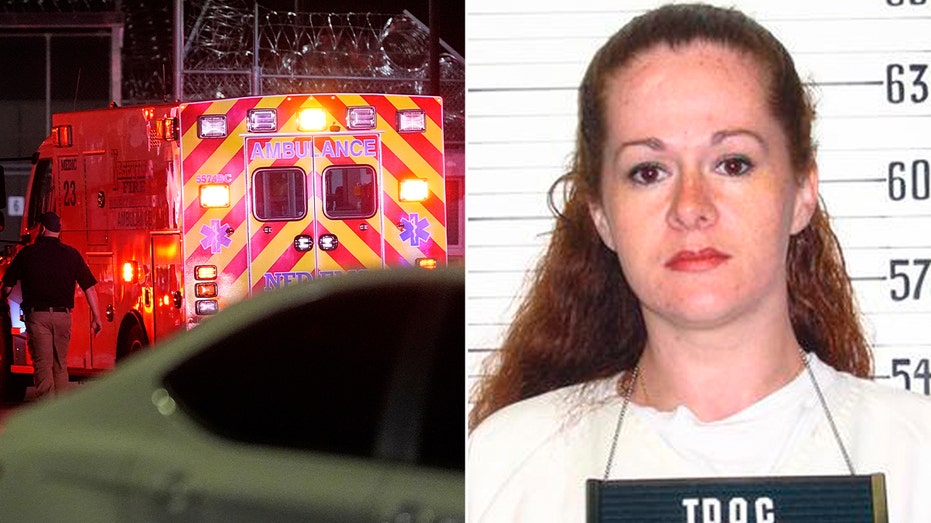
Emergency dispatch recordings reveal confusion and miscommunication after Tennessee death row inmate Christa Gail Pike survived a failed execution on Sept. 30, 2026. Operators initially questioned whether a call reporting the incident was genuine or a prank, and an emergency response was temporarily called off. Pike’s attorney and a state official later helped confirm the situation, allowing responders to enter Riverbend Maximum Security Institution. Pike was transported to a hospital by 9:34 p.m. and later regained consciousness.
| 1) | Dispatchers question the initial emergency call |
| 2) | The response is temporarily canceled |
| 3) | Pike’s attorney and officials confirm the emergency |
| 4) | Pike survives two doses of lethal-injection drugs |
| 5) | Tennessee pauses executions during a review |
Dispatchers question the initial emergency call
The first 911 call came at approximately 8:40 p.m., about an hour after Pike’s scheduled execution began at Riverbend Maximum Security Institution in Nashville. The unidentified caller reported that the execution had been carried out, that Pike had not died, and that she was breathing abnormally and needed an ambulance. The caller could not provide a code that dispatchers used to verify the report.
Audio shows emergency operators discussing whether the call described a real medical emergency or a hoax, including the possibility of a prank or swatting incident. The uncertainty reflected the restricted setting of the prison and the absence of immediate confirmation from facility personnel.
The response is temporarily canceled
At about 9:03 p.m., a dispatcher said supervisors at the Department of Emergency Communications had classified the call as false and that no medical assistance was needed at the prison. That decision came while operators were still trying to establish who had made the report and whether the execution had actually failed.
In a separate exchange, a dispatcher contacted Riverbend and asked to verify the report. A prison employee said the facility had not made the call and asked who had contacted emergency services. The dispatcher responded that operators did not know, deepening the confusion about the incident’s source and credibility.
Pike’s attorney and officials confirm the emergency
At approximately 9:08 p.m., Pike’s attorney, Kelly Gleason, called 911 and identified her client by name. Gleason said Pike had undergone the state execution protocol, remained alive and breathing, and required immediate life-saving care.
“She has completed the stages of the protocol and last we knew from the attorney who is present, she is still alive and breathing and needs immediate life-saving care,” Gleason said.
Around the same time, Riverbend’s Central Control told responders that the facility would normally have placed such a call but had not done so. A first responder also reported that people outside the prison were insisting the emergency was real and said one person claimed to be a state official. Central Control cleared responders to enter at 9:11 p.m.
Pike survives two doses of lethal-injection drugs
Pike had been scheduled to die by lethal injection after spending more than 30 years on Tennessee’s death row. Authorities administered a single dose of pentobarbital, a central nervous system depressant used under the state’s execution protocol. When she remained conscious, officials administered a second dose.
The second dose also failed to kill Pike. Tennessee’s single-drug protocol did not permit officials to administer a third dose. Pike was taken by ambulance to a hospital by 9:34 p.m., placed on a ventilator and remained unconscious for six days. Her attorneys said she woke on Oct. 6 and was later returned to the Debra K. Johnson Rehabilitation Center on Oct. 10, where she continued receiving medical care.
Tennessee pauses executions during a review
Pike was convicted in 1996 of first-degree murder and conspiracy to commit first-degree murder in the 1995 torture and killing of 19-year-old Colleen Slemmer, a fellow Job Corps student. She had been scheduled for execution after decades on death row.
Following the failed execution and the delayed emergency response, Tennessee Gov. Bill Lee paused all state executions pending a review. The dispatch recordings are expected to inform scrutiny of communication between the prison, emergency operators and responding personnel during the incident.
| Number | Key Point |
|---|---|
| 1 | The first 911 call was made around 8:40 p.m. after Pike remained alive following the start of her execution. |
| 2 | Dispatchers initially questioned whether the report was a prank or false call. |
| 3 | Pike’s attorney confirmed the emergency at about 9:08 p.m. |
| 4 | Responders entered the prison at 9:11 p.m., and Pike reached a hospital by 9:34 p.m. |
| 5 | Tennessee paused executions while authorities reviewed the failed procedure. |
Summary
The recordings show that uncertainty over the origin and authenticity of the initial 911 call delayed emergency coordination after Pike’s execution failed. Confirmation from her attorney, prison personnel and a person identifying as a state official eventually led to a response. Pike survived, received hospital treatment and later returned to a state correctional facility, while Tennessee suspended executions pending further review.
Frequently Asked Questions
When was the first emergency call made?
The first call came at approximately 8:40 p.m. on Sept. 30, about an hour after Pike’s scheduled execution began.
Why did dispatchers question the call?
The caller could not provide a verification code, and prison personnel had not immediately confirmed that the execution had failed. Operators therefore questioned whether the report was genuine.
When did responders enter the prison?
Riverbend Central Control cleared emergency responders to enter at approximately 9:11 p.m.
What happened to Pike afterward?
Pike was transported to a hospital, placed on a ventilator and remained unconscious for six days. Her attorneys said she woke on Oct. 6 and returned to a Tennessee women’s prison on Oct. 10.