
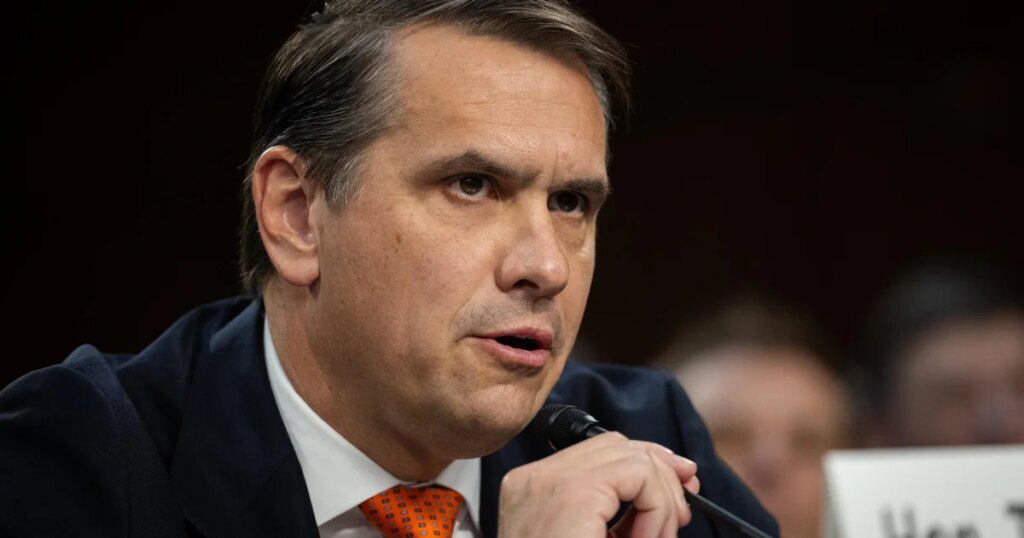
In a significant development on Sunday evening, Todd Blanche, acting Attorney General, formally rescinded plans for a contentious $1.8 billion “Anti-Weaponization Fund” meant to compensate individuals allied with former President Donald Trump. This decision followed pressure from Republican Senators Thom Tillis and John Cornyn, who threatened to block Blanche’s confirmation to lead the Justice Department. The order also clarified aspects of a prior IRS settlement involving President Trump, which has been a source of controversy.
| Article Subheadings |
|---|
| 1) Decision to Rescind the Fund |
| 2) Background and Context of the Fund |
| 3) Reactions from Political Stakeholders |
| 4) Settlement Details and Implications |
| 5) Prospects for Future Actions |
Decision to Rescind the Fund
Acting Attorney General Todd Blanche issued an official order on Sunday evening, stating that the fund designed to compensate allies of former President Donald Trump would not move forward. The order specifically referenced the cancellation of the “Anti-Weaponization Fund,” which had been mired in controversy since its announcement. Blanche stated, “The Attorney General’s May 18, 2026 Order establishing the Anti-Weaponization Fund (‘Fund’) is rescinded and shall have no force or effect.” This order aims to clarify any misunderstandings regarding the fund’s operational status and to solidify the Department of Justice’s position on the matter.
Background and Context of the Fund
The “Anti-Weaponization Fund” was conceived as a financial mechanism intended to compensate individuals who claimed they were victims of political persecution. The fund was first introduced in May as part of a broader settlement in response to litigation involving former President Donald Trump and the IRS, wherein he alleged political bias in tax enforcement. However, the fund quickly attracted criticism, being labeled a “slush fund” by Democrats and facing opposition from several Republican lawmakers, including Senators Tillis and Cornyn.
Reactions from Political Stakeholders
Response to the rescindment of the fund has been mixed among political stakeholders. Senators Tillis and Cornyn reportedly signaled their approval upon hearing the news, as they had previously indicated they would not support Blanche’s confirmation unless the fund’s future was established. Natalie Yezbick, a spokesperson for Cornyn, confirmed that an agreement had been reached between the Department of Justice and the senator concerning the fund and the scope of the IRS settlement. On the other hand, the former president expressed his discontent with the resignation of the fund, threatening to push for its revival if his allies were not given the necessary backing.
Settlement Details and Implications
Blanche’s order also modified the terms of a settlement agreement related to tax audits involving Trump and his family. The revised language stipulates that immunity from audits applies retroactively to claims pending at the time of the settlement, explicitly stating that this does not shield the former president from future tax examinations. This clarification seeks to address concerns regarding the enforcement and application of tax laws, emphasizing that the agreement does not provide unlimited protection to Trump in ongoing or future tax matters.
Prospects for Future Actions
With the funding rescinded and a clear stance taken by the Department of Justice, the prospects of the “Anti-Weaponization Fund” being revived appear slim. Legislative and judicial challenges persist, as numerous lawsuits have been filed against the fund, and a federal judge had already temporarily blocked it in May. Following the introduction of this order, the Senate Judiciary Committee is expected to vote on Todd Blanche‘s confirmation as permanent Attorney General soon. Blanche’s previous statements during his confirmation hearings indicating that the fund would not be pursued further have only reinforced the notion that any future attempts to implement it will face significant obstacles.
| No. | Key Points |
|---|---|
| 1 | The $1.8 billion “Anti-Weaponization Fund” has been rescinded by Acting Attorney General Todd Blanche. |
| 2 | Senators Thom Tillis and John Cornyn pressured for the fund’s cancellation to support Blanche’s confirmation. |
| 3 | Blanche’s order clarified terms of a previous IRS settlement concerning President Trump’s tax audit immunity. |
| 4 | Multiple lawsuits have attempted to challenge the fund’s establishment, complicating its future. |
| 5 | The context surrounding the fund and Trump’s legal challenges continues to evolve as political pressure mounts. |
Summary
The rescindment of the “Anti-Weaponization Fund” by Acting Attorney General Todd Blanche marks a critical moment in the ongoing tensions between Trump’s camp and Republican Senators. As the legal and political landscape shifts, the implications of this order extend beyond immediate funding concerns, touching on the broader narratives of political accountability and the enforcement of regulations regarding tax audits. The actions taken by Blanche in light of public and political pressure signal a significant recalibration within the Justice Department that could have lasting ramifications.
Frequently Asked Questions
Question: Why was the “Anti-Weaponization Fund” created?
The fund was proposed to compensate individuals who claimed to have been politically persecuted, particularly targeting those associated with former President Trump amid claims of bias in political and legal contexts.
Question: What prompted the rescindment of the fund?
The decision followed pressure from Republican Senators who threatened to block Todd Blanche’s confirmation unless the future of the fund was clarified and committed to writing.
Question: What are the implications of the updated IRS settlement?
The updated settlement restricts tax audit immunity for Trump and his family, limiting protection to claims that were pending at the time of the settlement and leaving future tax filings open to scrutiny.