
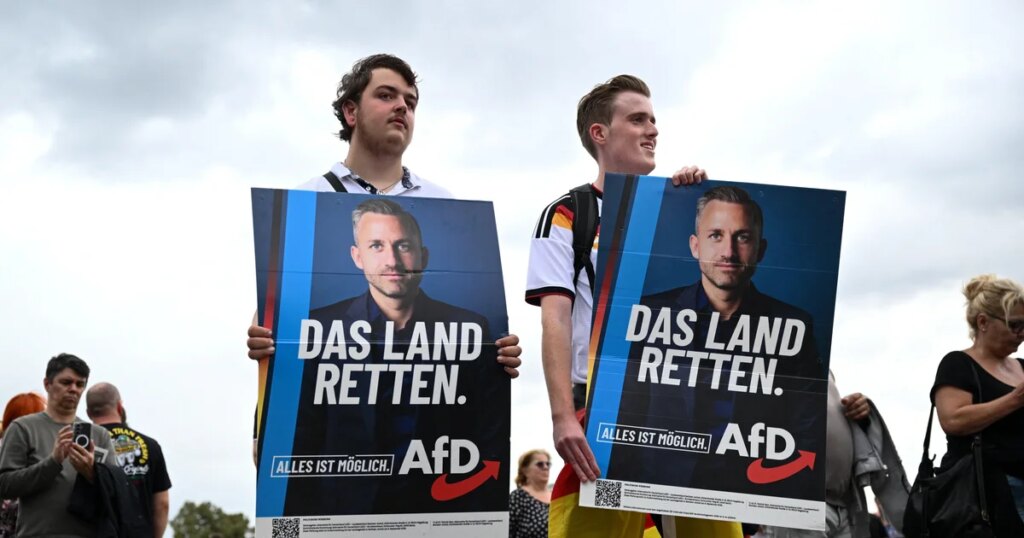
In a pivotal moment for German politics, the state of Saxony-Anhalt is witnessing a regional election that could potentially usher in the far-right Alternative for Germany (AfD) party, marking the first time since World War II that such a party could gain control of a German state. As polls open, the AfD leads public opinion with significant backing, raising concerns that reverberate beyond Germany’s borders, particularly among supporters and detractors of nationalist movements across Europe. The stakes are high, with implications for the country’s political landscape and its historical narratives.
| Article Subheadings |
|---|
| 1) An Overview of the AfD’s Rise |
| 2) The Impact of Recent Events on Local Sentiment |
| 3) Obstacles to Governance |
| 4) Mixed Reactions from the Local Communities |
| 5) Historical Context: A Legacy of Extremism |
An Overview of the AfD’s Rise
The Alternative for Germany (AfD) party, founded in 2013, has emerged from its roots as a protest movement against the European Union to a powerful political force advocating far-right ideologies. Since its inception, the AfD has significantly shifted rightward, promoting stances that appeal to a demographic fearing cultural displacement due to immigration. In the current political climate, the party is gaining traction in Saxony-Anhalt, with opinion polls placing it at 41%, substantially ahead of its nearest competitor, the Christian Democratic Union (CDU) led by Chancellor Friedrich Merz, which stands at roughly 23%.
This election is being closely monitored not just within Germany, but internationally, as the implications of an AfD-led government could have profound effects on democratic norms, human rights, and relations with marginalized communities. Recent reports from the state Office for the Protection of the Constitution classify the AfD’s Saxony-Anhalt branch as a “confirmed far-right extremist” organization, claiming that its core positions conflict with foundational principles enshrined in Germany’s constitution. Such characterizations have fueled ongoing debates about the party’s legitimacy and future in German politics.
The Impact of Recent Events on Local Sentiment
The sociopolitical atmosphere in Magdeburg, the state capital, has been intensified by recent tragic events, including a violent attack at a local Christmas market in 2024. This incident involved a driver, a doctor originally from Saudi Arabia, who drove into a crowd, leading to the deaths of five people. Although the perpetrator was not an Islamic extremist, the incident ignited public fears surrounding migration and security. Citizens mourning the loss have turned their focus towards political solutions, with many expressing that the AfD’s assertive stance on immigration has resonated with their concerns.
As the election draws near, numerous residents have articulated feelings of unease and tension, suggesting that such events have bolstered the AfD’s popularity. “I feel that the situation is particularly tense following the attack,” shared a local woman in Magdeburg. Others, like a 27-year-old supporter named Justin, have echoed similar sentiments, asserting that the AfD’s focus on migration issues directly addresses their concerns about “uncontrolled migration.” The complexity of local issues surrounding immigration and crime continues to drive political discourse in Saxony-Anhalt.
Obstacles to Governance
Winning the most votes does not guarantee the AfD the governorship in Saxony-Anhalt; the party must secure an absolute majority of more than half of the seats in the state parliament. Poll projections as of Friday indicate that while the party is likely to emerge with the most votes, achieving an absolute majority remains improbable. This scenario raises questions about how the AfD might exercise influence if they do not secure a governing position.
Additionally, the prospect of forming a coalition appears daunting since major parties in Germany have firmly ruled out collaboration with the AfD. In past elections, notably in neighboring Thuringia, the AfD secured the most seats but remained outside the governance structure as other parties formed a coalition. AfD candidate Ulrich Siegmund has expressed a strong desire to govern without forming alliances, further complicating the party’s path to power should they fail to achieve a parliamentary majority.
Mixed Reactions from the Local Communities
The local populace reflects a divided stance on the potential rise of the AfD. While proponents argue that the party accurately identifies and proposes solutions for pressing societal issues, critics express alarm over its radical platform. Birgit, a resident, articulates her trepidation regarding the AfD, branding it “far too extreme,” while others disclose their deeper apprehensions about the implications of an AfD government, especially concerning historical education and the remembrance of Germany’s darker past.
Opponents of the AfD raise significant concerns about how the party’s ideologies might manifest in social policies, particularly in terms of how migration and integration are handled. A couple of left-leaning former punks shared their belief that the AfD’s policies would adversely affect the societal fabric of the region, emphasizing the importance of inclusivity amidst a rapidly aging population that depends on the contributions of migrant workers.
Historical Context: A Legacy of Extremism
Germany’s historical relationship with extremism adds another layer of complexity to the current political climate. The AfD’s rhetoric often reflects a deep-seated resentment towards prevailing attitudes concerning Germany’s history, particularly regarding the Holocaust and its implications on modern governance. Key party figures have expressed dismissive views toward the necessity of remembering past atrocities, which raises significant ethical questions about their political philosophy and aspirations.
Statements from party leaders, such as remarks made by Hans-Thomas Tillschneider, suggesting that historical narratives have been overly politicized, echo sentiments that may resonate with portions of the electorate disenchanted with conventional political discourse. This attitude reflects an ongoing struggle within German society to reconcile its past with contemporary values, and how this reconciliation may or may not factor into the upcoming election could fundamentally shape the nation’s path moving forward.
| No. | Key Points |
|---|---|
| 1 | The AfD is polling at 41%, substantially leading over the CDU. |
| 2 | Recent violent incidents have heightened public concerns surrounding migration. |
| 3 | Winning the most votes may not guarantee the AfD a governing role. |
| 4 | Local reactions to the AfD are mixed, with both supporters and opponents articulating their views. |
| 5 | The historical context of extremism in Germany complicates perceptions of the AfD. |
Summary
As Saxony-Anhalt stands at a crossroads, the outcome of this election could have lasting ramifications for Germany’s political trajectory, immigration policies, and societal cohesion. The AfD’s potential rise to power reflects broader currents of populism and nationalism that are reshaping the political landscape across Europe. With the international community watching closely, the implications of voter sentiment will extend beyond regional boundaries, prompting debates on governance, identity, and the fundamental principles upon which democratic societies are built.
Frequently Asked Questions
Question: What could the rise of the AfD mean for Germany?
The rise of the AfD could signify a shift towards more nationalist and hardline political policies in Germany, particularly regarding immigration and integration, potentially altering the political landscape and sparking wider societal debates.
Question: How does local sentiment affect the election outcome?
Local sentiment is crucial as events such as recent violent incidents can significantly sway public opinion towards or against the AfD, impacting voter turnout and party support during the election.
Question: What obstacles does the AfD face in forming a government?
The AfD must secure an absolute majority in parliament to form a government independently; if they fail to do so, they face the challenge of forming alliances, which other parties have largely ruled out due to the AfD’s extreme positions.