
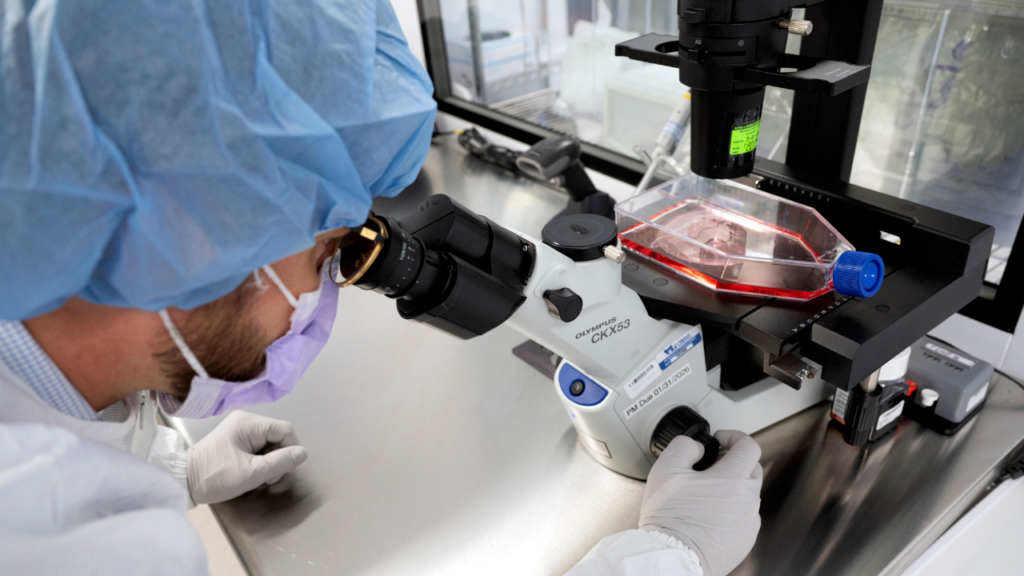
Artificial intelligence (AI) is rapidly transforming the field of medicine, particularly in cancer treatment and diagnostics. Researchers are harnessing AI technologies to personalize treatments, repurpose existing medications, and enhance diagnostic accuracy. As AI continues to revolutionize various medical practices, it is important for patients to understand how these advancements impact their healthcare journey.
| Article Subheadings |
|---|
| 1) AI helps personalize an experimental melanoma treatment |
| 2) What the melanoma results actually tell us |
| 3) AI can search existing drugs for completely new uses |
| 4) AI finds sperm cells that conventional testing can miss |
| 5) An AI blood test could flag heart risk years earlier |
AI helps personalize an experimental melanoma treatment
A significant development in cancer treatment comes from the collaboration between research companies Moderna and Merck. On August 19, they revealed promising topline results from a Phase 3 trial focusing on melanoma. The study evaluated a treatment named intismeran autogene (V940 or mRNA-4157), which was tested alongside Keytruda, a well-known cancer drug. In this clinical trial, a total of 1,137 patients diagnosed with high-risk melanoma who had undergone surgical removal were enrolled. The results demonstrated that the combination therapy met its primary endpoint for recurrence-free survival while also achieving significant secondary goals regarding distant metastasis-free survival.
This study marks a pivotal moment, as it represents the first positive Phase 3 readout for a personalized neoantigen therapy and an mRNA-based cancer treatment. The foundation of this innovative approach lies in analyzing a patient’s tumor sample to identify unique mutations. An algorithm is utilized to select specific targets, enabling the development of a personalized therapy that can encode up to 34 neoantigens. This treatment strategy symbolizes a shift towards patient-centered cancer care, allowing for the tailoring of therapies based on each individual’s cancer profile.
What the melanoma results actually tell us
The excitement surrounding these results is tempered by the reality that the complete findings have yet to be disclosed. While the topline results are promising, officials from both companies have committed to sharing their detailed research at an upcoming international medical meeting and with regulatory agencies. The ongoing study continues to monitor overall survival rates, crucial for assessing the therapy’s long-term efficacy.
Earlier investigations provide additional context. A smaller Phase 2b trial demonstrated that the combination of intismeran and Keytruda reduced the risk of recurrence or death by 49% compared to Keytruda alone. Furthermore, this combination decreased the risk of distant metastasis or death by 59%. These previous results were derived from a smaller patient group, making the expansive Phase 3 trial an essential progression in validating the treatment. Nevertheless, it is important to note that intismeran is still classified as investigational and has not yet received FDA approval.
AI can search existing drugs for completely new uses
In addition to personalizing cancer treatments, researchers are exploring the potential of repurposing existing medications for new therapeutic applications. A group led by Dr. David Fajgenbaum established a nonprofit organization called Every Cure, which investigates the feasibility of using already approved drugs for diseases that lack adequate treatment options. According to Every Cure’s report for 2025, approximately 18,000 recognized diseases exist globally, yet only about 4,000 have corresponding FDA-approved medications, leaving a vast number of diseases underserved.
Employing AI, Every Cure seeks out correlations between approved drugs and other diseases they may effectively treat. The organization reports that their systems can generate millions of predictions within a single day. A related initiative, MATRIX, backed by the federal Advanced Research Projects Agency for Health (ARPA-H), employs machine learning and AI technologies to forecast which FDA-approved drugs could be beneficial for treating other conditions. Although AI cannot confirm that a drug will succeed in treating different illnesses, it serves as a valuable tool to guide researchers toward promising avenues for investigation.
Dr. Fajgenbaum has witnessed first-hand the transformative power of finding new applications for existing medications. For instance, in 2020, his colleague Kaila Mabus began administering ruxolitinib, a treatment typically utilized for blood disorders, even though it was not FDA-approved for her condition—multicentric Castleman disease. Following her treatment, she saw significant improvements and was declared in remission a year later. Every Cure aims to utilize AI to identify favorable drug-disease connections more efficiently and on a larger scale, potentially leading to substantial breakthroughs in medicine.
AI finds sperm cells that conventional testing can miss
At the forefront of reproductive medicine, the Columbia University Fertility Center has developed a pioneering system named Sperm Tracking and Recovery (STAR). This innovative technology employs high-speed imaging and an AI detection model coupled with microfluidics. STAR addresses challenges faced by patients diagnosed with azoospermia or cryptozoospermia, conditions characterized by extremely low or undetectable sperm counts during standard examinations.
The STAR system meticulously analyzes semen samples at a scale far beyond human capabilities. It captures and processes approximately 1.1 million images hourly, utilizing its AI model to detect potential sperm cells with precision. Once a cell is identified, a microfluidic mechanism isolates and retrieves it for potential use in fertility treatments or cryopreservation. In a practical validation case, embryologists searched for two days without success before STAR identified 44 sperm in under one hour. This exemplifies how AI can excel in repetitive tasks that challenge human analysts, who may face fatigue and oversight.
An AI blood test could flag heart risk years earlier
Research teams at the University of Hong Kong are investigating yet another application of AI in public health: the early detection of cardiovascular disease. Researchers have designed an AI-based tool named CardiOmicScore, which analyzes intricate molecular information derived from blood samples. This tool employed extensive data from the UK Biobank, examining 2,920 circulating proteins and 168 metabolites, alongside genomic data.
By utilizing deep learning techniques, CardiOmicScore can accurately predict the risk of six cardiovascular diseases, including coronary artery disease and heart failure. In certain instances, this tool may identify elevated risks as much as 15 years before any clinical symptoms manifest. This capability has far-reaching implications, as it could enable healthcare providers to intervene earlier than presently possible, improving patient outcomes. However, as it stands, CardiOmicScore remains within the research phase and is not yet available as a standard screening test.
| No. | Key Points |
|---|---|
| 1 | AI is being used to personalize cancer treatments and improve their effectiveness. |
| 2 | Moderna and Merck’s recent Phase 3 trial shows promising results in melanoma treatment. |
| 3 | AI is facilitating the exploration of new uses for existing medications, potentially aiding untreatable diseases. |
| 4 | Sterilization methods have been enhanced through AI, allowing for better identification of sperm in low-count conditions. |
| 5 | AI tools like CardiOmicScore are emerging as potential early markers for cardiovascular risks. |
Summary
The integration of artificial intelligence in medicine is ushering in a new era of personalized treatments and enhanced diagnostics, promising to revolutionize patient care. As AI continues to evolve, it is crucial for patients to remain informed about its applications and associated caveats. While the potential is immense, it is vital to approach novel AI-based therapies and methods with a discerning mind, ensuring that robust clinical evidence supports their use.
Frequently Asked Questions
Question: How does AI improve cancer treatment?
AI enhances cancer treatment by personalizing therapies based on a patient’s unique tumor profile, enabling more effective and targeted interventions.
Question: What is the role of AI in finding new uses for existing medications?
AI analyzes extensive biomedical data to identify potential connections between FDA-approved drugs and diseases lacking effective treatments, expediting the discovery process.
Question: Can AI help in early detection of cardiovascular diseases?
Yes, AI tools like CardiOmicScore analyze molecular blood data to predict the risk of cardiovascular diseases long before symptoms occur, allowing for earlier intervention.