
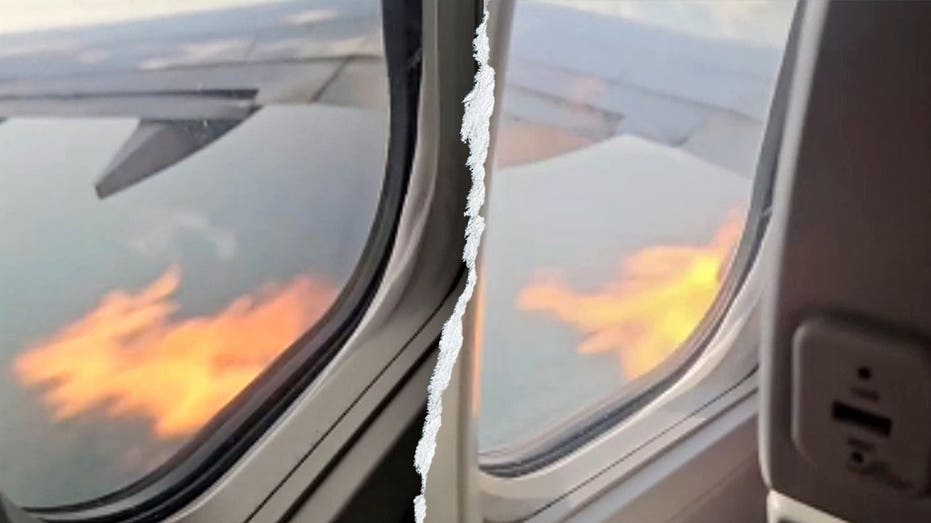
American Airlines Flight 1760 returned safely to Myrtle Beach International Airport on Monday after the crew reported a bird strike shortly after departure. Passenger video appeared to show flames coming from the Boeing 737-800, while air traffic control recordings captured a mayday call about an engine problem. The aircraft was carrying 172 people and landed about 36 minutes after leaving Myrtle Beach. No injuries were reported, and the Federal Aviation Administration said it would investigate.
The flight had been bound for Charlotte Douglas International Airport when the incident occurred. The aircraft was removed from service for inspection, and passengers were expected to continue their journey on a replacement plane.
| 1) | Flight returns to Myrtle Beach after reported bird strike |
|---|---|
| 2) | Passenger video shows flames during the emergency |
| 3) | Airline reports a safe landing and aircraft inspection |
| 4) | FAA begins review as airport removes birds from runway |
| 5) | Incident highlights the continuing risk of wildlife strikes |
Flight returns to Myrtle Beach after reported bird strike
Flight 1760 departed Myrtle Beach International Airport at approximately 8:00 a.m. Eastern time on Monday, Aug. 10, 2026, bound for Charlotte, North Carolina. The Federal Aviation Administration said the crew reported striking a bird while departing and returned to the same airport around 8:40 a.m. local time. Flight tracking data indicated the aircraft was airborne for roughly 36 minutes.
The Boeing 737-800 had 172 people onboard. The crew’s decision to return allowed the aircraft to land at the departure airport after the reported engine issue, rather than continue to its scheduled destination.
Passenger video shows flames during the emergency
Video recorded by a passenger appeared to show bursts of flames coming from the aircraft during the flight. The footage also included a voice describing severe engine backfiring and expressing concern that the engine might be on fire. The exact origin of the flames had not been established.
“Mayday, mayday, mayday, we got an engine problem here,” the pilot said in an air traffic control transmission.
The visual footage and radio communication documented the seriousness of the event, but the airline said there was no indication of an engine fire. Maintenance personnel were assigned to examine the aircraft after it landed.
Airline reports a safe landing and aircraft inspection
The airline said the aircraft returned shortly after departure because of a maintenance issue and landed safely. It was taken out of service so its maintenance team could inspect it. The company also said there were no reported injuries among passengers or crew.
Passengers were to be transferred to a replacement aircraft for the flight to Charlotte. The airline credited its employees with managing the response and thanked passengers for their patience while the disruption was resolved.
FAA begins review as airport removes birds from runway
The FAA identified the event as a reported bird strike involving a Boeing 737-800 traveling from Myrtle Beach to Charlotte. The agency said it would investigate the circumstances, including the aircraft’s reported engine problem and the flames seen in passenger footage.
Air traffic control recordings also indicated that airport personnel found a significant number of birds on the runway and were removing them. The runway activity provided additional context for the crew’s report, although investigators had not publicly determined the precise cause of the aircraft’s symptoms.
Incident highlights the continuing risk of wildlife strikes
Wildlife strikes remain a recurring aviation hazard, particularly during takeoff and landing when aircraft are close to the ground. FAA data shows that about 292,000 wildlife strikes involving civil aircraft were reported in the United States between 1990 and 2023.
The agency has said that approximately 54% of bird strikes occur from July through October, a period that includes the fledging of young birds and fall migration. About 70% occur between ground level and 500 feet, while roughly 62% occur during daylight, 8% at dawn or dusk, and 30% at night. Those figures help explain why airports use runway monitoring and wildlife removal procedures to reduce the risk.
| Number | Key Point |
|---|---|
| 1 | Flight 1760 returned to Myrtle Beach after a reported bird strike and engine problem. |
| 2 | The Boeing 737-800 carried 172 people and landed safely. |
| 3 | No injuries were reported, and the aircraft was removed from service for inspection. |
| 4 | The FAA said it would investigate the incident. |
Summary
The incident ended without reported injuries after Flight 1760 returned to Myrtle Beach following a reported bird strike and engine trouble. Passenger video showed flames, but the aircraft operator said there was no indication of an engine fire. The aircraft’s inspection and the FAA investigation are expected to clarify what caused the reported symptoms and the visible flames.
Frequently Asked Questions
What happened to Flight 1760?
The flight returned to Myrtle Beach International Airport after the crew reported a bird strike and an engine problem shortly after departure.
How many people were onboard?
The Boeing 737-800 was carrying 172 people.
Were there any injuries?
No injuries were reported, and the aircraft landed safely.
What happens next?
The aircraft was removed from service for a maintenance inspection, while the FAA said it would investigate the reported bird strike and related engine problem.