
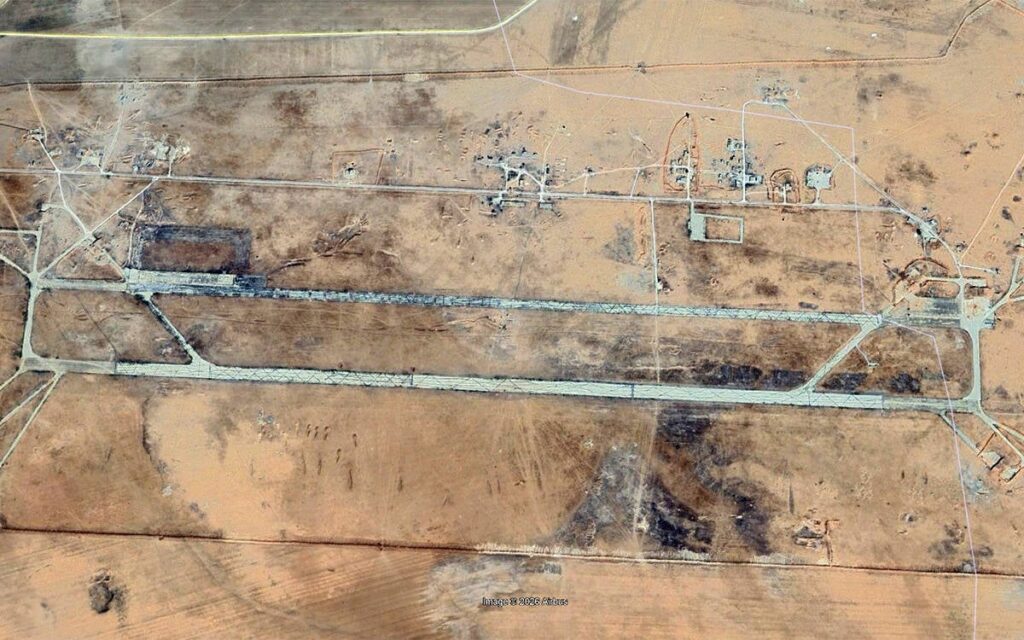
On a recent morning, Israeli warplanes targeted the Abu al-Duhur Military Airbase located in the Idlib region of northwestern Syria. Reports from Syrian state television revealed that the attacks consisted of eight airstrikes that damaged the base’s runway and warehouses. While there were no reported casualties, the airstrikes caused significant material damage and raised new tensions, particularly due to the geopolitical dynamics involving Turkey and Israel. The situation reflects broader implications for the security landscape in Syria, especially concerning alliances and military capabilities.
| Article Subheadings |
|---|
| 1) Background of the Abu al-Duhur Military Airbase |
| 2) Israeli Justification for the Attack |
| 3) Claims of Turkish Military Presence |
| 4) Regional Reactions to the Airstrikes |
| 5) Implications for Future Security Dynamics |
Background of the Abu al-Duhur Military Airbase
The Abu al-Duhur Military Airbase, situated approximately 70 kilometers east of the Turkish border, has seen a decrease in its operational activity over the years. Historically significant during the Syrian conflict, its importance stems from its strategic position on the transit route between Hama and Aleppo provinces, as well as its proximity to the Syrian Desert. Despite its reduced use as an active military facility, the base appears to have regained attention due to ongoing geopolitical interests in the region.
With the Syrian government taking steps towards rebuilding its military infrastructure, the Abu al-Duhur airbase could be considered a potential part of Syria’s broader military strategy. This focus on revitalization underscores the complexities of the situation as various actors, including Turkey and Israel, vie for influence and security in a volatile region. Understanding the history and context of the base is fundamental to interpreting the implications of the recent attacks.
Israeli Justification for the Attack
The context of the airstrikes on Abu al-Duhur significantly expands the narrative beyond mere military aggression. The Israeli Prime Minister’s Office articulated that the attacks were meant to act as a deterrent against what they perceived as a possible violation of the “status quo” between the Syrian government and Israel. The Israeli government accused Syria of enabling Turkish military deployment near Aleppo, suggesting that this move could alter the security dynamics in the region.
Israel’s decision to strike the base may have been a strategic measure to assert its interests in the context of shifting alliances and military capacity in Syria. By attacking the airbase, Israel seemingly aimed to send a multi-faceted message—not only to Syria but also to Turkey—regarding any perceived threats to its security posture. Such actions indicate a calculated approach to maintaining influence and limiting adversarial capabilities in close proximity to its borders.
Claims of Turkish Military Presence
Reports have emerged indicating that the day prior to the airstrikes, a Turkish military delegation visited the Abu al-Duhur airbase to assess preliminary work aimed at restoring the runway. This visit, compounded by claims of a Bayraktar-type reconnaissance drone being active in the area, has intensified speculation around Turkey’s intentions in the region. Despite these claims, a Turkish official has publicly denied the presence of their military personnel or equipment at the base, emphasizing the contentious nature of such allegations.
Witness accounts shared by local and military sources have reiterated the ambiguity surrounding the situation. The juxtaposition of the airstrike occurring shortly after the Turkish delegation’s visit raises critical questions about the likelihood of military interactions and the implications of Turkish involvement in the region. These developments heighten tensions and deepen the existing divide between the involved parties.
Regional Reactions to the Airstrikes
The airstrikes elicited strong reactions from both Ankara and Damascus. Turkey’s Foreign Ministry vehemently condemned the Israeli airstrikes, denouncing them as a violation of Syria’s sovereignty and territorial integrity. The Turkish Presidency Directorate of Communications labeled the Israeli claims regarding Turkey’s military presence as unfounded and frivolous, arguing that they were merely used to justify their military actions against Syria.
Damascus, on the other hand, rejected the Israeli narrative regarding an alleged security arrangement that would limit Syria’s capacity to strengthen its military capabilities. A diplomatic source from the Syrian Foreign Ministry emphasized that Syria had the right to pursue necessary military developments without external interference. This conflicting exchange highlights the escalating diplomatic fallout between the involved parties and the struggle for legitimacy in their respective narratives.
Implications for Future Security Dynamics
The recent attacks on Abu al-Duhur signify a pivotal moment in the evolving security landscape in Syria. These developments appear to be intertwined with broader trends, including Israel’s concerns over a resurgent Syrian military and emerging Turkish influence in the region. As the dynamics continue to shift, there is a growing risk of miscalculation and escalation, particularly as both countries navigate the implications of their actions on each other’s military strategies.
Moreover, the situation reflects the complexities of US-mediated security talks between the parties, which have yet to yield a binding agreement. The failure to establish clear parameters may exacerbate tensions and lead to further confrontations, complicating the diplomatic landscape in the region. The current trajectory suggests a potential for direct military contact if misunderstandings persist and security arrangements remain unaddressed.
| No. | Key Points |
|---|---|
| 1 | Israeli warplanes targeted the Abu al-Duhur Military Airbase in Syria, causing material damage. |
| 2 | Israel justified the airstrikes as a deterrent against potential threats from Syria and Turkey. |
| 3 | Reports indicated a Turkish military delegation had visited the airbase prior to the attacks, raising tensions. |
| 4 | Both Ankara and Damascus condemned the strikes, emphasizing violations of sovereignty. |
| 5 | The airstrikes could complicate ongoing US-mediated security talks between Israel and Syria. |
Summary
The Israeli airstrikes on the Abu al-Duhur Military Airbase serve as a critical reminder of the tenuous balance of power in Syria, highlighting the complexities of regional security dynamics involving multiple actors. As Israel seeks to deter perceived threats from both Syria and Turkey, the subsequent reactions from both governments underline the continued tensions that characterize their interactions. The unfolding situation could lead to more serious confrontations and complicate efforts for a diplomatic resolution, underlining the intricate web of military, political, and territorial interests at play.
Frequently Asked Questions
Question: What is the significance of the Abu al-Duhur Military Airbase?
The Abu al-Duhur Military Airbase is strategically located and has historical significance in the Syrian conflict, serving as a potential focal point for military activities in the region.
Question: Why did Israel conduct airstrikes on the airbase?
Israel believed the airstrikes were necessary to deter potential military developments by Syria and Turkey, which it deemed threatening to its security interests.
Question: How have Turkey and Syria responded to the airstrikes?
Both Turkey and Syria condemned the Israeli strikes, viewing them as violations of sovereignty and unnecessary escalations in an already tense situation.