
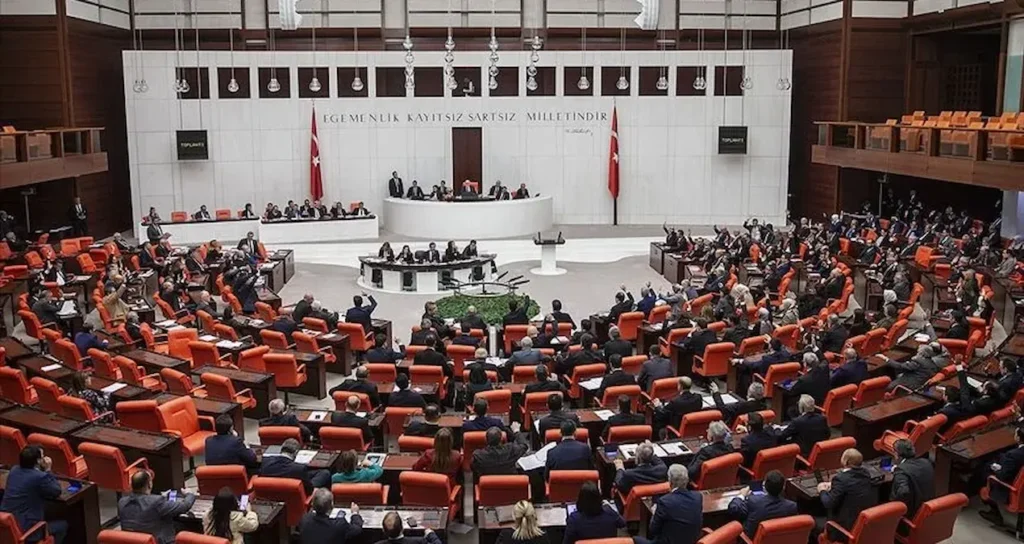
As political preparations intensify ahead of the forthcoming presidential and general elections in Turkey, there is notable activity in alliance formation among smaller parties. Key players from various factions are reportedly engaged in negotiations, with the prospect of new alliances—particularly along nationalist lines—emerging as a focal point in Ankara. With potential unifications among parties like the Re-Welfare Party, DEVA Party, and Saadet Party under discussion, the political landscape could shift dramatically as election day approaches.
| Article Subheadings |
|---|
| 1) New alliance scenarios are on the agenda |
| 2) Is a new nationalist alliance being established? |
| 3) Balances may change in the New Road Group |
| 4) Formula from CHP to crisis |
| 5) New Road Group may lose status again |
New alliance scenarios are on the agenda
In recent weeks, talks surrounding potential alliances among smaller political parties have gained traction in Ankara. Key factions such as the Re-Welfare Party, DEVA Party, and Saadet Party have been engaging in negotiations aimed at forming a collective front for the elections. Discussions reportedly center on shared principles and the feasibility of unification, indicating a strategic move to consolidate their strengths against larger political parties.
The urgency of these discussions can be traced to the approaching elections, slated for the end of the year. The political climate, influenced by the electoral system in Turkey, demands a united front, especially from smaller parties which historically struggle to gain sufficient representation independently. As leaders of these parties convene, their ability to forge a strong alliance could significantly impact the overall electoral landscape.
Engagement from the public and grassroots activists has been notable, as many view this potential unification as necessary for a stronger voice in Parliament. The confluence of interests among these parties, particularly in addressing policy issues and appealing to nationalist sentiments, reflects a broader strategy to enhance their electoral viability.
Is a new nationalist alliance being established?
The recent gathering of five prominent political party leaders in Ankara has propelled discussions about the possibility of a new nationalist alliance. Party heads, including Ümit Özdağ of the Victory Party and Remzi Çayır of the National Path Party, convened in a restaurant, where they discussed their political strategies and the viability of collaboration.
Remzi Çayır notably stated, “Yes, there is such a thing,” when questioned about the formation of a new alliance. This assertion has sparked interest and speculation in political circles, further enhancing conversations within Ankara about the potential to unify party efforts centered around nationalist principles.
The social and economic dynamics in Turkey have fueled nationalist sentiments, making it an opportune time for such an alliance. As many citizens seek solutions to pressing challenges, a united front may resonate well with the electorate. Observers are keen to see how this might evolve as the election date approaches, influencing the competition against more established parties.
Balances may change in the New Road Group
The New Road Group, comprising members from the DEVA Party, Future Party, and Felicity Party, has experienced recent changes that could alter its balance within the Turkish Grand National Assembly. Following the dissolution of the Future Party, the group has seen its number of deputies fall from 20 to 19, which is raising concerns about their legislative effectiveness.
This decline in representation has significant implications, as it brings the group below the required number of members to constitute a formal political group in Parliament. This situation highlights the fragility of small party alliances and the shifting allegiances that can forge or break them, particularly in the run-up to elections when coalitions and personal commitments are tested.
Political analysts speculate that difficulties in maintaining stability within the New Road Group may provide an opportunity for other parties, particularly those with larger voter bases, to expand their influence as election day approaches. This context necessitates careful maneuvering among smaller parties, as their survival may hinge on successful negotiations and strategic alliances.
Formula from CHP to crisis
On the same day that the Future Party’s dissolution was confirmed, the Republican People’s Party (CHP) took swift action by including a member of the New Road Group. This strategic move appeared to be aimed at stabilizing their presence and preventing losses in parliamentary representation.
The included member’s affiliation reinforces the political maneuvering underway, as various factions attempt to maintain or increase their influence in Parliament. These developments may also point to the potential for further instability, particularly if other deputies within the New Road Group are tempted to switch allegiances, which could cause ripple effects across party lines.
Reports suggest that additional members from the Future Party might contemplate leaving the New Road Group, which would further jeopardize the group’s status and influence. As anticipated, this tumultuous political climate drives parties to recalibrate their strategies, contributing to the dynamics leading into the elections.
New Road Group may lose status again
The possibility of further defections from the New Road Group poses a significant risk that could see it lose its formal status in the Turkish Grand National Assembly once more. Should Sema Silkin Ün and Kani Torun depart, the group’s viability in the legislative framework is jeopardized, confirming the precariousness of its position.
These developments underscore the importance of strategic alliances leading up to the elections. The dynamics of seat allocation in Parliament could shift dramatically as smaller parties clamor for partnerships to enhance their chances of survival. The opportunity to regain lost seats, establish a firm footing, and effect policy changes remains a priority for pursuing political relevance.
As the landscape shifts, both the New Road Group and newly forming alliances will undoubtedly shape the political discourse in the lead-up to the elections. Political observers are watching closely, ready to assess how these developments may unfold in the days to come.
| No. | Key Points |
|---|---|
| 1 | Political preparations for Turkey’s elections are intensifying, with small parties seeking alliances. |
| 2 | Negotiations among Re-Welfare Party, DEVA Party, and Saadet Party aim to form a joint electoral platform. |
| 3 | A potential nationalist alliance has emerged from discussions among five party leaders in Ankara. |
| 4 | The New Road Group is facing a decline in its number of deputies, threatening its parliamentary status. |
| 5 | Political maneuvering by parties like the CHP aims to stabilize representation amidst shifting allegiances. |
Summary
In summary, the political landscape in Turkey is undergoing significant changes as preparations for the presidential and general elections intensify. Smaller parties are actively searching for alliances, and the potential formation of a new nationalist coalition adds another layer of complexity to the electoral process. The dynamics within the New Road Group, compounded by the recent dissolution of the Future Party and shifting allegiances, could have far-reaching effects on the composition of the Turkish Grand National Assembly. As election day approaches, the effectiveness of these alliances will be put to the test, shaping the future political landscape of Turkey.
Frequently Asked Questions
Question: What is the significance of party alliances in Turkish politics?
Party alliances are crucial in Turkish politics as they can enhance the electoral viability of smaller parties by consolidating their vote share, making it easier to compete against larger parties.
Question: How does the electoral system in Turkey influence party alliances?
Turkey’s electoral system often favors larger parties due to the threshold for representation in Parliament, thus encouraging smaller parties to form alliances to secure seats.
Question: What challenges do small parties face in forming alliances?
Small parties often face challenges such as differing ideological views, competition for voter loyalty, and maintaining unity among members, all of which can complicate alliance formation.