
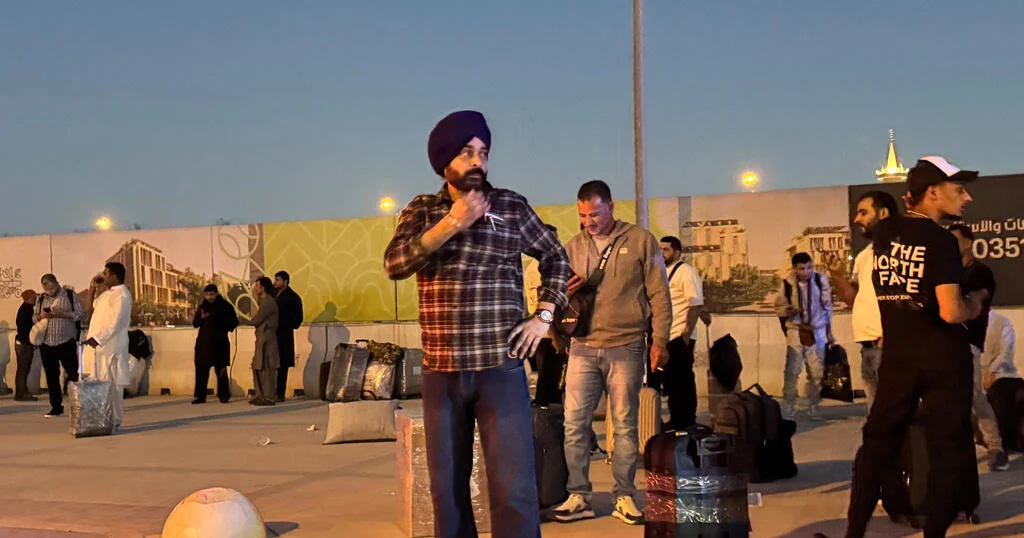
A recent series of attacks on King Khalid International Airport in Riyadh, Saudi Arabia, has escalated tensions amid an ongoing conflict with Yemen’s Houthi militants. The latest assault, occurring just one day after a deadly missile strike that claimed 12 lives, including that of a U.S. citizen, has raised concerns about new waves of violence in the region. In total, at least 13 individuals have been reported dead, and hundreds more injured, leading to major disruptions in air travel and school closures in the capital.
| Article Subheadings |
|---|
| 1) Overview of Recent Attacks |
| 2) The Houthi Response |
| 3) Global Reactions |
| 4) Humanitarian Impact |
| 5) Strategic Implications |
Overview of Recent Attacks
The recent escalation began on a fateful Saturday when the King Khalid International Airport was struck by missiles, resulting in the death of at least 12 individuals and injuring hundreds. Among the deceased was a U.S. citizen, a detail that has heightened international concern regarding the ongoing violence.
In just two days, the airport suffered another attack where one more person was killed, confirming the vulnerability of vital infrastructure in Riyadh. The Houthi militants have claimed responsibility for these assaults, stating they are retaliating against what they perceive as Saudi Arabia’s aggression in Yemen, which has been a battleground in the regional power struggle involving Iran.
Saudi officials confirmed that further attacks targeted terminals 3 and 4, aimed at domestic flights, aggravating an already tense situation in a key area for aviation in the Middle East. The airport, now shuttered since the initial strikes, has seen frequent missile attacks over the week, with the Houthi’s offensive marking a significant escalation in hostilities.
The Houthi Response
The Houthi military spokesperson, Brig. Gen. Yahya Saree, announced on social media that attacks would continue as long as Saudi aerial strikes persisted in Houthi-controlled regions. This includes threats against multiple airports in Saudi Arabia, excluding the revered sites of Mecca and Medina. The Houthis assert these operations are a necessary measure against ongoing Saudi military actions, which they claim have seen over 120 airstrikes launched in just the past day alone.
Saree publicly urged airlines and passengers to heed their warnings, turning an ordinary air travel experience into a high-stakes endeavor fraught with danger. The Houthi’s threatening rhetoric has resonated, leading several countries to advise their citizens to avoid traveling to Riyadh, exacerbating fears about safety in the region. Notably, flights have been diverted to other airports due to these attacks, impacting international travel.
Global Reactions
The international community’s response has been swift and critical. Following the attacks, condemnation poured in from various world leaders and organizations, including a notable statement from the United Nations. Leaders emphasized the growing threat posed by the Houthis, branding them as terrorists and condemning their escalation of violence.
The U.S. Secretary of State expressed strong disapproval of the attacks, stating that they targeted civilians indiscriminately, leading to tragic losses of innocent lives. This sentiment was echoed by global figures such as President Ursula von der Leyen, who pointed out that these insurgent acts risk destabilizing critical global transport and energy pathways.
In a broader context, the rising disharmony in Yemen and Saudi Arabia is seen as a component of the intensified U.S.-Iran proxy conflict. With accusations flying from both sides, the burgeoning escalation hints at potential wider regional instability, raising alarms for not only the Middle East but the world at large.
Humanitarian Impact
With the unraveling situation, humanitarian conditions have severely deteriorated. The attack on Saturday was described as the deadliest in over a decade on Saudi soil and caused critical injuries to over 300 individuals, some in dire condition. Hospitals in Riyadh are presently inundated with casualties, struggling to provide adequate care amidst the inflow of severely injured patients.
Among the casualties, the identity of some victims has been disclosed, highlighting the diverse demographics affected by the violence. The slain include both Saudi citizens and foreign nationals, such as a 28-year-old flight attendant working for Flynas and an Indian national who succumbed to injuries on Sunday.
Compounding these tragedies, the Houthi claim to have been targeted by relentless Saudi airstrikes further complicates the humanitarian response. Aid agencies fear that the continuation of such hostilities will further inhibit relief efforts, ensuring that innocent lives remain caught in the crossfire of this ongoing conflict.
Strategic Implications
The recent escalation in missile strikes has broader implications for regional stability and security. The closure of the Riyadh airport not only halts domestic and international travel but also signals a vulnerability in Saudi Arabia’s defensive posture. The Houthis’ capability to strike deep into Saudi territory raises eyebrows regarding the effectiveness of Saudi air defenses.
Furthermore, these attacks portend complications for international efforts to mediate the conflict, which has already dragged on for years. As the Saudi-led coalition intensifies its military operations against Houthi targets, tensions are expected to persist, creating a recurring cycle of violence that will complicate any potential resolution to the conflict.
In addition, the involvement of foreign powers, including the U.S. and regional stakeholders, might usher in a new chapter of military engagement. The volatile situation demands close monitoring, as international actors consider their next moves on this chessboard of geopolitical maneuvering.
| No. | Key Points |
|---|---|
| 1 | A recent series of missile attacks on Riyadh’s King Khalid International Airport have killed at least 13 individuals. |
| 2 | The Houthi group claims the attacks are a response to ongoing Saudi military operations in Yemen. |
| 3 | Global leaders have condemned the Houthi attacks, urging immediate action to stabilize the region. |
| 4 | The humanitarian crisis is worsening with hundreds injured and significant disruptions to healthcare. |
| 5 | The escalation poses strategic challenges, particularly for Saudi defenses and international diplomatic efforts. |
Summary
The recent wave of attacks on Riyadh’s airport has underscored the tense and increasingly dangerous environment surrounding the ongoing conflict in Yemen. As the Houthis escalate their military operations, the implications stretch beyond immediate casualties, affecting regional dynamics, international diplomacy, and humanitarian conditions. With conflicting narratives and a complex backdrop of foreign intervention, the need for a resolution becomes all the more pressing amid rising casualties and global concerns.
Frequently Asked Questions
Question: What prompted the recent attacks on Riyadh’s airport?
The recent attacks were prompted by the Houthi group’s view of ongoing Saudi military actions in Yemen as aggressions, resulting in retaliation against what they deem as hostilities.
Question: What has been the international reaction to these attacks?
Global leaders and organizations, including the United Nations, have condemned the attacks, labeling them as acts of terrorism and calling for measures to stabilize the region.
Question: How has the conflict impacted civilian life in Saudi Arabia?
The conflict has severely impacted civilian life, leading to the closure of schools and significant disruptions to air travel, as well as medical emergencies due to the influx of wounded individuals from the attacks.