
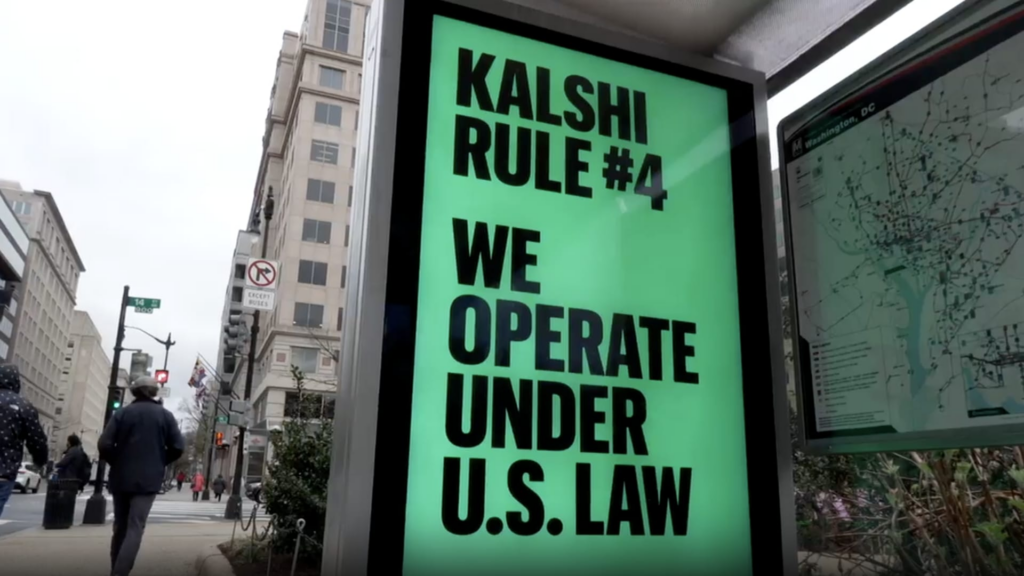
On March 27, 2026, the 9th U.S. Circuit Court of Appeals delivered a significant ruling affecting prediction market platforms, rejecting their calls for injunctive relief against the Nevada Gaming Control Board. This decision confirms that sports-related event contracts are classified as gambling and not as derivatives regulated by federal entities. The court’s stance has ignited a legal debate over the jurisdiction of state regulators versus federal regulatory bodies over such financial instruments. This ruling not only impacts platforms like Kalshi and Crypto.com but also indicates a potential path towards Supreme Court involvement on this complex issue.
| Article Subheadings |
|---|
| 1) Overview of the Ruling |
| 2) Specific Case Details |
| 3) Legal Implications and Reactions |
| 4) Industry Impact |
| 5) Future Outlook |
Overview of the Ruling
The 9th U.S. Circuit Court of Appeals handed down a decision that impacts how prediction markets operate within the realm of sports betting. The court concluded that contract offerings related to sports events do not align with the definition of derivatives regulated by federal bodies. This pivotal ruling came in response to an appeal by Kalshi and Crypto.com, both active players in the prediction market space. The courts maintained that these companies cannot evade state laws by classifying their sports wagers as federally regulated financial instruments. The implications of this decision extend beyond the immediate case, as it underscores the ongoing tension between state rights and federal oversight.
Specific Case Details
The case at the heart of this ruling involved Kalshi and Crypto.com challenging the Nevada Gaming Control Board’s authority to halt their operations related to sports betting. In Nevada, such activity is tightly regulated, and the board argued that these transaction types fall under state-defined gambling laws. The ruling specified that the court found no grounds to consider the sports event contracts as swaps, which would typically be governed by the federal Commodity Futures Trading Commission (CFTC). The Nevada Attorney General’s office hailed the court’s decision as a victory for state regulatory authority.
Legal Implications and Reactions
The ruling sparks significant debate about jurisdictional authority over prediction markets. Legal experts anticipate that the question of whether state gaming regulators or federal bodies like the CFTC should oversee sports-related event contracts will eventually be brought before the Supreme Court. This point of law is exacerbated by a recent contradictory ruling from the 3rd U.S. Circuit Court of Appeals, which upheld that only the CFTC has jurisdiction over such contracts. As a result, legal scholars are calling this situation a “classic circuit split,” wherein different federal courts have provided opposing interpretations of the law, suggesting an eventual appeal to the highest court in the land is likely.
Industry Impact
The ramifications of this judicial ruling could be felt across the sports betting industry and interpretation of prediction markets. Shares of major online sportsbooks like DraftKings and Flutter Entertainment rose following the announcement, indicating that investors see the ruling as a deterrent against the risk of competition from such prediction markets. This surge suggests a recognition of the legal protection providing market stability among traditional betting avenues. The momentum has also prompted these companies to expedite the development of their prediction market platforms in the face of potential regulatory challenges.
Future Outlook
As the dust settles on this ruling, the prediction market industry anticipates a landscape of heightened scrutiny and continued legal battles. The conflicting interpretations from different circuits create uncertainty, encouraging platforms like Kalshi and Crypto.com to prepare for further judicial challenges as they seek to assert their position within the heavily regulated sports betting market. Lawmakers and industry stakeholders will undoubtedly be watching as events unfold, especially if a case is posed to the Supreme Court — an outcome that may redefine the regulatory schema within which both state and federal regulators operate.
| No. | Key Points |
|---|---|
| 1 | The 9th Circuit Court ruled against Kalshi and Crypto.com, affirming that sports event contracts are classified as gambling. |
| 2 | The court stated that sports bets cannot be categorized as federally regulated derivatives under the CFTC. |
| 3 | Legal experts foresee a future Supreme Court case concerning jurisdiction over sports-related event contracts. |
| 4 | Shares of DraftKings and Flutter Entertainment rose following the favorable ruling for state regulations. |
| 5 | The ruling showcases a significant circuit split regarding the regulatory authority governing prediction markets. |
Summary
In conclusion, the 9th Circuit Court’s ruling on sports-related event contracts has significant implications for the future of prediction markets and gambling regulation in the United States. It marks a crucial moment in the ongoing debate between state and federal authority, revealing the complex relationship between different regulatory frameworks. As the legal landscape evolves, industry stakeholders must navigate the implications of this ruling and prepare for potential future legal skirmishes, possibly culminating in a Supreme Court decision.
Frequently Asked Questions
Question: What did the 9th Circuit ruling determine regarding prediction markets?
The ruling determined that sports-related event contracts offered by platforms like Kalshi and Crypto.com are classified as gambling, not derivatives, and thus fall under state regulatory authority.
Question: How might this ruling affect the prediction market industry?
The ruling could hinder the growth and operational abilities of prediction market platforms, compelling them to compete within state-defined gambling regulations, while traditional sportsbooks gain stability amidst competition fears.
Question: What is a circuit split?
A circuit split occurs when different federal appellate courts provide conflicting rulings on the same legal question, creating inconsistency in jurisprudence that may prompt an escalation to the Supreme Court for a definitive interpretation.