
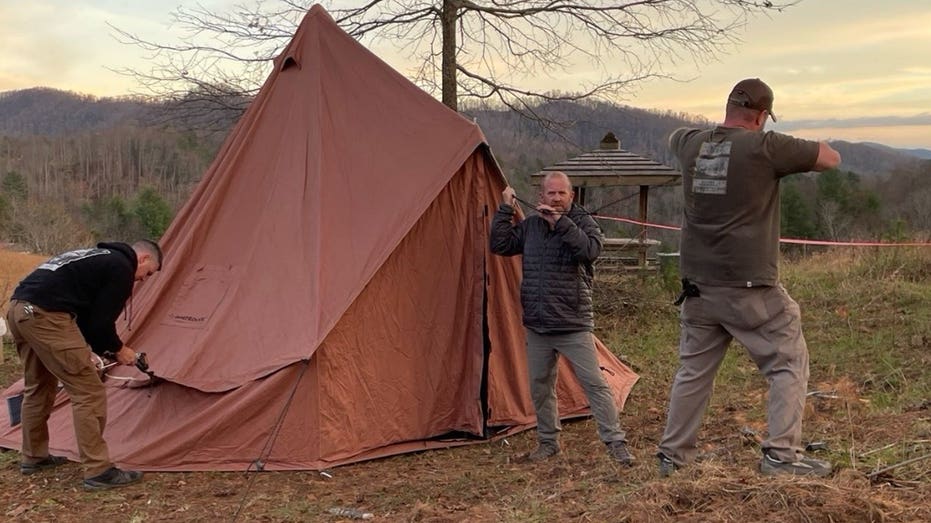
Sean Michael Lee, an Army veteran and former 82nd Airborne Division paratrooper, died Tuesday from cancer linked to toxic burn pit exposure in the Middle East. After more than 20 years of military service and multiple deployments, he continued helping people through humanitarian missions. His work included evacuating Afghan allies, supporting aid efforts in Poland and helping bring wounded war correspondent Benjamin Hall home. He also spent weeks assisting communities in western North Carolina after Hurricane Helene in 2024.
| 1) | A military career built around service |
| 2) | Helping Afghan allies after the fall of Kabul |
| 3) | Supporting rescue and relief missions abroad |
| 4) | Staying in North Carolina after Hurricane Helene |
| 5) | A legacy defined by the “send me” ethos |
A military career built around service
Sean Michael Lee served in the Army for more than two decades, including deployments to Iraq and Afghanistan and service with the 82nd Airborne Division. After leaving the military, he continued working with people connected to veteran support and humanitarian relief. Steven Rozina, deputy chief operating officer of the Independence Fund, met Lee through the nonprofit and described him as someone who remained focused on helping others until the end of his life.
“His entire life was in service to others. Up until the very end, Sean was always thinking of others,” Rozina said.
Helping Afghan allies after the fall of Kabul
When Afghanistan fell in 2021, Lee joined efforts to evacuate thousands of Afghan allies, including people who had worked with American personnel and remained connected to them. The operation reflected his continued commitment to those who had supported the United States. According to Rozina, Lee treated the mission as another call to serve, using his military experience and organizational skills to help people facing danger and uncertainty.
Supporting rescue and relief missions abroad
After the evacuation work, Lee traveled to Poland following Russia’s invasion of Ukraine. He helped establish aid stations and supply lines through humanitarian organizations, including Save Our Allies. He also assisted efforts to rescue journalist Benjamin Hall, who had been seriously injured while reporting near Kyiv. Lee helped coordinate the operation from Poland, contributing to the effort that brought Hall home.
“Sean was never the guy on the front page of the paper, but he was always there,” Rozina said.
Staying in North Carolina after Hurricane Helene
When Hurricane Helene devastated parts of the Southeast in 2024, Lee quickly traveled to western North Carolina, his home state. Rozina said the two men slept in their cars while helping establish aid for affected communities. Lee remained after many volunteers returned home, living in tents and working alongside residents who lacked basic resources.
His work included helping rebuild family homes and a local store that served as the only business available to some residents. The response showed how Lee applied his emergency planning and veteran support experience to a natural disaster close to home.
A legacy defined by the “send me” ethos
Lee died Tuesday from cancer associated with toxic burn pit exposure during his Middle East deployments. Even while dealing with the illness, he continued planning future missions. Rozina said a text message from the previous week showed Lee considering how to respond more efficiently to another hurricane or earthquake and how veterans could help others during emergencies.
“Any help is still help,” Rozina said, describing the message he believed Lee would leave behind. “You might feel like you’re not doing much, but doing something means a lot. So, do what you can.”
| Number | Key Point |
|---|---|
| 1 | Lee served more than 20 years in the Army, including with the 82nd Airborne Division. |
| 2 | He helped evacuate Afghan allies after the fall of Afghanistan in 2021. |
| 3 | He supported humanitarian operations in Poland and the effort to rescue Benjamin Hall. |
| 4 | He stayed in western North Carolina to help communities recover from Hurricane Helene. |
| 5 | He died from cancer linked to toxic burn pit exposure in the Middle East. |
Summary
Sean Michael Lee carried his military commitment into civilian life, repeatedly responding to crises at home and abroad. His work for Afghan allies, war victims and hurricane survivors reflected a belief that preparation, persistence and even small acts of assistance could change lives. Friends and colleagues remember him as a quiet organizer whose service continued until shortly before his death.
Frequently Asked Questions
Who was Sean Michael Lee?
Lee was an Army veteran with more than 20 years of military experience, including service as a paratrooper with the 82nd Airborne Division and deployments to Iraq and Afghanistan.
What humanitarian missions did Lee support?
He helped evacuate Afghan allies, supported aid stations and supply lines in Poland, assisted efforts to bring injured reporter Benjamin Hall home and aided North Carolina communities after Hurricane Helene.
How did Lee die?
Lee died Tuesday from cancer linked to toxic burn pit exposure during his deployments in the Middle East.
What was Lee’s guiding principle?
Colleagues described his approach as a “send me” ethos, meaning he was prepared to respond when people needed help and encouraged others to do what they could.