
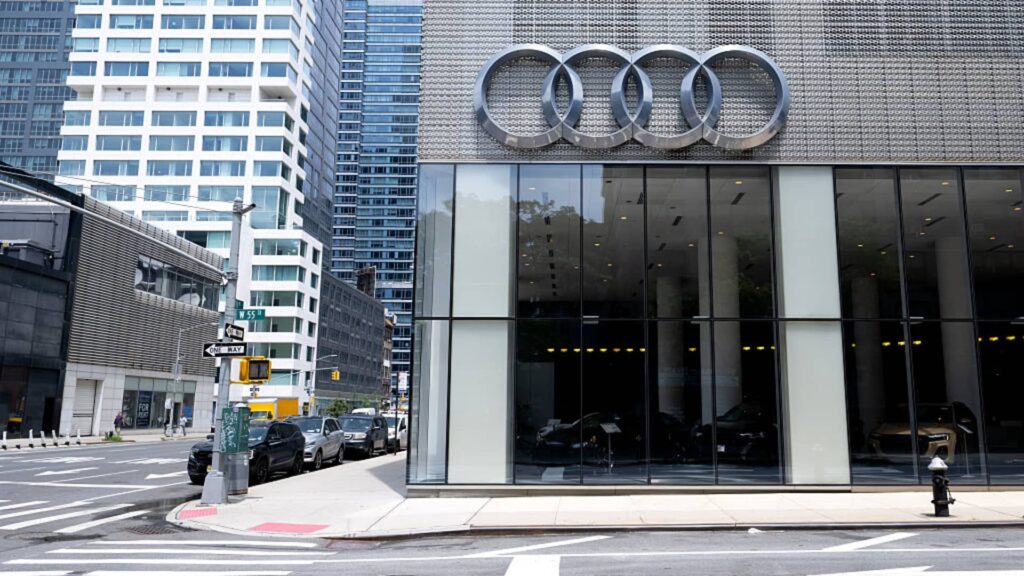
Audi’s CEO, Gernot Dollner, recently provided a robust defense of the company’s plans to establish a new $4 billion production plant in Georgia, emphasizing the strategic nature of the decision aimed at boosting sales and minimizing exposure to tariffs imposed by the U.S. government. The announcement was notably made during a rally in Georgia, presided over by President Donald Trump, signaling a pivotal moment as Audi embarks on its journey to localize production in the United States. The new facility, marking Audi’s inaugural manufacturing base in the U.S., comes amid significant structural changes at Audi’s parent company, Volkswagen, including staff reductions and plant closures in Germany.
| Article Subheadings |
|---|
| 1) Strategic Shift: Audi’s Decision for a U.S. Plant |
| 2) Background and Context of the Announcement |
| 3) Economic Implications for Audi and U.S. Tariffs |
| 4) Production Potential and Future Plans |
| 5) Broader Industry Impacts and Audi’s U.S. Strategy |
Strategic Shift: Audi’s Decision for a U.S. Plant
Audi’s choice to set up its first manufacturing facility in the United States, particularly in Georgia, marks a significant strategic move for the luxury automotive brand. The initiative is not just about expanding production capabilities; it reflects a calculated response to various market pressures, including tariff implications and evolving consumer demand in the premium vehicle segment. Gernot Dollner articulated a vision that aims to enhance Audi’s market competitiveness in a landscape where the U.S. represents the second-largest premium automobile market globally. The decision signifies Audi’s ambition to leverage local manufacturing to reach U.S. consumers more efficiently and competitively.
Background and Context of the Announcement
The announcement of Audi’s U.S. plant coincided with a rally featuring President Donald Trump, where the economic strategies pertaining to American manufacturing were a focal point. Amid a transforming landscape within its parent company, Volkswagen, which is grappling with job cuts and plant closures in Germany, Audi’s endeavor is seen as a proactive step to align with both market dynamics and political directives. Dollner clarified that the decision to establish a plant was the result of extensive evaluations, with more than 70 potential locations assessed over a prolonged period. This meticulous process included negotiations with various stakeholders, marking it as a significant commitment to long-term reform in their U.S. operations.
Economic Implications for Audi and U.S. Tariffs
Audi’s move is underscored by ongoing challenges related to tariffs, particularly those affecting imports from Germany. Currently, the tariff on vehicles from Germany stands at 15%, a reduction from previous levels. However, in 2022 alone, these tariffs resulted in an estimated loss of approximately 1.2 billion euros ($1.4 billion) for Audi, predominantly due to the logistics of importing vehicles from Europe or Mexico. By localizing production, Audi aims to mitigate these costs, improving both profitability and market share within the U.S. market. Dollner highlighted that this move is not simply about cost reduction; it is driven by the necessity to enhance operational efficiencies and respond to consumer preferences more responsively.
Production Potential and Future Plans
The Georgia facility is expected to commence production in the early 2030s, focusing on popular SUV models such as the Q7, Q8, and Q9. With an annual production capacity projected at 200,000 vehicles, roughly half of these vehicles are slated for exportation outside the U.S. This significant capacity indicates Audi’s commitment to becoming a formidable player in the U.S. automotive market. The expansion is designed to align with growing consumer preferences for luxury SUVs and positions Audi to capitalize on an expanding segment of the market. Vito Paladino, President of Audi of America, emphasized the importance of this strategy for Audi’s presence and influence in the U.S., suggesting that further details regarding additional investments will be revealed in due course.
Broader Industry Impacts and Audi’s U.S. Strategy
Audi is currently the last major German luxury brand to establish a production facility in the United States, following in the footsteps of competitors such as Mercedes-Benz and BMW. This strategic decision not only reflects Audi’s desire to strengthen its market foothold but also emphasizes a broader trend among luxury automobile manufacturers to localize production to better meet customer needs and reduce import reliance. The decision also ties into the larger narrative surrounding U.S. manufacturing and job creation, particularly in the context of the upcoming midterm elections. The political backdrop adds an element of urgency, as government support for such initiatives may bolster voter sentiments toward economic growth and employment opportunities.
| No. | Key Points |
|---|---|
| 1 | Audi plans to invest $4 billion in a new manufacturing plant in Georgia, marking its first facility in the U.S. |
| 2 | The decision aims to reduce operational costs and dependency on rising tariffs for imported vehicles. |
| 3 | The plant will focus on producing popular Audi SUVs like the Q7, Q8, and Q9, aiming for a production capacity of 200,000 vehicles annually. |
| 4 | The plant’s announcement came during a politically significant rally, reflecting Audi’s alignment with U.S. manufacturing strategies. |
| 5 | Audi’s U.S. sales have remained relatively flat, following a notable decline the previous years, which the new plant aims to address. |
Summary
In conclusion, Audi’s decision to establish a production facility in Georgia signals a pivotal moment for both the brand and the U.S. automotive landscape. As the luxury market continues to evolve, this strategic move represents not only an effort to enhance operational efficiency and mitigate tariff-related challenges but also positions Audi to become a more prominent player in the U.S. market. The anticipated production capabilities underscore the intentions to align with consumer preferences while contributing to local job creation and industry growth.
Frequently Asked Questions
Question: Why did Audi choose Georgia for its new plant?
Audi selected Georgia after evaluating over 70 potential locations, indicating strategic relevance due to factors such as local incentives, infrastructure, and market access.
Question: What models will be produced at the new Audi facility?
The new plant is set to produce Audi’s SUV models, including the Q7, Q8, and Q9.
Question: How does this decision impact Audi’s sales in the U.S.?
The establishment of the plant is intended to bolster Audi’s presence and competitiveness in the U.S. market, addressing prior sales stagnation and rising operational costs.