
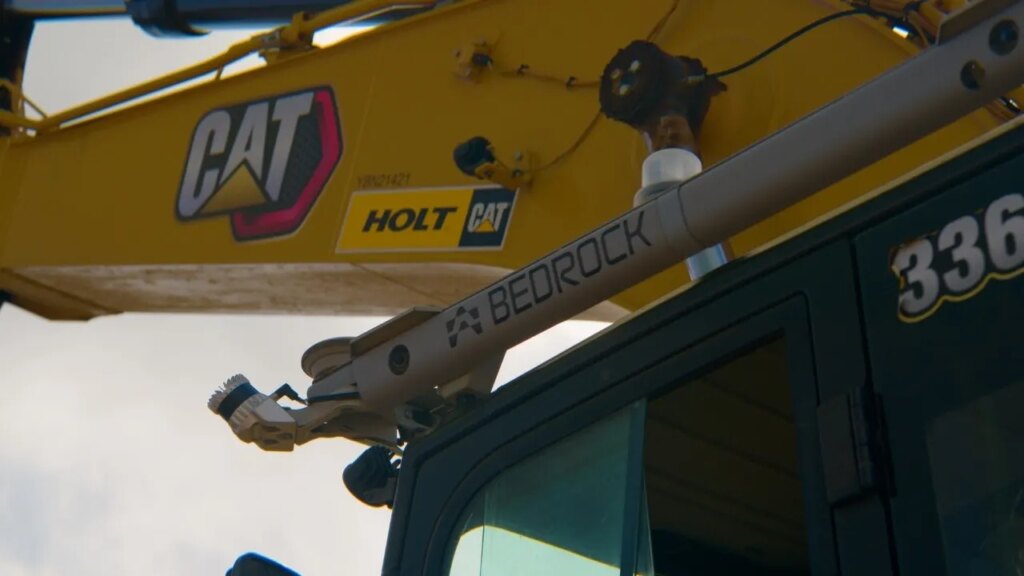
In an innovative leap for the construction industry, Bedrock Robotics has introduced autonomous excavators that operate without human presence on active job sites. These machines, currently deployed in Texas and Nevada, promise to address persistent worker shortages while enhancing productivity on major infrastructure projects. By utilizing advanced sensor technology and machine learning, Bedrock aims to streamline earthmoving tasks, allowing skilled operators to focus on more complex responsibilities.
| Article Subheadings |
|---|
| 1) Bedrock’s Autonomous Excavators in Action |
| 2) Measuring Productivity: Nearing Human Levels |
| 3) The Technology Behind Bedrock Operator |
| 4) Ensuring Safety with Human Oversight |
| 5) Future Vision: A Coordinated Fleet |
Bedrock’s Autonomous Excavators in Action
Bedrock Robotics has made strides in deploying autonomous excavators that are performing tasks on commercial job sites. These excavators are currently involved in substantial infrastructure projects, such as a water treatment facility in Nevada in collaboration with Sundt Construction and a substantial earthwork project in Texas with Champion Site Prep. The vital role these excavators play emphasizes the significant transformations occurring within the construction industry.
The projects being executed encompass large-scale earthmoving activities, including rough early earthmoving and foundation preparations. Specifically, Bedrock is managing the clearing earth, cut-and-fill operations, and rough cuts, activities fundamental to initiating any construction project. Any delays in these preliminary phases could lead to setbacks in later construction phases, thus affecting overall project timelines.
Measuring Productivity: Nearing Human Levels
Bedrock evaluates the productivity of its autonomous excavators based on the volume of earth moved during a work shift. Productivity expectations can vary significantly depending on numerous factors such as project specifications, soil conditions, and the existing machinery utilized on-site. According to a company spokesperson, “As of our deployments in August 2026, two years after the company was founded, we are already nearing human-level productivity.”
This assertion of nearing human-level productivity not only highlights the effectiveness of the technology but also the considerable potential for widespread adoption in the industry. As the machines continue to demonstrate efficiency, the implications extend beyond a single job site to reshape how labor and machinery interact in construction.
The Technology Behind Bedrock Operator
Bedrock’s proprietary system, dubbed the Bedrock Operator, functions as a retrofit solution for pre-existing heavy equipment. It integrates a sensor and computing package that can be installed swiftly—reportedly in just one day—without making permanent modifications to the excavator. Upon setting the initial construction plan, the software autonomously manages the excavation work.
The Bedrock Operator system utilizes advanced machine-learning algorithms developed through extensive training based on tens of thousands of hours of fieldwork. Despite its current deployment stage, Bedrock emphasizes that it predominantly employs newly outfitted excavators that have been rigorously tested at the company’s facilities. Plans to integrate the system into existing contractor equipment are still being fine-tuned, clarifying that Bedrock’s focus is currently on optimizing its own machinery.
Ensuring Safety with Human Oversight
Concerns surrounding safety inevitably arise with the innovation of unmanned excavators. Bedrock acknowledges that the consideration of safety is paramount, especially as it expands deployment. The excavators are equipped with self-monitoring systems that assess their progress in real time. In cases where the machinery encounters obstacles or gets stuck, it has the capability to autonomously alert for assistance.
On the topic of human intervention, a Bedrock spokesperson remarked, “It’s relatively rare.” The protocol delineates that if a machine confronts unexpected situations, a remotely monitoring operator can intervene to assist the autonomous system as needed. Additionally, maintaining a human presence on-site—albeit not in the cab—enhances overall safety as workers move through construction zones, ensuring that machines adhere to safety protocols.
Future Vision: A Coordinated Fleet
Looking ahead, Bedrock envisions a future where multiple autonomous machines will collaborate on job sites, rather than functioning as isolated entities. Bedrock co-founder Kevin Peterson articulated this concept, suggesting that an excavator could seamlessly operate alongside a bulldozer, truck, or grader. This interconnected framework has the potential to enhance project scheduling significantly, as a site manager could assign overarching goals while the machines work in concert to expedite completion.
Although this level of coordination remains a vision for the future, the present focus for Bedrock is scaling excavator deployments and expanding the range of tasks these machines are able to perform independently. The impending advancements in coordination could revolutionize operational dynamics on construction sites.
| No. | Key Points |
|---|---|
| 1 | Bedrock Robotics has introduced autonomous excavators operating without human supervision on job sites. |
| 2 | These machines are currently engaged in significant infrastructure projects in Texas and Nevada. |
| 3 | Productivity levels are reportedly nearing those of human operators, showcasing efficiency improvements. |
| 4 | Bedrock’s technology, known as the Bedrock Operator, retrofits existing machinery to provide autonomous capabilities. |
| 5 | Future goals involve developing a synchronized fleet of autonomous machines for enhanced workflow on construction sites. |
Summary
The advancement of autonomous excavators from Bedrock Robotics signifies a pivotal moment in the construction industry’s evolution, offering solutions to labor shortages while enhancing productivity. As these innovative machines operate on live projects, they demonstrate the potential to change industry dynamics by allowing skilled workers to concentrate on more complex tasks rather than repetitive earthmoving activities. With a clear focus on safety and future developments towards coordinated fleets, Bedrock Robotics stands at the forefront of technological transformation in construction.
Frequently Asked Questions
Question: How does Bedrock’s autonomous excavator technology ensure safety on job sites?
Bedrock’s systems monitor their progress and can call for human assistance if obstacles arise. Additionally, they are designed to automatically stop if a person or object enters too close to the machine, ensuring safety around construction zones.
Question: What is the future vision for Bedrock’s autonomous machines?
Bedrock envisions multiple autonomous machines working collaboratively on job sites, coordinating tasks to improve efficiency and project scheduling.
Question: How does Bedrock measure the productivity of its autonomous excavators?
Productivity is measured by the amount of earth moved during a shift, and as of recent deployments, Bedrock claims that their machines are nearing human productivity levels.