
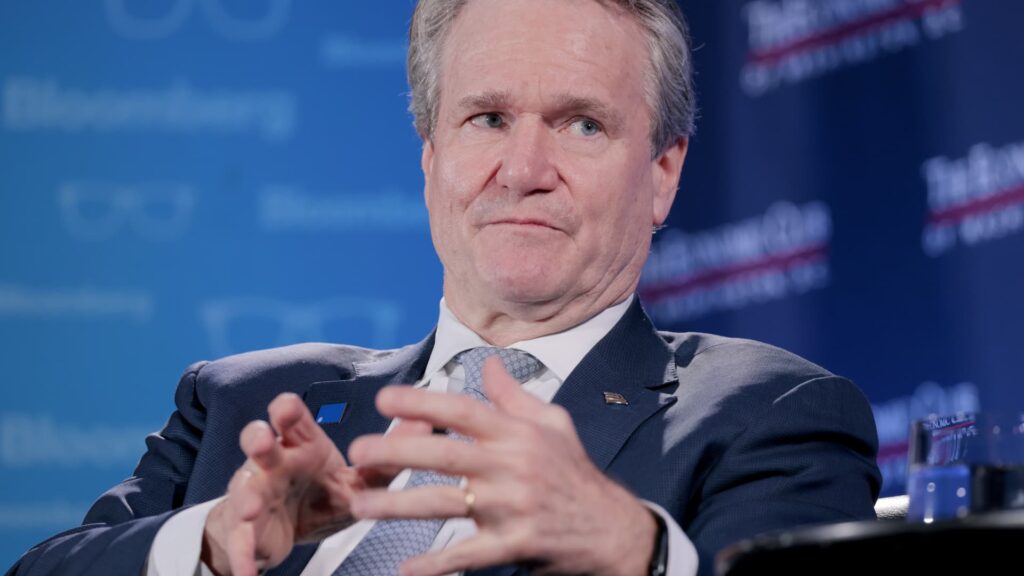
Bank of America recently reported a significant decline in profits, adversely impacted by a hefty $1.2 billion penalty imposed by U.S. regulators. The bank’s third-quarter earnings were notably below expectations, with revenue falling short due to disappointing trading performance. These results led to a nearly 5% drop in the bank’s shares, raising questions about its operational controls and confidence within the financial markets.
| Article Subheadings |
|---|
| 1) Overview of the Financial Outlook |
| 2) Impact of Regulatory Penalties |
| 3) Analyst Reactions and Concerns |
| 4) Management’s Strategy Moving Forward |
| 5) Broader Implications for the Banking Sector |
Overview of the Financial Outlook
Bank of America has reported a disheartening third-quarter financial outlook as it grapples with significant regulatory penalties and disappointing trading revenue. The bank’s latest earnings revealed a 17% decline in profit, totaling $6.93 billion, or 91 cents per share, as opposed to the market expectations of $1.10 per share. Analysts attribute a considerable part of this decline to the unexpected regulatory penalties that undermined the bank’s profitability during the quarter. Revenue figures came in at $30.12 billion, which also fell short of the anticipated $30.69 billion, primarily driven by the weak trading performance.
Specifically, within the trading operations, fixed-income trading revenue saw a staggering 17% decline, landing at $2.55 billion, significantly below the expected estimates. In contrast, equities trading revenue experienced a 10% increase, reaching $2.51 billion, but still failed to meet market expectations. The disappointing trading results have left both investors and analysts concerned about Bank of America’s ability to navigate the current financial landscape effectively.
Impact of Regulatory Penalties
The $1.2 billion penalty imposed on Bank of America by U.S. regulators has sent shockwaves throughout the financial community. This fine arose from the company’s failure to report billions of dollars in suspicious transactions, raising serious concerns regarding its operational controls and compliance practices. Following this announcement, analysts have suggested that the bank’s reputation has been further jeopardized in the eyes of investors, leading to a significant dip in share prices, almost 5% on the day of the announcement.
The implications of this penalty extend beyond immediate financial losses. With regulatory scrutiny intensifying across the banking sector, Bank of America may face additional challenges moving forward in terms of compliance costs and operational adjustments necessary to regain investor confidence. The management’s handling of these regulatory issues will likely play a pivotal role in shaping the bank’s strategic direction and its ability to recover from this setback.
Analyst Reactions and Concerns
Following the release of the disappointing earnings report, various analysts voiced their concerns regarding Bank of America’s performance. Prominent analyst Mike Mayo from Wells Fargo referred to the bank’s capital markets results as “easily worst in class” for the quarter, a statement reflective of the frustration many analysts feel about the bank’s trading performance. Analysts have been particularly vocal about their concerns regarding the sharp decline in share value and whether the management under Brian Moynihan can adequately address these issues.
During the earnings call, several questions were raised regarding the bank’s earlier guidance around compliance costs and future share repurchases, with analysts pressing for more clarity. Another analyst, Vivek Juneja from JPMorgan, remarked on the reputational damage and lack of confidence that could be the result of the penalty, highlighting the broader implications for Bank of America’s future business operations.
Management’s Strategy Moving Forward
In light of the substantial regulatory penalties and poor trading results, Brian Moynihan addressed the concerns in an interview, emphasizing that the bank is committed to remediating the issues at hand. He stated that the bank must first conduct the necessary work to satisfy regulators and expressed caution about speculating on timelines for resolution. His positive outlook on the bank’s course of action reflects a willingness to overcome the challenges faced.
Moynihan’s leadership since taking the helm in 2010 has already had to navigate through tough waters before, particularly relating to mortgage-related abuses from the 2008 financial crisis. Nevertheless, analysts are keenly observing the management’s ability this time around to maintain a steadier course following the recent penalties and disappointing profits. A focus on strengthening compliance measures and improving overall market confidence will likely dictate Bank of America’s operational strategies in the near future.
Broader Implications for the Banking Sector
The ramifications of Bank of America’s recent challenges extend beyond the institution itself, posing broader implications for the overall banking sector. Regulatory scrutiny is expected to increase across other major banks, as seen with the recent examples of mixed performances reported by institutions such as JPMorgan Chase and Goldman Sachs. As regulatory environments tighten, institutions may face similar pressures to ensure compliance and maintain transparency in their operations.
Managing compliance costs and enhancing operational controls have never been more critical for large financial institutions, as evidenced by the immediate financial repercussions suffered by Bank of America. The evolving landscape will also dictate how banks strategize around investment and trading operations, particularly in fluctuating interest rate environments. Investors will be closely monitoring how these institutions adjust their practices to regain trust and align with regulatory expectations.
| No. | Key Points |
|---|---|
| 1 | Bank of America reported a 17% decline in profits, leading to a fall in shares of nearly 5%. |
| 2 | A $1.2 billion regulatory penalty severely impacted the bank’s earnings and reputation. |
| 3 | Analysts expressed strong concern regarding the bank’s trading performance and operational controls. |
| 4 | Bank management is focusing on compliance remediation while facing increased regulatory scrutiny. |
| 5 | Broader implications for the banking sector include heightened scrutiny on compliance and operational transparency. |
Summary
The recent financial results and regulatory challenges faced by Bank of America underline the critical intersection of compliance and operational performance within the banking sector. As U.S. regulators step up scrutiny, the bank’s response will be pivotal not just for its recovery but for setting precedents in industry compliance standards. Consequently, both investors and analysts will be closely watching how Bank of America navigates this turbulent period while striving to regain market confidence.
Frequently Asked Questions
Question: What caused Bank of America’s profit decline in the third quarter?
The profit decline was primarily due to a $1.2 billion penalty imposed by U.S. regulators, coupled with disappointing revenue from trading operations.
Question: How did the market react to Bank of America’s earnings report?
Shares of Bank of America fell almost 5% following the earnings report, reflecting investor concern over the sharp profit decline and regulatory issues.
Question: What measures is Bank of America planning to take in response to regulatory scrutiny?
Bank of America management, including CEO Brian Moynihan, has committed to addressing compliance issues and enhancing operational controls, although specific timelines have not been provided.