
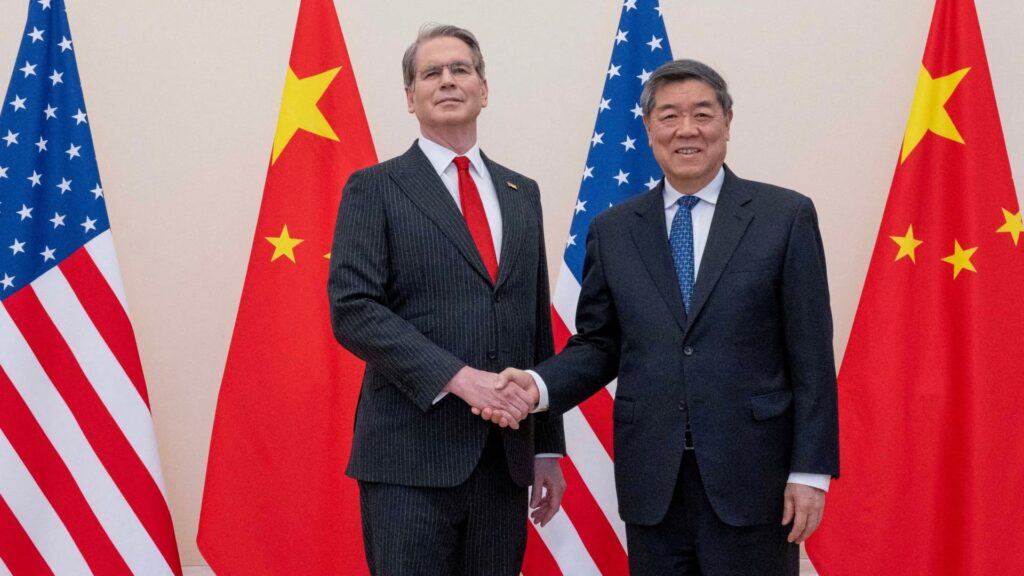
In a pivotal meeting leading up to a highly anticipated summit, U.S. Treasury Secretary Scott Bessent and Chinese Vice Premier He Lifeng discussed critical issues such as artificial intelligence and trade relations. This gathering aimed to set the stage for upcoming discussions between President Donald Trump and President Xi Jinping in Washington, D.C. as tensions continue to rise between the two nations. The conversation underscored an urgent need for mechanisms to address the burgeoning complexities related to AI, amidst a backdrop of intense competition in the tech sector.
| Article Subheadings |
|---|
| 1) Importance of the Bessent-He Meeting |
| 2) AI Concerns and Proposed Mechanisms |
| 3) Trade Talks and Operational Changes |
| 4) Xi’s Upcoming Visit and High-Stakes Context |
| 5) Broader Economic Implications and Future Actions |
Importance of the Bessent-He Meeting
U.S. Treasury Secretary Scott Bessent held a significant meeting with Chinese Vice Premier He Lifeng on a Sunday, marking a vital prelude to the imminent discussions between President Donald Trump and President Xi Jinping. This encounter, defined by the exchange of diplomatic pleasantries and strategic propositions, aims to navigate the turbulent waters of U.S.-China relations, particularly, decisions that directly affect the economic landscape.
During their deliberations, topics spanning from trade policies to the implications of artificial intelligence (AI) were addressed. Bessent emerged stating the meeting’s success and reinforcing the necessity for sustained dialogue to tackle present and future challenges. The dialogue not only underlined the commitment from both sides to enhance bilateral relations but also illustrated the urgency surrounding discussions prior to significant leadership summits.
AI Concerns and Proposed Mechanisms
A significant aspect of the Bessent-He talks was the discussion regarding artificial intelligence, a technology that has seen unprecedented growth but also raises complex questions regarding safety and national security. Bessent indicated the U.S. proposal to establish a “U.S.-China AI Dialogue,” focusing on creating a notification mechanism for incidents involving AI that could potentially escalate to national security concerns.
This proposal reflects an understanding that transparency in AI interactions is critical for the world’s leading powers, as both nations grapple with how AI innovation could impact geopolitical dynamics. Bessent highlighted,
“We think that just like with any cross-border activity, moving from opaque to more transparency between the number one and the number two AI powers in the world is very important.”
This pursuit for clarity aims to reduce misconceptions and improve cooperation in a field that is rapidly evolving, thereby safeguarding mutual interests.
Trade Talks and Operational Changes
In addition to AI discussions, the meeting touched significantly on trade relations. U.S. Trade Representative Jamieson Greer announced that the U.S. and China have “operationalized” the U.S.-China Board of Trade, which aims to facilitate more nuanced trade negotiations. Greer elaborated that this initiative seeks to identify a “critical mass of goods” to be considered separately in future trade measures, should tensions escalate.
These goods could encompass a variety of sectors, ranging from consumer products and low-tech items from China to energy, agricultural products, and potentially medical devices from the U.S. This strategic dialogue is essential as it lays groundwork for future negotiations, possibly averting trade skirmishes by allowing both sides to address concerns through targeted sectors.
Xi’s Upcoming Visit and High-Stakes Context
The talks between Bessent and He come on the eve of President Xi Jinping‘s visit to Washington, his first during Trump’s second term. The timing of these meetings is crucial, especially following President Trump’s previous trip to Beijing amid rising tensions between the two largest economies in the world. This upcoming summit is poised to be a focal point for economic dialogue, where unresolved issues regarding trade and tariffs will be central to discussions.
The backdrop for these high-stakes conversations is significant, as reports indicate that leading executives, including CEOs from major financial institutions and tech companies, will be present at state dinners during Xi’s visit. The anticipated turnout includes industry leaders such as Jamie Dimon of JPMorgan Chase and Jane Fraser of Citigroup, as well as tech pioneers like Sam Altman from OpenAI and Jensen Huang from Nvidia. Their presence underscores the importance of collaboration and dialogue at the highest levels, especially as the U.S. and China seek to re-align their economic trajectories amidst competition and potential conflict.
Broader Economic Implications and Future Actions
As the summit approaches, it is expected to cover a range of pressing topics, including ongoing trade dynamics that have evolved since the last discussions. A notable point of contention is the current U.S.-China trade truce, which includes a variety of commitments from both sides. The truce encompasses agreements on rare-earth exports by China and U.S. agricultural purchases. However, the existing arrangement also allows for adjustments, with Washington’s suspension of heightened reciprocal tariffs on Chinese imports set to expire on November 10.
This fiscal adjustment not only has implications for trade practices but also sets the stage for increased dialogue surrounding technology regulations and economic policies that could define the next phase of U.S.-China relations. Ongoing discussions will seek to address these critical issues, paving the way for potential solutions that could benefit both economies while fostering greater stability in a globally interconnected market.
| No. | Key Points |
|---|---|
| 1 | U.S.-China talks focus on AI and trade ahead of the upcoming summit. |
| 2 | Bessent proposed a notification mechanism for AI incidents. |
| 3 | Operational changes in the U.S.-China Board of Trade could mitigate future trade disputes. |
| 4 | Xi’s visit signifies growing collaboration amid economic tensions. |
| 5 | Trade truce and tariffs will be pivotal discussion points during the summit. |
Summary
The meeting between Secretary Scott Bessent and Vice Premier He Lifeng serves as a crucial step in mitigating U.S.-China tension during a tumultuous era marked by rapid technological advancement and economic rivalry. With the establishment of proposed frameworks for AI dialogue and strategic trade negotiations, both nations appear to be laying the groundwork for more effective cooperation in fields critical to the global economy. The upcoming summit symbolizes a pivotal junction for both leaders to confront major issues that threaten to influence their bilateral relationship and economic stability.
Frequently Asked Questions
Question: What were the main topics discussed during the Bessent-He meeting?
The meeting focused on artificial intelligence, trade relations, and the establishment of a U.S.-China AI Dialogue geared towards enhancing transparency and safety in technology interactions.
Question: Why is President Xi Jinping’s upcoming visit significant?
Xi’s visit marks his first during Trump’s second term and is significant as it aims to address growing economic tensions amid U.S.-China disparities and seek resolutions that can foster collaboration.
Question: What is the status of the current U.S.-China trade truce?
The current trade truce includes commitments from China regarding rare-earth exports and agreements on U.S. agricultural purchases, with key tariff adjustments set to expire on November 10.