
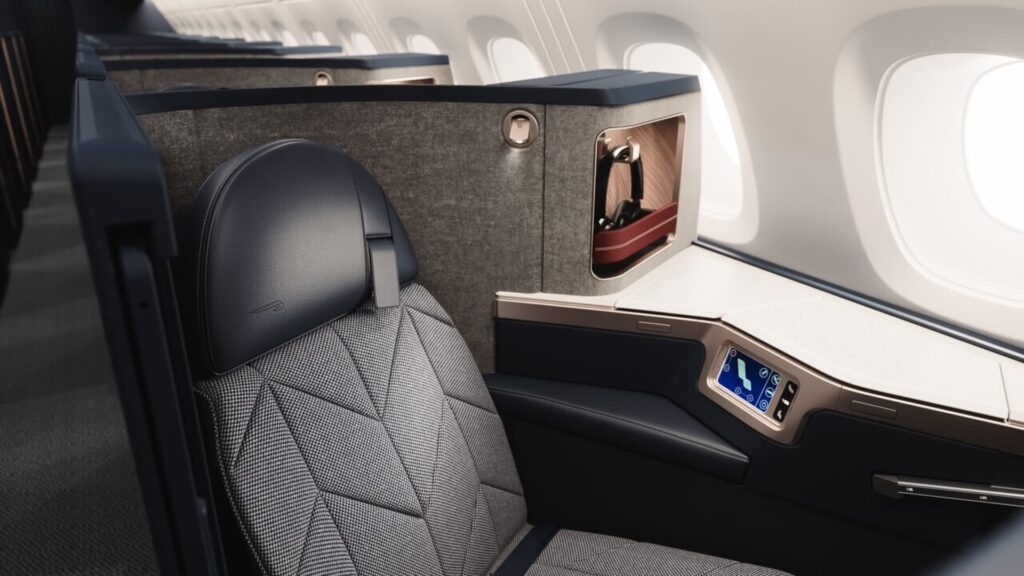
British Airways has announced a significant transformation in its long-haul travel accommodations, unveiling plans to create what it describes as the “world’s largest” business-class cabin aboard its Airbus A380 aircraft. This ambitious overhaul involves the removal of numerous economy seats to instead enhance the comfort and luxury offerings for high-spending travelers. The changes reflect a broader trend in the airline industry, wherein carriers are increasingly focusing their investments on premium seating options to attract more affluent passengers.
| Article Subheadings |
|---|
| 1) Major Changes to the Aircraft Configuration |
| 2) The Trend Towards Luxury Seating |
| 3) Strategic Implications for British Airways |
| 4) Market Responses and Competitor Moves |
| 5) The Future of the A380 in Air Travel |
Major Changes to the Aircraft Configuration
The most notable change British Airways is making involves its Airbus A380, the largest passenger aircraft in the world. The airline plans to reconfigure this aircraft to include a massive 106-seat business-class cabin, an increase from the current 97 seats. This substantial shift highlights the airline’s commitment to catering to business travelers who prioritize comfort and luxury during their journeys. Furthermore, first-class accommodations will be refreshed, featuring 12 suites instead of the previous 14. While premium economy seats will grow to 84 from 55 in the revised setup, the number of standard economy seats will decrease sharply from 303 to just 215.
British Airways is betting on the appeal of exclusive travel experiences, recognizing that high-spending customers are willing to invest more for enhanced comfort. The new business-class suites will be outfitted with sliding doors, ensuring privacy for passengers on the upper deck of the aircraft. This redesign marks an important shift in the airline’s strategy, which aims to prioritize the provisioning of luxurious travel options over a higher volume of economy seats.
The Trend Towards Luxury Seating
In recent years, airlines around the globe have increasingly focused on expanding their premium seating offerings, investing millions of dollars to modernize cabin configurations. The surge in demand for more spacious and luxurious travel options is ongoing as travelers assert their appetite for comfort, particularly on long-haul flights. As a strategic response, British Airways is making significant capital investments to enhance passenger experience and ensure that its premium seating remains competitive.
British Airways isn’t alone in this trend; its joint-venture partner is American Airlines, which recently introduced a 70-seat business-class configuration on its largest Boeing aircraft. Airlines recognize that affluent customers are willing to pay a premium for upgraded service, including enhanced legroom and other additional amenities. Such seats often carry substantial price tags, illustrating the revenue potential that luxurious travel options can generate. For example, the cost for extra legroom on transatlantic flights can exceed $200 per leg, while the prices for premium economy can soar over $1,000 depending on booking timing.
Strategic Implications for British Airways
The extensive transformation within British Airways appears to be part of a larger strategy aimed at improving its overall brand image and service offerings. The airline understands that the premium segment of air travel is not only lucrative but also critical for its market positioning. By focusing on the more affluent travelers, British Airways aims to garner a willing-to-pay clientele that prioritizes comfort and luxury over cost, thereby increasing profitability.
Additionally, this reconfiguration of its cabin aligns with the airline’s overall operational strategy at its major hub in London Heathrow. The enhancements in service, which extend to lounges and ground services, add to a comprehensive approach for customer satisfaction. As airline competition intensifies, providing premium experiences could be a defining factor that differentiates British Airways from its competitors, positioning it advantageously in an evolving travel market.
Market Responses and Competitor Moves
As airlines have been shifting their focus towards premium offerings, the responses from competitors and market analysts have been closely monitored. Industry experts observe that this shift reflects a growing trend among airlines to revamp their fleet configurations, adapting to the evolving demands of travelers who are increasingly seeking luxury accommodations.
“There is absolutely a customer who wants this and is prepared to pay a premium for it,”
emphasized a prominent industry executive, highlighting the financial viability of such investments.
The reaction from other airlines has been telling, as many have opted to introduce similar upgrades in their own fleets. Qantas, for example, has reported growing interest among customers for high-end options on long-haul flights. The competitive landscape suggests that as each airline seeks to outdo the others in catering to affluent travelers, more carriers are likely to modify their seats and services to capture their share of this lucrative market.
The Future of the A380 in Air Travel
British Airways’ commitment to the Airbus A380 coupled with its overhaul strategy serves as an intriguing case in the ongoing evolution of the aviation industry. This investment in refurbishing its fleet highlights the potential demise of the aircraft type seen by some analysts, particularly as several airlines have already chosen to retire or downsize their A380 services in favor of more efficient, smaller aircraft. Yet, this bold investment suggests that British Airways sees a continued demand for this large aircraft, particularly among high-yield passengers who are willing to pay more for comfort.
Despite ongoing challenges in the airline industry, British Airways remains steadfast in its commitment to enhancing the travel experience on its A380s, viewing this cabin overhaul as a means of reaffirming its position in a competitive landscape. Fulfilling passenger expectations for luxury, comfort, and service could ultimately determine the future success of both the airline and the A380 itself in a market that increasingly prioritizes efficiency.
| No. | Key Points |
|---|---|
| 1 | British Airways is creating the world’s largest business-class cabin on its A380, increasing seating capacity to 106. |
| 2 | The redesigned cabin prioritizes luxury by replacing standard economy seats for enhanced business-class experiences. |
| 3 | Airlines are investing significantly to meet the rising demand for premium seating options among affluent travelers. |
| 4 | British Airways aims to enhance its brand image and improve customer satisfaction through this strategic overhaul. |
| 5 | The future of the A380 may be promising as major airlines continue to invest in its refurbishment. |
Summary
In summary, British Airways is not just modernizing its fleets; it is strategically positioning itself in the competitive marketplace by embracing the demand for luxury travel. The significant investment into business-class accommodations illustrates the airline’s commitment to enhancing the passenger experience while ensuring profitability. As airlines adapt to evolving consumer preferences, such initiatives may shape the future of long-haul air travel for years to come.
Frequently Asked Questions
Question: What changes are being made to British Airways’ A380 cabin configuration?
British Airways will increase its A380 business-class seats to 106 and significantly reduce standard economy seats from 303 to 215, while the premium economy will also see an expansion.
Question: Why are airlines focusing more on premium seating options?
Airlines are responding to rising demand among travelers willing to pay extra for more comfortable and spacious seating, thus making substantial investments in premium configurations.
Question: What does this mean for the future of the A380 aircraft?
The overhaul and continued investment in the A380 by airlines like British Airways signal that there remains a market for larger aircraft among high-paying passengers despite others retiring them.