
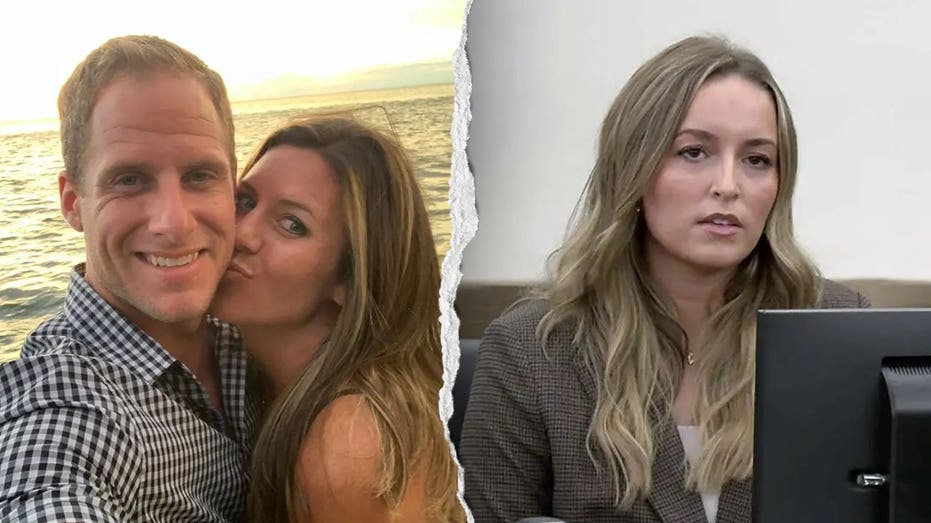
Alleigha Botner testified during the Ohio murder trial of former “American Idol” contestant Caleb Flynn that their messages about his wife’s death were not understood as a plan to kill her. Prosecutors presented messages exchanged before Ashley Flynn was shot, including statements about becoming free and taking action. The defense argued the exchanges concerned divorce and portrayed Botner as pressuring Flynn to leave his marriage. Testimony later turned to phone data that investigators say may help establish a timeline before Ashley Flynn’s death.
| 1) | Messages cited as evidence of motive |
|---|---|
| 2) | The final exchanges before the shooting |
| 3) | Defense interpretation of the affair |
| 4) | Botner’s account after Ashley Flynn’s death |
| 5) | Digital evidence and the emerging timeline |
Messages cited as evidence of motive
Botner told jurors that she and Flynn exchanged messages about Ashley Flynn months before the February 2026 killing. She became emotional while reading one message in which she said she wanted Ashley dead, followed by Flynn’s response that he felt the same. Prosecutors presented the exchange as evidence of a possible motive and of the relationship’s emotional intensity.
“I want to kill her, Caleb.”
Botner said she did not believe Flynn literally intended to carry out violent statements. She testified that she thought he was incapable of such an act, a point the defense used to challenge the prosecution’s interpretation of the messages.
The final exchanges before the shooting
Prosecutors then examined messages exchanged during the night before Ashley Flynn was killed at her Ohio home. Botner said she repeatedly asked whether Flynn was prepared to leave his wife and whether his actions would match his promises. The messages referred to the following day as significant and included expressions of fear, commitment and anticipation.
Botner testified that she told Flynn he was about to be free. She said he replied that he chose her and that she was enough for him. Prosecutors argued that the language could indicate preparation for a murder, while the defense maintained it described Flynn’s expected separation from Ashley.
Defense interpretation of the affair
Defense attorney Emily Smith questioned Botner about what she believed Flynn meant when he discussed freedom, taking action and leaving Ashley. Botner agreed that she understood those references as plans for divorce rather than murder. She also testified that her research into divorce proceedings and her deletion of messages were intended to conceal the affair, not to hide a homicide.
Smith presented Botner’s own messages as evidence that she had repeatedly urged Flynn to end his marriage. The defense cited several deadlines she gave him after earlier promises went unfulfilled, along with messages expressing anger, jealousy and frustration. Botner acknowledged pressing Flynn to leave Ashley and threatening to end their relationship if he did not do so.
Botner’s account after Ashley Flynn’s death
Botner testified that she went to Ashley’s parents’ home after the shooting, where church staff had gathered. She said Flynn hugged her when he arrived and made a remark suggesting that events had not unfolded as they had expected. Botner said the comment heightened her suspicions as Flynn described hearing a gunshot, finding blood and discovering Ashley inside the home.
Ashley Flynn, a substitute teacher and volleyball coach in Tipp City, was found dead at the residence. Flynn is accused of killing her and staging the scene to resemble a break-in. The allegations remain matters for the jury to determine as the trial continues.
Digital evidence and the emerging timeline
After Botner left the witness stand, Ohio Bureau of Criminal Investigation digital forensics examiner Joseph Wilhelm described data recovered from Flynn’s iPhone. Investigators ultimately extracted a complete copy of the device after earlier attempts failed, then reviewed browser history, location information, health data, application activity and other records.
Wilhelm testified that ChatGPT was removed from the phone on February 15, while GroupMe and Instagram were deleted shortly after 1 a.m. on February 16. He also discussed Apple Watch activity, AirPods connections and phone-location records leading up to Flynn’s 911 call. Jurors heard that no text messages between Flynn and Ashley were found on the device. Prosecutors also played two AI-generated songs linked to Flynn’s relationship with Botner and to lyrics saved in the phone’s notes application.
| Number | Key Point |
|---|---|
| 1 | Botner described violent messages but said she did not believe Flynn meant them literally. |
| 2 | The defense argued that references to freedom concerned divorce. |
| 3 | Botner acknowledged repeatedly urging Flynn to leave his wife. |
| 4 | Investigators presented phone, wearable-device and application data. |
| 5 | The trial is continuing, and the jury must assess competing interpretations of the evidence. |
Summary
The testimony presented competing accounts of the relationship between Flynn and Botner. Prosecutors emphasized violent language, final messages and digital activity before Ashley Flynn’s death, while the defense argued that the same evidence reflected an affair and plans for divorce. Further testimony is expected to address the phone data and the events surrounding the 911 call.
Frequently Asked Questions
What did Alleigha Botner testify about the messages?
She said the messages included violent statements about Ashley Flynn but testified that she understood references to freedom and action as relating to divorce, not murder.
What is the defense arguing?
The defense is arguing that the affair was emotionally volatile, that Botner pressured Flynn to leave his wife and that her deleted messages were intended to conceal the relationship.
What digital evidence was presented?
An examiner described recovered phone data, including location records, application activity, health information, wearable-device activity, deleted applications and files found on Flynn’s phone.