
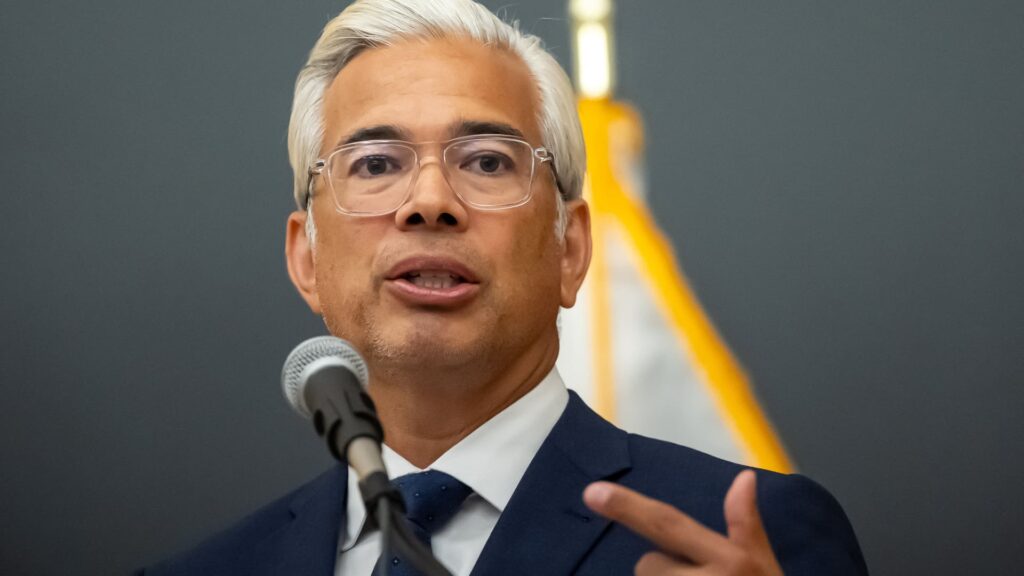
California Attorney General Rob Bonta has underscored the urgency and seriousness surrounding the lawsuit filed by several states against the proposed merger of Paramount and Warner Bros. Discovery. The group, which includes 12 states, argues that the merger would significantly harm competition within the entertainment sector. Bonta indicated that negotiations for possible structural remedies are on the table as the parties prepare for a trial set for March 2024.
| Article Subheadings |
|---|
| 1) Lawsuit Details and State Participation |
| 2) Implications of the Merger on Market Competition |
| 3) The Role of the Clayton Antitrust Act |
| 4) Paramount’s Defense and Future Plans |
| 5) Potential Outcomes and Next Steps |
Lawsuit Details and State Participation
In July, a coalition of attorneys general from 12 states, including Arizona, Colorado, Connecticut, Massachusetts, Minnesota, Nevada, New Jersey, New Mexico, New York, Oregon, and Washington, filed a lawsuit against the planned merger of Paramount and Warner Bros. Discovery. This legal action is predicated on concerns regarding market dominance and anticompetitive behavior in the entertainment industry. The states argue that the merger could lead to a situation where the combined entity would control a significant portion of the film and television programming market. The lawsuit aims to protect consumers and maintain competition within the growing media landscape.
With Rob Bonta spearheading the case, the lawsuit highlights specific markets where antitrust violations are anticipated. During an interview, Bonta emphasized that the focus should not be on the broader context of the streaming market but specifically on the allegations of market manipulation and anticompetitive practices stemming from the merger. The states involved are advocating for a resolution that prioritizes consumer interests and regulatory compliance, demonstrating their commitment to maintaining competitive markets.
Implications of the Merger on Market Competition
The proposed merger between Paramount and Warner Bros. Discovery is seen as having profound implications for market competition within the entertainment industry. Bonta argues that the merger would create a “presumptively illegal market concentration,” allowing the newly formed company to dominate film and television markets drastically. The combined entity would control nearly one-third of both the film and basic cable television segments, raising serious concerns among regulators and consumers alike.
Industry experts believe that this consolidation could lead to reduced choices for consumers, impacting not only subscription prices but also the diversity of content available. As streaming platforms continue to grow in viewership, regulators remain wary of monopolistic practices that could stifle innovation and discourage competition. Bonta has challenged the argument presented by Paramount, which claims that market contraction due to streaming trends should be considered in the merger’s evaluation. Instead, he insists that the legal merits of the case should focus on existing laws prohibiting overwhelming market control.
The Role of the Clayton Antitrust Act
Central to the lawsuit filed by Bonta and the coalition of states is the Clayton Antitrust Act, a federal law enacted over a century ago to prohibit anticompetitive mergers and acquisitions. The Act aims to protect consumers from market monopolization, ensuring fair competition and preserving market diversity. Bonta has indicated that the legal arguments presented in the suit directly rely on the provisions of this landmark legislation.
According to Bonta, the allegations made against the merger hinge on well-established parameters of antitrust law, with clear definitions around what constitutes anti-competitive behavior. He noted that there are grounds to believe the merger would violate Section 7 of the Act, which prohibits acquisitions that may substantially lessen competition or tend to create a monopoly. The focus on a disciplined legal approach highlights the seriousness with which states are pursuing their case, showcasing an in-depth understanding of antitrust regulations and market dynamics.
Paramount’s Defense and Future Plans
Despite the substantial opposition to the merger, Paramount has firmly defended its position. The company has described the lawsuit as a mischaracterization of the current competitive landscape within the entertainment industry. Paramount’s leadership has expressed confidence in the merger’s potential, emphasizing that it would enable innovation and improve product offerings for consumers.
Lead trial attorney Jeffrey Kessler stated that the company would vigorously defend against the challenge posed by the states. In earlier statements, he noted the firm belief that the merger aligns with sound competition and policy frameworks and that it ultimately serves consumer interests. Paramount has also indicated its willingness to pursue legal avenues all the way up to the Supreme Court if necessary to facilitate the merger, illustrating the company’s commitment to its strategic goals.
Potential Outcomes and Next Steps
As both parties prepare for a trial scheduled for March 2024, speculation abounds regarding the potential for a settlement. Bonta has acknowledged that discussions for a resolution could take place, stating, “Coming to the table has always been on the table. If David Ellison and Paramount want to talk in good faith, we want to have that conversation.”
The possibility of reaching a settlement raises questions about what structural remedies might be necessary to alleviate antitrust concerns. Any resolution would aim to ensure that competition is maintained while allowing Paramount the opportunity to pursue its strategic initiatives. As the entertainment industry continues to evolve, all eyes are on the trial proceedings, with implications reaching beyond the two entities to influence the regulatory landscape of media mergers in the future.
| No. | Key Points |
|---|---|
| 1 | The lawsuit against the proposed merger includes 12 states and focuses on competition concerns. |
| 2 | The merger is projected to dominate a significant portion of the film and TV markets. |
| 3 | The Clayton Antitrust Act is central to the case, emphasizing the legal framework against monopolistic practices. |
| 4 | Paramount is preparing a strong defense and exploring all legal avenues to facilitate the merger. |
| 5 | The trial is scheduled for March 2024, with the potential for settlement talks to mitigate litigation. |
Summary
The proposed merger between Paramount and Warner Bros. Discovery has ignited a contentious antitrust lawsuit, led by California Attorney General Rob Bonta and supported by 12 other states. With concerns over market concentration and its implications for competition in the entertainment industry, both parties are navigating complex legal arguments in preparation for a March trial in 2024. As discussions continue about potential settlements, the outcome could redefine the regulatory landscape of media mergers and acquisitions in the future.
Frequently Asked Questions
Question: What is the basis for the lawsuit against Paramount’s merger with Warner Bros. Discovery?
The lawsuit is based on concerns about anticompetitive practices and market concentration that could harm consumers by reducing choices and increasing prices in the entertainment sector.
Question: What are the implications of the Clayton Antitrust Act in this case?
The Clayton Antitrust Act prohibits mergers that may substantially lessen competition or create monopolies, serving as a legal foundation for the states’ challenge to the proposed merger.
Question: What could be the next steps if the trial does not result in a settlement?
If the trial does not lead to a settlement, the case could potentially escalate to higher courts, including the Supreme Court, if Paramount chooses to pursue further legal action to secure the merger.