
A California lawsuit is challenging a new parole board policy that could allow prisoners serving life without parole to be considered for resentencing or clemency. Former Sacramento District Attorney Anne Marie Schubert, victims’ families, and nonprofit groups argue that the policy exceeds the board’s legal authority and undermines the finality of criminal judgments. The policy is scheduled to take effect in October 2026.
The Criminal Justice Legal Foundation and its coalition filed the petition in Sacramento Superior Court on July 15, 2026. The California Office of Administrative Law approved the regulations on July 9. The parole board says existing statutes allow it to evaluate cases for possible recommendations to a sentencing court or the governor.
| 1) | Lawsuit challenges parole board authority |
| 2) | Policy could affect life-without-parole prisoners |
| 3) | Victims’ families seek finality |
| 4) | The Peterson case remains central |
| 5) | The board defends its statutory interpretation |
Lawsuit challenges parole board authority
Anne Marie Schubert, now president and chief executive of the Criminal Justice Legal Foundation, says the California Board of Parole Hearings used administrative rulemaking to create a resentencing and clemency review system that only the legislature should establish.
The challengers argue that the board’s authority concerns parole, while people sentenced to life without parole are not eligible for parole under their judgments. They also say the policy conflicts with sentencing laws approved through ballot initiatives and with Marsy’s Law, the constitutional victims’ rights measure that includes protections related to the finality of judgments.
“The main primary arguments deal with the fact that one, they don’t have the legal authority to do this, that this is an administrative bureaucratic agency that’s trying to rewrite the legislature.”
Policy could affect life-without-parole prisoners
The policy would allow the board to review cases involving people sentenced to life without the possibility of parole and decide whether to recommend resentencing or commutation. A recommendation would not automatically release anyone, but it could create a route for cases to reach a sentencing court or the governor.
Anne Marie Schubert said the potential group includes prisoners convicted of especially serious crimes, including killings of police officers, murders of children, mass shootings, and serial killings. She cited a Fresno case from the early 1990s involving a defendant who killed 10 people and pleaded to life without parole. She also pointed to David Hill, convicted in the 2004 killing of San Francisco Police Officer Isaac Espinoza and the shooting of Espinoza’s partner, and Darryl Lamar Collins, released under a youthful offender law before killing his girlfriend, Fatima Johnson, less than a year later.
Victims’ families seek finality
Supporters of the lawsuit say the process could force victims’ relatives to revisit traumatic cases through repeated hearings and reviews. They argue that families accepted life without parole as a final sentence and should not have to monitor a continuing possibility of release.
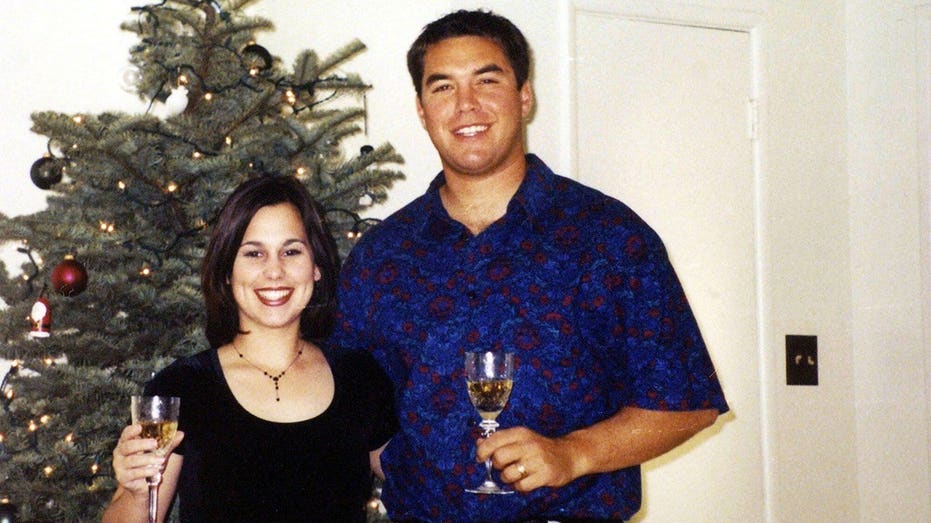
Sharon Rocha, the mother of Laci Peterson, said her daughter was eight months pregnant when she and her unborn son, Conner, were killed. She said the family believed certainty had been restored after Scott Peterson was resentenced from death to life without parole.
“Victims should not have to spend the rest of their lives wondering whether the person responsible will receive another opportunity for release. Justice demands finality.”
The Peterson case remains central
Laci Peterson disappeared from her Modesto home on Christmas Eve in 2002. Her remains and those of Conner were found months later in San Francisco Bay. Scott Peterson was convicted in 2004, and the California Supreme Court later overturned his death sentence while upholding the murder convictions. He continues to maintain his innocence and challenge the conviction in court.
Laci’s close friend Kim Juarez said the family and friends had accepted the life-without-parole sentence because they understood it to mean Scott Peterson would never leave prison. She said the possible review pathway revived fears that the case would remain unresolved for those closest to Laci.
The board defends its statutory interpretation
In a response to a concerned member of the public, the parole board cited California Penal Code sections 1172.1 and 4801. The board said those provisions do not expressly exclude people serving life without parole from consideration for recommendations involving commutation or resentencing.
The challengers dispute that reading and say the board is attempting to achieve through regulation what lawmakers could not enact legislatively. Anne Marie Schubert cited unsuccessful 2025 Senate Bill 672, which sought to expand eligibility for some younger prisoners serving life without parole. She said the new policy is broader because it is not limited to people who committed crimes before age 26. Neither the parole board nor the California Department of Corrections and Rehabilitation provided comment on the lawsuit.
| No. | Key Point |
|---|---|
| 1 | The lawsuit seeks to block a policy scheduled to take effect in October 2026. |
| 2 | The policy could permit reviews for resentencing or clemency in life-without-parole cases. |
| 3 | Victims’ families argue the process threatens legal protections for finality. |
| 4 | The parole board says state law gives it discretion to evaluate these cases. |
Summary
The court challenge will determine whether California’s parole board can create a review process for prisoners serving life without parole without specific legislative authorization. The case pits the board’s interpretation of state law against victims’ families who say the policy threatens the finality of sentences and could reopen long-settled trauma.
Frequently Asked Questions
What does the challenged policy do?
It allows the parole board to evaluate some life-without-parole cases for possible recommendations involving resentencing or clemency.
Who filed the lawsuit?
The Criminal Justice Legal Foundation filed the case with victims’ families and nonprofit groups in Sacramento Superior Court on July 15, 2026.
Why are victims’ families opposing the policy?
They say life without parole was intended to provide finality and that additional reviews could force families to repeatedly relive traumatic crimes.
When is the policy expected to take effect?
The regulations are scheduled to take effect in October 2026, unless the legal challenge or another action prevents implementation.