
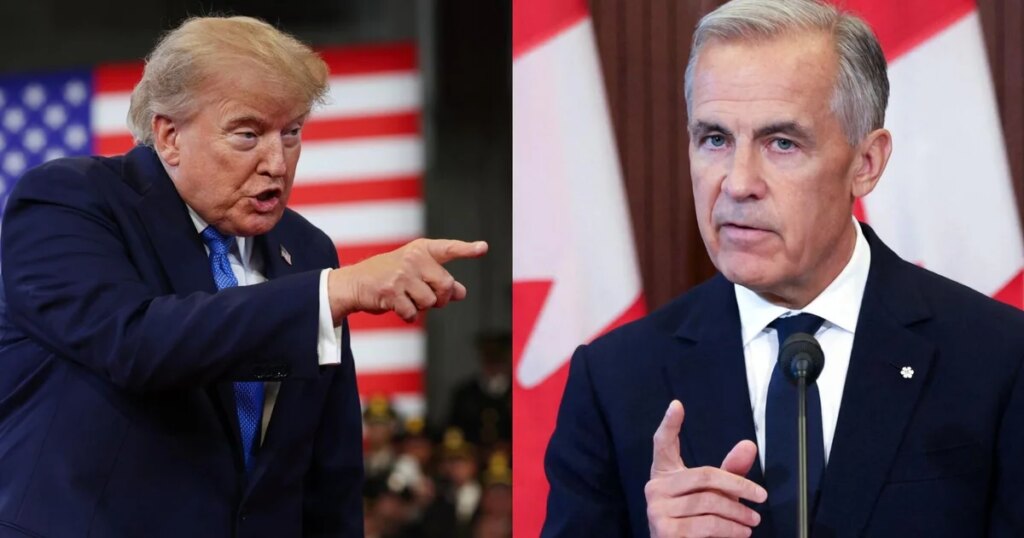
In a significant escalation of trade tensions between Canada and the United States, Canadian officials have announced retaliatory tariffs of up to 50% on $20 billion worth of American goods. These tariffs aim to pressurize key U.S. states and are viewed as a strategic response to the Trump administration’s imposition of similar tariffs on Canadian imports. Economists caution that the renewed trade war could inflict economic damages on both nations, particularly effecting manufacturing states in the Midwest and Northeast. This article delves into the implications of these tariffs, their effects on state economies, and what the future may hold for U.S.-Canada trade relations.
| Article Subheadings |
|---|
| 1) Overview of Canada’s Tariffs on U.S. Goods |
| 2) Targeted States and Economic Impact |
| 3) Objectives Behind the Tariffs |
| 4) Broader Implications on Trade Relations |
| 5) Potential Economic Consequences for Canada |
Overview of Canada’s Tariffs on U.S. Goods
In a calculated move, Canada has introduced retaliatory tariffs targeting over 800 types of American goods that will take effect on September 8. This decision followed the Trump administration’s controversial announcement of 50% tariffs on Canadian imports, particularly in the steel and automotive sectors. As articulated by Melanie Joly, Canada’s Minister of Industry, the tariffs are designed to strategically apply pressure on U.S. states to reconsider their stance on trade policies potentially detrimental to Canada. Observers note that such moves signify a continuing trade war characterized by reciprocal actions from both sides, with substantial ramifications for cross-border commerce.
Targeted States and Economic Impact
The retaliatory tariffs are strategically structured to target key U.S. states, particularly those that are politically sensitive and face competitive midterm elections. Economists suggest that states like Michigan and Indiana, which rely heavily on manufacturing, will bear the brunt of these new tariffs. Industries affected include those producing American-made appliances, steel, and aluminum products. In contrast, while states like North Dakota significantly rely on trade with Canada, their primary exports, including soybeans and wheat, are exempt from these tariffs.
Michigan, Indiana, and similar states with robust manufacturing sectors may experience greater economic pressures due to the nature of the tariffs. This reflects a conscious decision by Canadian officials to inflict maximum political and economic pressure on regions historically aligned with the current U.S. administration. The White House has also pointed to discussions and sentiments that emphasize the Midwest’s suffering under what they perceive to be “unfair foreign trade practices,” further complicating the situation.
Objectives Behind the Tariffs
Canada’s decision to enact these tariffs is not just a retaliation, but also serves broader objectives of protecting domestic industries and shifting consumer behavior. By making U.S. products more expensive for Canadian consumers, officials hope to encourage the purchase of Canadian-made goods. Melanie Joly urged Canadians to choose local products, emphasizing the protective benefits for local jobs as well as the economic implications of supporting domestic producers.
The Canadian government expects to see certain changes in consumer behavior, particularly in the furniture, clothing, and dairy sectors. Moreover, the political timing of these tariffs—less than two months before the U.S. general elections—has not gone unnoticed, raising questions of whether they aim to influence American politics while also managing to fortify Canada’s economic interests.
Broader Implications on Trade Relations
The ongoing trade dispute could destabilize the historically cooperative U.S.-Canada trade relationship. This latest round of tariffs, particularly those impacting agricultural products like dairy and lobsters, reflects a tactical approach to target specific states with political significance. Ed Gresser from the Progressive Policy Institute pointed out that these decisions might not only impact economic aspects but also emotional ties to products native to specific locations, enhancing the gravity of the situation.
As Canada imposes tariffs on U.S. goods, the expectation is that negotiations for a new trade deal would be pursued to alleviate the ongoing tensions. However, the approach taken—a balanced assortment of tariffs affecting states with diverse political affiliations—seems calculated to maximize political fallout in the U.S., demonstrating that Canada is actively engaging in both an economic and political strategy amidst a contentious climate.
Potential Economic Consequences for Canada
Although Canada’s tariffs are oriented toward pressuring the United States, they could inadvertently weigh heavily on the Canadian economy as well. An analysis from Oxford Economics indicated potential ramifications such as increased inflation, projected to rise by 0.3 percentage points, and a corresponding decrease in economic growth as businesses adapt to the new environment. Acknowledged by Canadian officials, the new tariffs might present hardships for domestic businesses that rely on U.S. imports.
To mitigate these effects, the Canadian government plans to introduce a series of measures, including business loans and unemployment assistance, suggesting a recognition of the precarious nature of this trade conflict. Patty Hajdu, Canada’s Minister of Jobs and Families, expressed confidence in the resilience of Canadians during challenging times, emphasizing unity and solidarity to weather the impending economic storm.
| No. | Key Points |
|---|---|
| 1 | Canada has announced retaliatory tariffs of up to 50% on $20 billion of American goods. |
| 2 | The tariffs will primarily impact politically sensitive states like Michigan and Indiana. |
| 3 | Canada aims to protect domestic industries and influence consumer choices favoring local products. |
| 4 | The timing of the tariffs could strategically impact U.S. political dynamics ahead of elections. |
| 5 | Potential economic consequences for Canada may include increased inflation and economic growth drag. |
Summary
The imposition of retaliatory tariffs by Canada not only highlights ongoing tensions in U.S.-Canada trade relations but also reflects a complex interplay between economic and political strategies. As both nations navigate this increasingly contentious environment, the potential repercussions could lead to significant impacts on businesses and consumers alike. The future of trade relations between the two countries hangs in the balance, contingent upon further negotiations and an evolving international trade landscape.
Frequently Asked Questions
Question: What types of American goods are affected by Canada’s new tariffs?
The tariffs target more than 800 types of American goods, including products such as steel, aluminum, appliances, and dairy products, with rates varying up to 50%.
Question: Which U.S. states are likely to be most affected by these tariffs?
States with strong manufacturing sectors like Michigan and Indiana are expected to be significantly impacted, alongside agricultural states such as Wisconsin and Vermont due to tariffs on dairy products.
Question: What actions is Canada taking to protect its economy amid these tariffs?
The Canadian government has outlined plans to provide business loans and unemployment support to mitigate potential economic hardships caused by the new tariffs.