
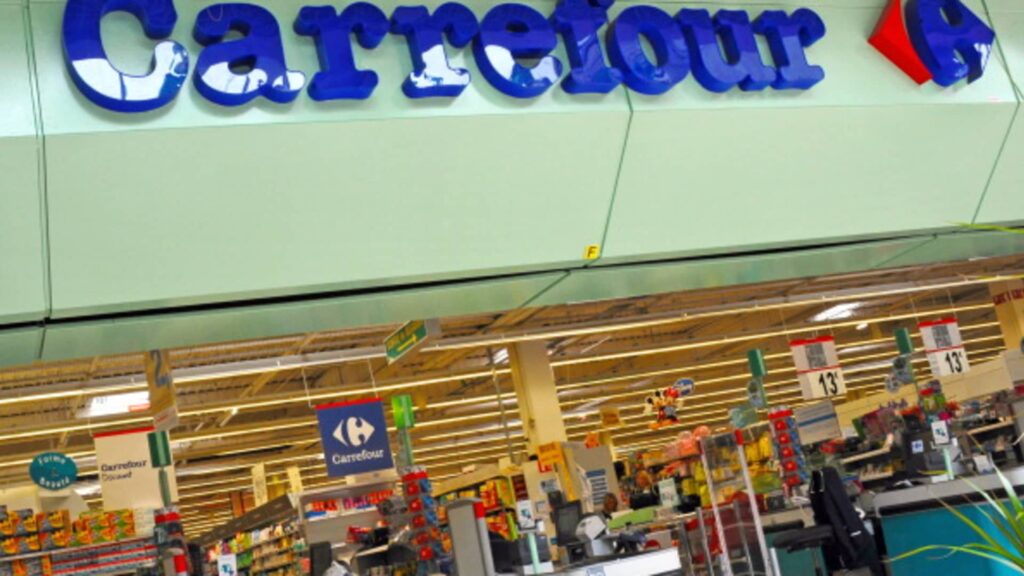
Shares of Carrefour, the French supermarket giant, experienced a dramatic fall of 14% on Wednesday following the company’s revised profit forecast for the year. The adjustment was largely prompted by what corporate officials termed “an unprecedented situation in France,” driven by a surge in social unrest and deteriorating consumer conditions. This upheaval has made significant impacts on public consumption patterns and store operations, leaving Carrefour to navigate through a challenging economic landscape ahead of the crucial year-end shopping season.
| Article Subheadings |
|---|
| 1) Overview of Carrefour’s Financial Situation |
| 2) Causes of the Unrest in France |
| 3) The Impact on Consumer Behavior |
| 4) Market Response to Carrefour’s Changes |
| 5) Future Prospects for Carrefour |
Overview of Carrefour’s Financial Situation
In the recent third-quarter earnings report, Carrefour announced a significant downward revision in its profit expectations for the year, reducing its forecast for operating margin growth from 25 basis points to a range of 0 to 15 basis points. The supermarket chain’s anticipated adjusted earnings per share growth has also been scaled back from high-single-digit growth to a flat or slightly increased rate. Moreover, Carrefour projected a decrease in free cash flow, reversing previous expectations of modest growth, highlighting the emerging financial strain exacerbated by ongoing unrest.
Carrefour’s concerns are rooted in the “unprecedented unrest” in France, which has alarmed company leaders and indicators of consumer confidence alike. The disturbances have been linked to broader issues such as high living costs, rising energy prices, and demands for increased government investment in public services. Given that France represents over half of Carrefour’s total sales, amounting to €11.9 billion (approximately $13.4 billion) in the third quarter, the company is particularly vulnerable to changes in consumer sentiment amidst these developments.
Causes of the Unrest in France
The chaotic protests sweeping French cities have become a focal point for public discontent. Triggered by frustrations over economic hardships, hundreds of thousands of citizens have taken to the streets to voice their concerns. The protests, while predominantly peaceful, have also seen instances of violence and vandalism, with some demonstrators committing acts of looting, destroying public property, and clashing with law enforcement. The protests have stemmed from issues surrounding living costs and a perceived lack of government support, exacerbating frustrations during a time of economic transition.
With the backdrop of France’s labor and socio-economic struggles, the unrest is a reflection of deeper systemic problems including high inflation rates and energy cost surges that have strained family budgets. The protests signify a tangible dissatisfaction with government policies, representing a critical junction in France’s socio-political landscape and a serious challenge for businesses like Carrefour that depend heavily on stable consumer behavior.
The Impact on Consumer Behavior
Amidst the turbulence, Carrefour has observed shifts in consumer spending patterns, which are pivotal to the company’s performance. The company has reported that shopping habits have been unsettled due to the unrest; consumers are hesitant to spend in an environment where safety and stability are compromised. For many shoppers, the ongoing demonstrations have raised concerns about access to goods, resulting in a decline in in-store purchases.
As consumers continue to navigate through economic uncertainties, a shift towards more budget-conscious shopping behavior has also emerged. Customers are increasingly seeking value for their purchases, moving away from premium products. Additionally, the heightened security issues surrounding shopping areas, combined with socio-political turmoil, have likely contributed to a palpable decline in foot traffic within stores, further straining the business.
Market Response to Carrefour’s Changes
The financial market responded sharply to Carrefour’s latest earnings report and profit downgrades. The company’s stock, which had previously seen reasonable gains throughout the year, took a hit and fell by 14% in response to the unfavorable news. This decline placed Carrefour among the underperformers within the Stoxx 600 index, contrasting its year-to-date progress where shares had risen by approximately 2.5%.
Analysts have pointed to the volatile economic environment as a significant factor contributing to Carrefour’s stock fluctuations. Institutional and retail investors alike are reevaluating their positions on the stock, heightening the sense of uncertainty as Carrefour braces for both holiday spending pressures and ongoing societal challenges. Meanwhile, the CAC 40 index fared somewhat better, edging up by 0.2% due to strong performance from other sectors, indicating a divergence among differing market segments amidst economic turmoil.
Future Prospects for Carrefour
Looking forward, Carrefour faces an uphill battle as it grapples with the implications of protest-related disruptions and fluctuating consumer sentiment. The company’s management has signaled its intention to adapt and respond promptly to the continuing challenges posed by social unrest. This includes potential strategic adjustments in operational protocols, pricing strategies, and product offerings aimed at re-engaging consumers who may be wary of venturing into stores during tense situations.
Moreover, Carrefour’s leadership acknowledges that the forthcoming year-end shopping season is crucial. With the holidays being a traditional peak sales period, any further decline in consumer confidence could have significant consequences. To mitigate these risks, Carrefour may need to ensure robust safety measures, enhance customer experience, and communicate effectively with the public about steps taken to ensure safety during shopping. By focusing on these areas, Carrefour hopes to navigate through this tumultuous period while sustaining its market position and addressing the shifting landscape of consumer needs.
| No. | Key Points |
|---|---|
| 1 | Carrefour’s shares dropped 14% due to a revised profit forecast amid social unrest in France. |
| 2 | The company expects minimal growth in operating margins and earnings per share. |
| 3 | Protests in France have disrupted shopping habits and reduced consumer confidence. |
| 4 | Market reaction has shown significant volatility following Carrefour’s earnings report. |
| 5 | Future strategies will focus on consumer engagement and operational adjustments to counter current disruptions. |
Summary
Carrefour’s recent financial difficulties underscore the interplay between economic conditions and consumer behavior amid rising social unrest in France. As the company works to navigate these challenges, it faces critical questions regarding its strategy and ability to stabilize operations leading into the year-end shopping season. The ongoing situation serves as a reminder of how external socio-economic factors can swiftly impact corporate performance and market sentiment.
Frequently Asked Questions
Question: What factors led to Carrefour’s profit forecast cut?
Carrefour attributed the profit forecast cut to the escalating social unrest in France, which has hindered consumer spending and disrupted store operations.
Question: How has consumer spending changed due to the protests?
Consumer spending has notably decreased as shoppers have become more cautious, influenced by concerns over safety and economic instability amidst ongoing protests.
Question: What is Carrefour’s strategy moving forward?
Carrefour plans to adjust its operational strategies and enhance customer engagement in response to current economic challenges and disruptions caused by the unrest.