
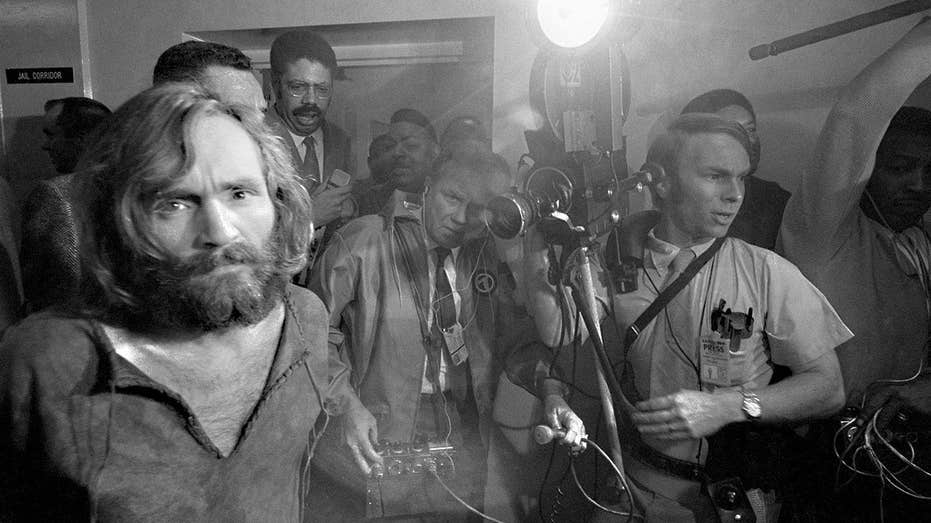
Sophia Maddox was 22 and living in Los Angeles when her father called with a discovery about his biological parentage. DNA testing eventually confirmed that Daniel Arguelles was a half-brother of Michael Brunner, the son of convicted murderer Charles Manson. The finding made Manson Maddox’s grandfather and prompted her to investigate the family history in a documentary. Her search also contributed to a painful rift with her father.
| 1) | The DNA discovery that changed a family history |
| 2) | A granddaughter investigates Manson’s past |
| 3) | The childhood experiences Maddox examined |
| 4) | A documentary that deepened a father-daughter conflict |
| 5) | Separating family identity from criminal legacy |
The DNA discovery that changed a family history
Daniel Arguelles, born in 1959, had spent years trying to identify his biological father. He submitted his DNA to Ancestry in 2015 after suspecting that the man who raised him was not his biological parent. In 2022, he matched with Michael Brunner, and additional testing confirmed that the two men were half-brothers.
Brunner is the son of Charles Manson and Mary Brunner, one of Manson’s earliest followers. Arguelles later learned that his mother, Darlene Arguelles, had a brief relationship with Manson, who was using the alias “Charlie Dear.” The result established Manson as Maddox’s biological grandfather.
“It was a really devastating day,” Sophia Maddox said of learning the connection.
A granddaughter investigates Manson’s past
Sophia Maddox, an aspiring filmmaker and actress based in Los Angeles, said her father warned her that the identity of his biological father was “really dark.” She initially guessed another notorious criminal before realizing that he meant Charles Manson, whose name had been revived in popular culture by a fictionalized depiction of the 1969 killings.
Rather than focus only on the mythology surrounding Manson, Maddox said she wanted to understand how he became a violent cult leader. Her investigation became the Hulu documentary “My Grandfather Charles Manson,” in which she meets former Manson followers and people who knew him directly. She also speaks with relatives of victims and examines the family’s history.
The childhood experiences Maddox examined
Charles Manson was born in 1934 to teenage Kathleen Maddox. His biological father was absent, and he later took the surname of his mother’s husband, William Manson. After his mother was imprisoned for robbery, Manson lived with relatives and entered a succession of juvenile institutions.
As a teenager and young adult, Manson was involved in theft, running away and forgery, spending roughly half his life in institutions or prison by the time he was released from federal prison in 1967. Maddox reviewed records describing harsh conditions and abuse in his childhood institutions. She said those experiences may help explain the survival mechanisms that influenced his later decisions, but she did not regard them as an excuse for his crimes.
A documentary that deepened a father-daughter conflict
Arguelles initially encouraged Maddox to make the film and had participated in an interview. However, she said they fell out about a week before production began as confronting Manson’s past became increasingly painful for him. Maddox said she had more emotional distance because Manson was her grandfather, while Arguelles was confronting the identity of his biological father.
Arguelles said he remained proud of his daughter and supported her, but attributed the estrangement to different views about the documentary’s overall narrative. Maddox said she did not know whether he had watched the finished film and was respecting his wishes while waiting for him to make contact.
Separating family identity from criminal legacy
Manson was convicted of orchestrating the 1969 murders of pregnant actress Sharon Tate and six others in Los Angeles. Five people were killed at Tate’s home on August 9, including Abigail Folger, Jay Sebring, Wojciech Frykowski and Steven Parent. The following night, Leno LaBianca and Rosemary LaBianca were murdered. Manson died in prison in 2017 at age 83 while serving a life sentence.
Maddox described herself and her father as ordinary, hardworking people with artistic backgrounds. During production, she also changed her surname from Arguelles to Maddox, saying she wanted to reclaim a name she associated with goodness and give it a new meaning. She said understanding Manson’s past was intended to explore the roots of violence, not to justify what he did.
| Number | Key Point |
|---|---|
| 1 | DNA testing connected Daniel Arguelles to Michael Brunner as half-brothers. |
| 2 | The match confirmed Charles Manson was Sophia Maddox’s grandfather. |
| 3 | Maddox explored Manson’s childhood and criminal history in a Hulu documentary. |
| 4 | The filmmaking process contributed to a conflict between Maddox and her father. |
Summary
Sophia Maddox has used the discovery of her biological connection to Charles Manson to examine family history, institutional abuse and the lasting impact of notorious crimes. Her documentary presents that investigation while making clear that understanding Manson’s background does not absolve him of responsibility for the murders.
Frequently Asked Questions
How did Sophia Maddox learn that Charles Manson was her grandfather?
Her father, Daniel Arguelles, discovered through DNA testing that he was a half-brother of Michael Brunner, one of Manson’s sons. That match established the family connection.
What is the documentary about?
“My Grandfather Charles Manson” follows Maddox as she investigates Manson’s family history, childhood, followers and the people connected to his victims.
Did Maddox defend Manson’s actions?
No. She said her goal was to understand the experiences that shaped him without apologizing for or justifying his crimes.
Why did Maddox change her surname?
She changed it from Arguelles to Maddox during production, saying she wanted to reclaim a name she associated with goodness and give it a new meaning.