
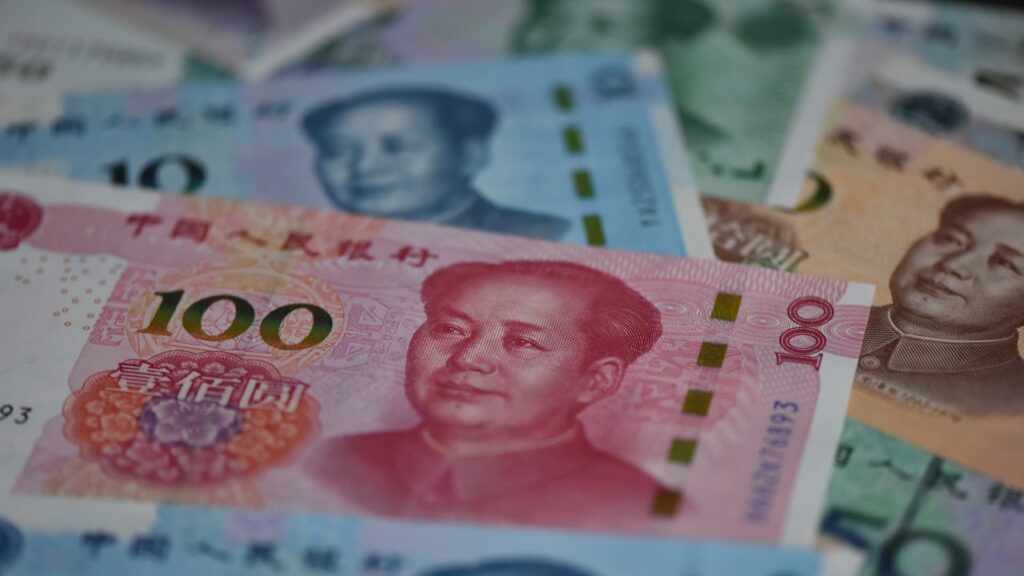
As the global economy shifts, China’s yuan has demonstrated resilience, particularly in the face of a challenging domestic environment. Recent analyses indicate that Chinese government bonds (CGBs) are emerging as a compelling option for investors, likely to offer distinct advantages over bonds from developed nations. Strategists highlight that, unlike counterparts in countries like the United States, Japan, and the United Kingdom, China’s economic landscape is characterized by deflationary pressures and supportive monetary policies, which makes its bonds attractive for portfolio diversification.
| Article Subheadings |
|---|
| 1) The Strengthening Yuan and its Implications |
| 2) Divergence in Bond Yield Trends |
| 3) The Role of the People’s Bank of China |
| 4) Global Perspectives on Chinese Bonds |
| 5) Future Outlook for Chinese Government Bonds |
The Strengthening Yuan and its Implications
The Chinese yuan has shown significant strength against the U.S. dollar this year, reflecting a commendable performance amidst various economic challenges. This resilience comes even as China’s economy faces a series of headwinds, notably a downturn in the property market and a deflationary trend that differs starkly from the inflationary pressures observed in many Western economies. Strategists from various financial institutions point out that this dynamic is likely influencing the behavior of China’s bond market, creating a unique environment for investors.
Investors are paying close attention to the yuan’s performance as it not only impacts trade but also signifies the country’s broader economic health. Analysts are considering how a strong yuan can support the purchasing power of Chinese consumers and businesses, potentially balancing the scale against weak domestic demand. The outlook for the yuan and the Chinese economy will depend heavily on upcoming economic data and the responses from policymakers.
Divergence in Bond Yield Trends
The trends observed in bond yields provide further insight into the disparities between China and other major economies. Recently, China has experienced a downward movement in bond yields, while counterparts in the United States, Japan, and the United Kingdom have seen yields soar to multi-decade highs. This divergence signals that China’s economic trajectory remains somewhat insulated from global market influences, enabling its bonds to behave differently compared to those in developed markets.
According to experts, the sustained decrease in China’s bond yields can be attributed to both supportive macroeconomic policies and the impact of robust export growth on the demand for government bonds. As noted by investment strategists, the stability of Chinese bonds positions them as a useful tool for investors seeking risk-adjusted returns, further solidifying their appeal in the context of diversified investment portfolios.
The Role of the People’s Bank of China
The People’s Bank of China (PBoC) has been pivotal in navigating the current economic landscape. With recent economic indicators such as retail sales and industrial production showing tepid growth, the central bank is expected to maintain its accommodative stance. Reports suggest that the PBoC may implement further rate cuts and stimulus measures designed to rejuvenate domestic demand. This ongoing support is likely to result in a different trajectory for Chinese government bonds, as the bond market reacts favorably to anticipated measures from the central bank.
This proactive approach from the PBoC not only aims to instill confidence in the Chinese economy but also seeks to differentiate China’s economic policy from those of other major central banks which are leaning towards tightening. With a focus on liquidity operations and targeted credit measures, the PBoC’s policies may enhance the stability and attractiveness of Chinese bonds for both local and foreign investors.
Global Perspectives on Chinese Bonds
Investment professionals are increasingly recognizing the strategic value of Chinese government bonds as part of a diversified global and Asian portfolio. Market analysts have pointed out that as major central banks like the European Central Bank and the Bank of Japan continue to raise interest rates, Chinese bonds provide an alternative that appears fundamentally distinct. The potential for CGBs to offer diversification benefits amidst varying interest rate cycles is a key factor that is drawing global attention.
Financial experts emphasize that the defensive characteristics of these bonds make them a valuable asset in times of heightened market uncertainty. They argue that the unique position of the PBoC and China’s economic policies create a demand for CGBs, allowing investors to hedge against risks associated with currency volatility and other market disruptions.
Future Outlook for Chinese Government Bonds
Looking ahead, the outlook for Chinese government bonds remains cautiously optimistic. As the global economy continues to navigate a complex landscape shaped by rising inflation and shifting interest rates, China’s unique economic conditions may enable its bonds to play a significant role in global investment strategies. Market analysts anticipate that supportive macroeconomic policies and improved export performance will sustain demand for CGBs, potentially benefitting both institutional and retail investors.
As China’s economy seeks to stabilize, further policy measures may be implemented to drive growth and liquidity. This proactive response may bolster interest in CGBs, solidifying their place as a go-to option for investors looking to diversify their holdings amidst uncertainty in major developed markets. Given the current trajectory, the investment community is closely watching China’s economic indicators as they seek opportunities for growth.
| No. | Key Points |
|---|---|
| 1 | The yuan has strengthened notably against the U.S. dollar, showcasing resilience in a challenging economic environment. |
| 2 | Chinese government bonds are positioned to perform differently than those from developed economies, offering potential risk-adjusted returns. |
| 3 | The People’s Bank of China is expected to maintain accommodative policies in response to weak domestic demand and economic indicators. |
| 4 | Chinese government bonds may become increasingly valuable for global investors seeking diversification from rising interest rates in developed markets. |
| 5 | The future outlook for Chinese government bonds hinges on the stabilization of the economy and supportive policy measures from the PBoC. |
Summary
In summary, the current landscape surrounding Chinese government bonds presents a compelling opportunity for investors both domestically and abroad. The strengthening yuan, coupled with distinct economic conditions and supportive policies from the People’s Bank of China, illustrates a unique environment for CGBs. As global markets continue to be influenced by rising interest rates and inflationary pressures, Chinese bonds may serve as a key asset for diversification and risk management within broader investment portfolios.
Frequently Asked Questions
Question: What are Chinese government bonds?
Chinese government bonds (CGBs) are debt securities issued by the central government of China to finance public spending and manage the economy.
Question: How do CGBs compare to U.S. Treasury bonds?
CGBs differ from U.S. Treasury bonds primarily in terms of yield behavior, with CGBs currently offering lower yields while also being influenced by distinct monetary policies from the People’s Bank of China.
Question: Why are foreign investors interested in CGBs?
Foreign investors are attracted to CGBs due to their potential for diversification, positive real yields, and the defensive qualities they exhibit compared to other global bond markets facing inflationary pressures.