
In a significant move to bolster the Chinese financial sector, the Ministry of Finance has launched a capital injection of approximately $54 billion into several state-owned banks and insurers. This initiative aims to foster economic growth amidst a backdrop of constrained stimulus measures and declining demand for credit. Despite expectations for a larger infusion, the recapitalization, which includes support for insurers for the first time, reflects a strategic response to ongoing financial system stresses. The implications of this capital boost and the future of lending in China are closely observed by economists and market analysts.
| Article Subheadings |
|---|
| 1) Overview of the Capital Injection Initiative |
| 2) Detailed Breakdown of Allocations |
| 3) Economic Context and Impact on Growth |
| 4) Market Reactions and Investor Sentiment |
| 5) Future Outlook for the Financial Sector |
Overview of the Capital Injection Initiative
The recent capital injection by China’s Ministry of Finance, totaling approximately 360 billion yuan (around $54 billion), serves as a critical intervention in the banking and insurance sectors. This move is particularly noteworthy as it marks the first instance where recapitalization efforts have been extended to insurers, underscoring growing concerns about the stability of China’s financial system. With state-owned banks and insurers receiving this significant funding, the initiative is designed to strengthen their capital buffers as financial strains persist.
Key players in this initiative include three major state lenders and five insurance firms. This capital injection is intended to enhance their capacity to mobilize resources, support credit issuance, and ultimately contribute to economic growth. Gary Ng, a senior economist at Natixis, emphasized that the renewed capital cushion enables financial institutions to extend more robust assistance in the capital markets, which includes purchasing bonds and equities.
Detailed Breakdown of Allocations
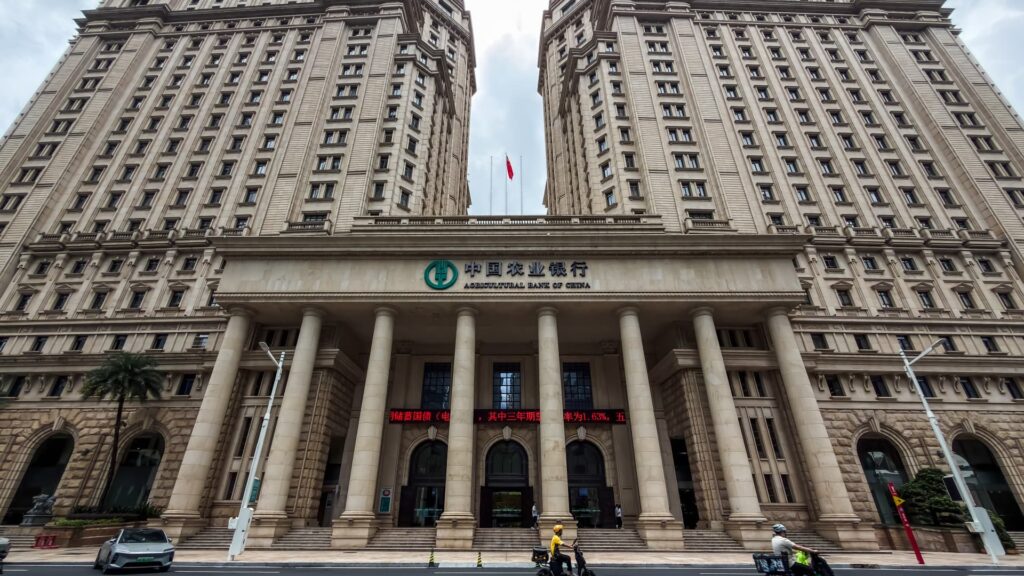
The precise allocations within this capital initiative indicate a strategic approach by the Ministry of Finance. Agricultural Bank of China, one of the largest state-owned banks, and the Industrial and Commercial Bank of China are poised to raise substantial amounts through private A-share placements, with targets set at 160 billion yuan and 100 billion yuan, respectively. These funds will be allocated exclusively to bolster their capital reserves.
Other significant beneficiaries of the capital injection include the Export-Import Bank of China, which will receive a direct 30 billion yuan to enhance its operational capacity, specifically aimed at strengthening financing for the real economy. China Life, the largest life insurer, is set to benefit from a 35 billion yuan injection. More modest allocations include 7 billion yuan for China Taiping Insurance, 10 billion yuan for China Export and Credit Insurance Corp, and 3 billion yuan for China Reinsurance Group, showcasing a comprehensive effort to stabilize the insurance sector as well.
Industry experts, including Bruce Pang from the Chief Economist Forum, have pointed out that external capital injections are critical as persistently low market interest rates restrict banks’ abilities to rebuild capital independently through retained earnings. This capital influx aims to enhance the lenders’ ability to provide higher-quality financial support to priority sectors of the economy.
Economic Context and Impact on Growth
The backdrop for this significant capital response is a challenging economic landscape characterized by faltering growth rates within the world’s second-largest economy. The capital injection is seen as a proactive measure to address the persistent tightening of profit margins in the banking sector, which have faced significant pressures as the government maintains a commitment to keeping interest rates low for struggling borrowers.
Economists such as Larry Hu from Macquarie have cautioned that, despite the large-scale capital infusion, the primary constraint on bank lending stems more from weak credit demand than a lack of capital itself. Data indicates growth in China has further slowed into the third quarter of this year, prompting shifts in governmental policy to acknowledge the “difficulties and challenges” faced by the economy.
Market Reactions and Investor Sentiment
Following the announcement of the capital injection, shares of various state-owned banks and insurers experienced declines, reflecting investor apprehension and sentiment surrounding the effectiveness of the measures. The Hang Seng Index saw a modest drop of less than 1%, though specific stocks fared worse, with Agricultural Bank of China and Industrial and Commercial Bank of China both reporting decreases of approximately 2.7% and 2.3% respectively.
The investor reaction could be attributed to the lowered expectations for this recapitalization compared to earlier speculations that anticipated a larger-scale response. According to analysts from Citibank, this downsized initiative highlights the comparatively stable capital positions of Chinese insurers, signaling a reduced urgency for aggressive capital replenishment. The long-term sentiment reflects the skepticism surrounding whether these measures are sufficient to stimulate broader economic recovery and growth.
Future Outlook for the Financial Sector
The implications of this capital injection extend beyond immediate financial stability; they set the stage for China’s banking sector as it prepares to support future strategic investments, particularly in advanced technologies and artificial intelligence. Experts, such as Han Shen Lin from The Asia Group, suggest that state capital is being strategically used to build up the banking system’s resilience amidst ongoing pressures.
Looking ahead, the Chinese government appears focused on gradually easing capital pressures on banks while simultaneously prioritizing quality growth over rapid expansion. As credit demand remains uncertain, the successful implementation of these capital injections may ultimately hinge on the global economic outlook and the recovery trajectory of key sectors.
| No. | Key Points |
|---|---|
| 1 | China’s Ministry of Finance has initiated a $54 billion capital injection into state-owned banks and insurers. |
| 2 | This marks the first recapitalization support extended to insurers amid financial system strain. |
| 3 | The capital injection aims to enhance financial institutions’ capacity to mobilize resources and support economic growth. |
| 4 | Recent market reactions include declines in shares of major state-owned banks, reflecting investor sentiment and uncertainty. |
| 5 | The long-term implications of the capital injection are being closely monitored against the backdrop of ongoing economic challenges. |
Summary
In summary, the recent capital injection by China’s government marks a pivotal step towards reinforcing the financial sector amidst ongoing economic challenges. While the measure is designed to bolster banks’ and insurers’ operational capacities, its long-term effectiveness will depend on the broader economic context and credit demand dynamics. As China navigates a complex financial landscape, the implications of these interventions will be crucial for sustaining growth and stability in the economy.
Frequently Asked Questions
Question: What is the purpose of the capital injection into banks and insurers?
The capital injection aims to strengthen the financial sector’s stability by increasing the capital reserves of state-owned banks and insurance companies, enabling them to better support economic growth and manage potential risks.
Question: How much funding has been allocated for this capital injection?
Approximately 360 billion yuan, equivalent to roughly $54 billion, has been allocated as a capital injection into various state-owned financial institutions.
Question: Why are banks experiencing difficulties in lending?
Banks are facing challenges primarily due to weak credit demand rather than a lack of capital. Economic uncertainties and shifting growth dynamics have contributed to this limited lending environment.