
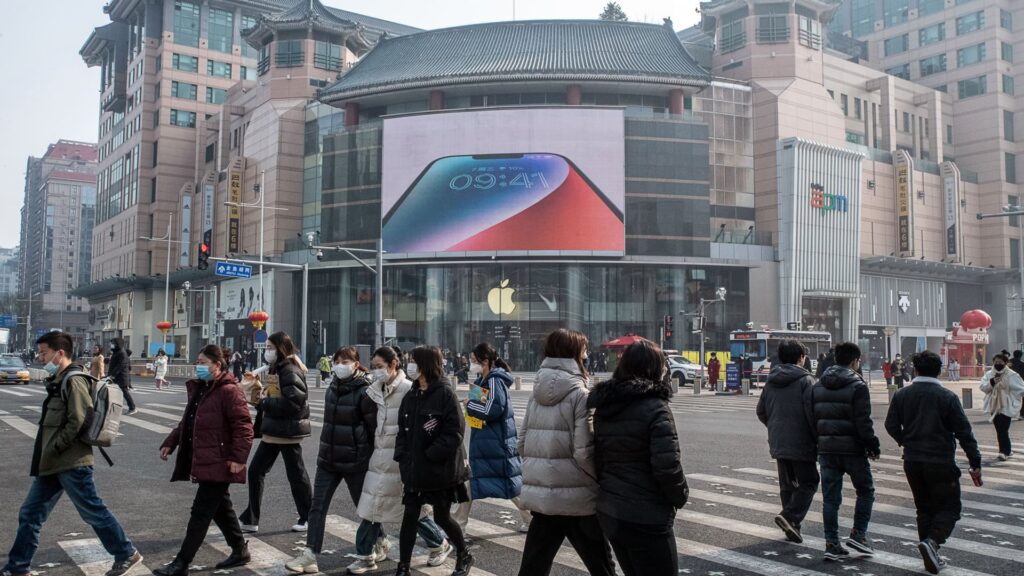
Recent economic data has revealed a mixture of challenges and some positive developments within China’s economy as the country continues its recovery post-pandemic. While retail sales growth has slowed and the investment slump deepened, industrial output has surpassed expectations, indicating pockets of resilience. The urban unemployment rate has also risen slightly, with officials urging the need for enhanced fiscal policies to promote domestic demand amid prevailing economic uncertainties.
| Article Subheadings |
|---|
| 1) Overview of Retail Sales and Industrial Output |
| 2) Dynamics of Urban Unemployment |
| 3) Government Efforts and Market Reactions |
| 4) Economic Projections and Targets |
| 5) Key External Factors Influencing Economic Trends |
Overview of Retail Sales and Industrial Output
According to the National Bureau of Statistics (NBS), China’s retail sales exhibited a growth rate of only 0.4% in August compared to the previous year. This figure represents a decrease from July’s growth rate of 0.6% and falls short of economists’ predictions which anticipated a rise of 0.8%. The sluggish retail growth reflects a cautious consumer sentiment as individuals and families continue to navigate post-COVID economic conditions and rising living costs.
In contrast, industrial output demonstrated a more robust performance, registering a growth of 5.2% in August, surpassing both July’s growth of 4.5% and economists’ expectations for a 4.8% increase. This anomaly illustrates contrasting trends in China’s economy, presenting an imbalance where industrial growth does not necessarily translate into increased consumer spending. The reasons for strong industrial performance could be attributed to various factors, including improved production capabilities and a recovery in export orders.
Dynamics of Urban Unemployment
The urban unemployment rate in China saw a slight increase, reaching 5.3% in August, up from 5.2% in the preceding month. This uptick is consistent with annual figures, suggesting that employment remains a key concern for policymakers. Fu Linghui, a spokesperson for the NBS, explained that this rise in unemployment correlates strongly with graduation season, pointing out the influx of new job seekers into a market that already faces notable challenges.
Despite the rise in unemployment, the manufacturing sector has maintained a level of stability. Certain industries such as technology, hospitality, and catering have shown good employment prospects, indicating that while the overall job market is facing pressures, some sectors are still experiencing growth and demand. The NBS cautioned that the ongoing external environment could have adverse effects, leading to a “strong supply and weak demand” situation domestically, hindering further employment stability.
Government Efforts and Market Reactions
In response to the underwhelming economic indicators, the Chinese government has commenced several new policy measures aimed at revitalizing the economy. These include an increase in government bond issuance and enhanced loan-interest subsidies targeted toward small businesses and consumers. The central bank has signaled intentions to provide more policy support; however, it refrains from making a definitive commitment to an explicit rate cut at this time.
Despite these efforts, the market response has been tepid. Recent data indicate that credit expansion in August fell significantly short of expectations, suggesting that while there is an intention to stimulate growth, actual corporate and consumer borrowing remains low. New bank loans amounted to just 60 billion yuan (approximately $8.95 billion), a stark contrast to the 400 billion yuan that had been anticipated and substantially down from the 590 billion yuan recorded the previous year. This points to a larger issue concerning the appetite for debt amidst economic uncertainty.
Economic Projections and Targets
China’s economic growth for the second quarter slowed to 4.3%, marking the weakest rate in over three years. This deceleration raises concerns about the country’s capacity to hit its annual growth targets, set between 4.5% and 5%. Analysts from Oxford Economics have assessed that the forecasted third-quarter growth could remain stagnated at about 4.3%, further complicating the challenges in meeting annual goals. They attribute significant drags on growth to weak consumption and a struggling property market, despite some positive contributions from exports and certain manufacturing sectors.
Economists like Raymond Yeung from ANZ Research suggest that the upcoming month of September could offer a critical window for policymakers to revive business confidence ahead of the Golden Week holidays in October. They underline the need for increased fiscal support while marking a cautious approach to any policy rate cuts due to the current economic landscape.
Key External Factors Influencing Economic Trends
Several external factors are currently influencing China’s economic situation, including a global investment boom in sectors such as artificial intelligence, which has spurred demand for Chinese semiconductors and tech hardware. Moreover, China’s management of its massive oil stockpiles plays a crucial role in buffering the economy against surging international oil prices, positioning the country strategically as the world’s largest crude importer.
Furthermore, the official manufacturing purchasing managers’ index reflected improvements, indicating growth in new orders and output returning to expansion territory after previous contractions. These developments signal that while challenges remain, certain sectors continue to rebound, hinting at a possible turnaround if the right policies and adjustments are implemented effectively.
| No. | Key Points |
|---|---|
| 1 | China’s retail sales growth was only 0.4% in August, missing expectations and down from July’s 0.6%. |
| 2 | Industrial output showed significant resilience, growing 5.2%, exceeding expectations. |
| 3 | The urban unemployment rate increased slightly to 5.3%, mainly influenced by graduation season. |
| 4 | Government bond issuance and loan-interest subsidies have increased, yet credit expansion continues to underperform. |
| 5 | Economic forecasts predict third-quarter growth could stall at 4.3%, raising doubts about meeting annual targets. |
Summary
The current economic data from China underscores the complexities facing its recovery. While pockets of industrial strength are evident, retail sales and employment challenges raise significant concerns for policymakers. The government’s response, including fiscal stimuli and enhanced support for affected sectors, is essential as the nation navigates a pathway back to stable growth. Continued monitoring of employment trends, consumer behavior, and external economic dynamics will be crucial in shaping China’s economic recovery strategy.
Frequently Asked Questions
Question: What is the current status of retail sales in China?
Retail sales growth in China was reported at only 0.4% in August, down from 0.6% in July and below the anticipated 0.8% growth, reflecting cautious consumer spending amid economic uncertainties.
Question: How has industrial output fared in recent months?
The industrial output in China expanded by 5.2% in August, which was an increase from 4.5% in July and surpassing economists’ expectations, indicating a strong performance in the sector.
Question: What measures is the government taking to address economic challenges?
The Chinese government is implementing initiatives such as increasing government bond issuance and providing loan-interest subsidies to stimulate the economy and encourage consumer spending amid the ongoing economic challenges.