
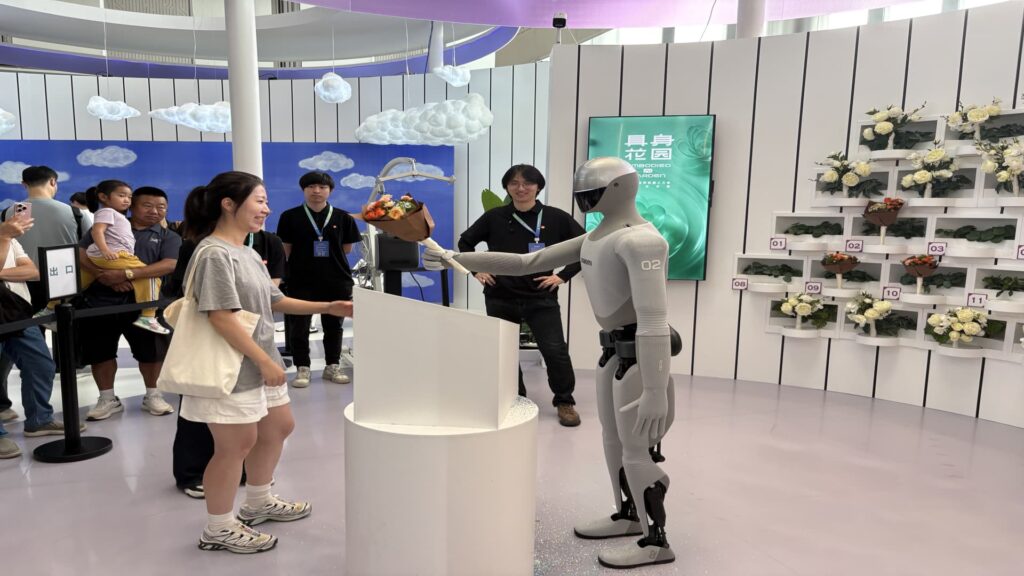
At the recently held World Robot Conference in Beijing, industry leaders highlighted the challenges faced by humanoid robots in today’s technological landscape. The conference underscored that while advancements have been made, the efficiency of humanoid robots still lags behind that of humans, creating significant hurdles for their integration into the workforce. Companies are focused on delivering practical solutions, indicating a shift in priority from humanoids to robots that can more effectively address immediate operational problems.
| Article Subheadings |
|---|
| 1) Overview of the Challenges in Humanoid Robotics |
| 2) Federal Regulations Impacting Import of Robots |
| 3) Industry Focus: Solutions Over Types of Robots |
| 4) Innovations in Humanoid Robotics: A Case Study |
| 5) The Future of Humanoid Robots and Market Potential |
Overview of the Challenges in Humanoid Robotics
The conference featured speeches from various industry leaders, including Wang Xingxing, founder of Unitree, who emphasized significant challenges that humanoid robots continue to face. He noted that despite remarkable advancements, humanoid robots are not yet as effective or efficient as human workers. This inadequacy in performance often results in a slower learning curve, which is a barrier to widespread adoption in workplaces. On the same day, Unitree experienced a tumultuous market reaction, seeing its shares plummet by 18.7%, which likely stemmed from the underlying apprehension investors have regarding the viability of humanoids as actors in the current economy.
Federal Regulations Impacting Import of Robots
The recent announcement by the U.S. Federal Communications Commission (FCC) regarding restrictions on foreign-made advanced robotic devices, including humanoids, adds another layer of complication for the robotics industry. Although the specific countries affected were not disclosed, retailers are permitted to import previously approved models. Experts like Jeff Burnstein, president of the Association for Advancing Automation, expressed that the impact of these regulations might not significantly disrupt current operations, primarily because the utilization of humanoid robots in the U.S. remains minimal. Instead, Burnstein suggested that the regulations could have a more pronounced effect on autonomous mobile robots, which are commonly used in factories.
Industry Focus: Solutions Over Types of Robots
Industry leaders indicated a clear preference from consumers: they are in search of immediate solutions to their operational hurdles rather than being concerned about the type of robotic solution employed. “What I hear from customers in the U.S. is a need for practical solutions,” remarked Burnstein. The urgency lies in solving problems rather than distinguishing between humanoid and traditional robotic platforms. Burnstein explained that the current landscape is compelling companies focusing on automation and efficiency to prioritize results over the robot’s form, putting pressure on humanoid robot developers to prove their usefulness and practicality.
Innovations in Humanoid Robotics: A Case Study
A glimpse into the progress on the ground can be seen in the operations of Keenon, a startup that is pushing the boundaries of humanoid robotics. The company has commenced developing humanoids that work alongside basic delivery robots, specifically tailored for services such as laundry handling in hospitality. Wan Bin, the COO of Keenon, highlighted the significant leap from completing tasks satisfactorily—citing a 50% or even 80% completion rate—to achieving near-perfection at 99.9%. He affirmed the complexity that such high standards demand on both engineering prowess and training methodologies. Keenon’s innovation is backed by notable partnerships with brands like Buffalo Wild Wings and Hilton, and the company has impressively shipped over 100,000 robots, projecting growth beyond 150,000 units by the end of the next year.
The Future of Humanoid Robots and Market Potential
Looking toward the future, the integration of humanoid robots into various sectors is rife with potential, albeit fraught with challenges. The synthesis of various robotic forms may eventually allow humanoids to work alongside more traditional robots to optimize performance in industries such as hospitality, healthcare, and manufacturing. As the technology matures, and as the market opens up, industry stakeholders will need to continually demonstrate the cost-effectiveness and reliability of humanoid robots. The enduring quest for elevated performance and functionality will shape the future of humanoid robotics, determining its role and viability across diverse applications.
| No. | Key Points |
|---|---|
| 1 | The efficiency of humanoid robots still lags behind human workers, creating barriers to workplace integration. |
| 2 | Recent FCC regulations could limit imports of foreign-made advanced robotics, adding challenge for U.S. markets. |
| 3 | Consumers are more focused on immediate solutions rather than the specific type of robot being offered. |
| 4 | Innovations by startups like Keenon demonstrate the practical applications of humanoids in service industries. |
| 5 | The future market for humanoid robots will depend heavily on their demonstrated efficiency and cost-effectiveness. |
Summary
The discourse surrounding humanoid robotics at the recent World Robot Conference paints a complex picture of the industry. While technology has made strides, significant barriers remain in achieving efficiency that can match human capabilities. Regulatory changes add a new layer of complexity to market dynamics, further pressing developers to ensure their humanoid robots can provide effective solutions to practical challenges. As companies like Keenon innovate, the future for humanoid robots could be promising, pressing the need for continuous improvement and adaptation to real-world requirements.
Frequently Asked Questions
Question: What are the main challenges faced by humanoid robots today?
Humanoid robots struggle with efficiency and often require extensive training to learn and adapt to new tasks, which hampers their widespread implementation in the workplace.
Question: How do recent FCC regulations affect humanoid robot imports?
The FCC has imposed restrictions on foreign-made advanced robotic devices, which may indirectly impact the availability of humanoid robots in U.S. markets, though the immediate effects may be limited due to low current usage.
Question: What role do startups play in the development of humanoid robots?
Startups like Keenon are innovating by integrating humanoid robots with simpler robotic systems to provide specialized services in sectors such as hospitality, showing the potential practical applications and marketability of humanoids.