
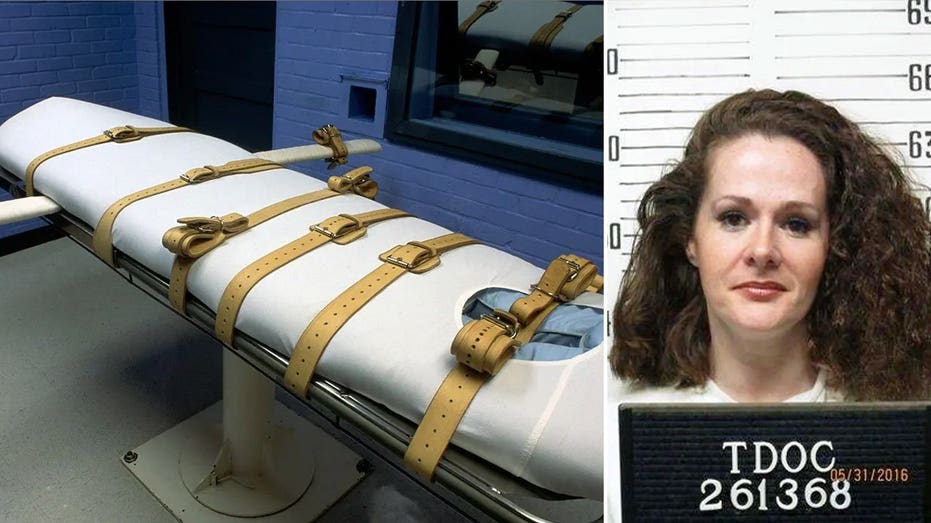
Christa Pike has returned to prison after surviving an attempted lethal injection in Tennessee, leaving the future of her death sentence uncertain. A capital punishment scholar said a continued inability to understand her punishment or the crime behind it could prevent another execution. State officials have not publicly announced whether they will seek a new death warrant, pursue a commutation or defend the existing sentence in court.
Pike was convicted of the 1995 torture and murder of 19-year-old Colleen Slemmer, a fellow student at a vocational training center in Knoxville. Her execution was scheduled for Sept. 30, 2026, but she survived after receiving two doses of pentobarbital.
| 1) | Pike returns to prison after the failed execution |
| 2) | Mental competency could determine whether execution remains lawful |
| 3) | Tennessee faces several possible paths |
| 4) | A new execution attempt could trigger further litigation |
| 5) | Pike’s conviction remains tied to the Slemmer murder |
Pike returns to prison after the failed execution
Christa Pike was taken back to prison after being released from a hospital following the halted execution. The attempt occurred at Riverbend Maximum Security Institution in Nashville on Sept. 30, 2026, when officials administered two doses of the lethal injection drug pentobarbital but did not complete the execution.
Pike’s attorneys described her physical recovery as remarkable. She is regarded as the only known person to survive a lethal injection attempt in the modern era. Her return to custody has not resolved the legal questions surrounding her sentence, and state officials have yet to publicly explain their next steps.
Mental competency could determine whether execution remains lawful
Deborah Denno, a Fordham Law professor and capital punishment scholar, said Pike’s mental condition could become central to any future proceedings. Pike’s attorney has indicated that she appeared confused and did not have a clear memory of what happened to her during the execution attempt.
“You have to understand why you’re getting a punishment and also connect that to whatever crime you committed,” Deborah Denno said.
Courts have barred executions of prisoners who cannot understand the reason for their punishment. Denno also noted that executions are prohibited for people with intellectual disabilities. A continued cognitive impairment could therefore create an independent legal barrier, although a court would need to evaluate Pike’s condition and apply the relevant constitutional standards.
Tennessee faces several possible paths
One potential outcome would be a commutation by Gov. Bill Lee, changing Pike’s sentence to life imprisonment without parole. Lee has already imposed a moratorium on executions in Tennessee for at least the remainder of 2026. Denno said a gubernatorial commutation was possible but unlikely.
The state could instead seek another death warrant. That decision would likely lead to renewed litigation over Pike’s medical condition, the failed execution and the legality of any future punishment. The Tennessee Supreme Court could ultimately become involved in deciding whether the death sentence remains enforceable or whether Pike should serve life in prison.
A new execution attempt could trigger further litigation
Pike’s lawyers could argue that the state has already carried out the punishment by administering the drugs and completing the steps intended to cause her death. Denno described that theory as a possible double jeopardy claim, but stressed that it would have to be tested in court.
“She has already received the state’s punishment, from A to Z,” Deborah Denno said, while noting that the outcome would depend on how courts viewed the state’s failed procedure.
If the courts reject that argument and authorize another execution, the method would create another dispute. A second lethal injection could face a challenge based on the first attempt, while Pike has previously requested hanging or a firing squad as alternative methods. No decision has been announced on whether any method will be used.
Pike’s conviction remains tied to the Slemmer murder
Pike was convicted and sentenced to death for the 1995 killing of Colleen Slemmer in Knoxville. The two knew each other from the Jobs Corps Center, where they were classmates. The crime has continued to shape the legal proceedings, because any competency review must address whether Pike can understand both her punishment and the offense for which she received it.
The case has also drawn renewed attention to Tennessee’s execution procedures and oversight. A prison chief resigned after the failed attempt, and an independent review was announced under new leadership. Those developments may inform future legal and administrative decisions, but they do not by themselves determine whether Pike’s sentence will be carried out.
| Number | Key Point |
|---|---|
| 1 | Pike survived two doses of pentobarbital during the Sept. 30 execution attempt. |
| 2 | Her mental capacity could determine whether another execution is legally permitted. |
| 3 | Tennessee could consider a commutation, a new death warrant or further court proceedings. |
| 4 | Pike’s attorneys may challenge another execution under double jeopardy and cruel-and-unusual-punishment theories. |
Summary
Christa Pike’s failed execution has created unresolved questions about her competency, the enforceability of her death sentence and the method of any future execution. Tennessee officials have not announced a final course of action. The next phase is likely to involve medical evaluations, executive consideration and additional court review.
Frequently Asked Questions
Why was Christa Pike’s execution halted?
Pike survived after receiving two doses of pentobarbital during the Sept. 30, 2026, lethal injection attempt. The execution was not completed.
Why could Pike’s mental state affect her sentence?
Courts generally prohibit executing prisoners who cannot understand why they are being punished or connect the punishment to their crime. A court would need to assess Pike’s condition.
What could Tennessee do next?
The state could seek another death warrant, while the governor could consider commuting the sentence to life without parole. Further litigation is possible under either path.
Could Pike face another lethal injection?
That possibility has not been ruled out, but it would likely face legal challenges concerning the failed attempt, Pike’s competency and whether lethal injection would constitute cruel and unusual punishment.