
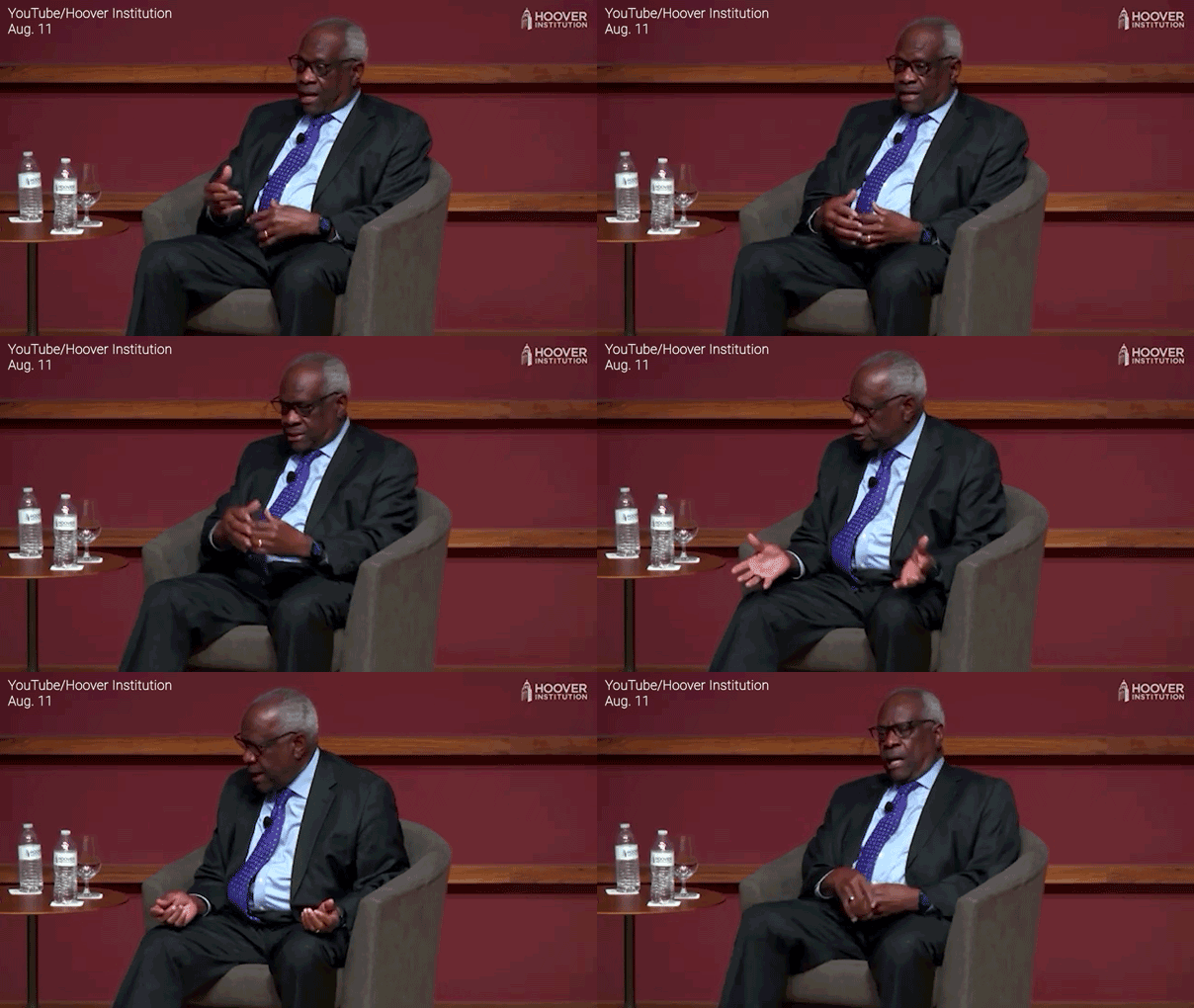
Supreme Court Justice Clarence Thomas recently spoke about the challenges and scrutiny he faces regarding his perspectives on race and politics. During a conversation at the Hoover Institution, he expressed his frustration with critics who question his identity as a Black man based on his conservative beliefs. Thomas reflected on the influences that have shaped his approach to understanding race in America, particularly the works of economist Thomas Sowell, which empowered him to embrace his views in a predominantly liberal cultural environment.
| Article Subheadings |
|---|
| 1) Reflections on Identity and Race |
| 2) The Influence of Critical Voices |
| 3) Challenging Conventional Wisdom |
| 4) The Impact of Thomas Sowell on Thomas’s Views |
| 5) The Call for Independent Thought |
Reflections on Identity and Race
During an engaging dialogue at the Hoover Institution, Justice Clarence Thomas candidly addressed the continuous criticism he faces regarding his race and political beliefs. Thomas indicated that such scrutiny is not merely personal; it resonates with broader societal expectations. “I mean, how stupid is that? Look at me,” he remarked, illustrating his frustration with the perception that his views might disqualify him from authentic Black identity. This dialogue highlights a contentious issue in the ongoing discourse about race in America, where individuals are often pressured to conform to specific ideologies based on their racial backgrounds.
Thomas reflected on his experiences growing up, recalling the pressures he felt to align with certain political beliefs as a young Black man. “You have these views, you have these instincts, but you are getting inputs from the media, from the politicians, the people who have the megaphone,” he explained. This notion speaks to a wider phenomenon wherein prominent voices attempt to define the parameters of acceptable political thought within marginalized communities, which can lead to feelings of isolation and doubt among those who harbor differing viewpoints.
The Influence of Critical Voices
Justice Thomas‘ conversation delved deeper into the critical voices that have informed his ideological journey. He recounted times in which his independent thinking was met with ridicule and disbelief, particularly during his time at Yale Law School. “When I began questioning prevailing norms, I faced significant backlash, which showed me how entrenched certain ideologies are within academic circles,” he noted. This highlights the tension that exists within academic environments where challenging dominant narratives can provoke hostility rather than foster dialogue.
Thomas’s insights also speak to the complexities of discourse among Black Americans, where leadership often presents a different narrative compared to the perspectives of ordinary individuals. He described a “disconnect” between views held by Black political leaders and those of everyday Black Americans, particularly regarding issues like school busing and affirmative action. This discussion underscores the nuanced reality that not all individuals within a racial or ethnic group share a monolithic viewpoint, a fact often overlooked in broader political discourses.
Challenging Conventional Wisdom
Throughout his career, Justice Thomas has consistently challenged established orthodoxies regarding race, identity, and politics. He recalled instances at law school where he voiced skepticism toward initiatives such as busing, questioning the logic of sending Black children across town to unfamiliar schools. “I remember saying those things at Yale and people — the bottom line was, well, you shouldn’t believe that because you’re Black,” he recounted, illustrating the pushback he received from both peers and faculty, who believed his views were inconsistent with the expectations of his race.
His perspective has positioned him at odds with many in the political mainstream, but he argued for the importance of critically evaluating assumptions about race and identity. Thomas’s insistence on independent thought echoes a broader call for all individuals, particularly those from underrepresented communities, to examine and draw conclusions based on their own experiences rather than succumbing to societal pressures to conform.
The Impact of Thomas Sowell on Thomas’s Views
One pivotal figure mentioned during the discussion was Thomas Sowell, a renowned economist and a fellow conservative thinker. Thomas described how Sowell’s work significantly influenced his own perspectives on race and economics. He referred to a friend introducing him to Sowell’s “Race and Economics,” which he characterized as a crucial turning point in his thinking. “It was literally like a drink of water,” Thomas remarked, emphasizing how Sowell’s insights helped validate his instincts and beliefs about race, ultimately liberating him from feelings of isolation concerning his viewpoints.
A shift in Thomas’s understanding also was catalyzed by reading Sowell’s earlier works, which he initially dismissed. Reflecting on his past views, he resonated with many who might share his early resistance to conservative interpretations of race. This journey of intellectual growth signifies the importance of engaging with various perspectives that challenge one’s preconceived notions, illustrating how an open-minded approach can lead to profound transformations.
The Call for Independent Thought
Justice Thomas reiterated the importance of independent thought and the courage to express one’s beliefs, particularly in a climate where dissenting opinions are often met with backlash. He stated that while it is essential for individuals to engage in respectful discourse and consider opposing viewpoints, there is an overwhelming expectation among certain factions in society for conformity among individuals of color. “There’s this overriding public view that you’re not supposed to think this way,” Thomas noted, emphasizing how this pressure can diminish the authenticity of individual voices within the Black community.
He articulated his belief that people must be encouraged to articulate their thoughts freely, asserting, “If they can prove you wrong, fine. But if they call you names or say you’re not Black, I mean, how stupid is that?” This perspective underscores the necessity of fostering spaces where open dialogue can flourish, allowing individuals to confront and challenge prevailing narratives without fear of alienation.
| No. | Key Points |
|---|---|
| 1 | Justice Clarence Thomas expressed frustration with critics questioning his Blackness due to his conservative views. |
| 2 | He reflected on the pressures faced by Black Americans to conform to societal and political expectations. |
| 3 | Thomas highlighted a disconnect between Black political leaders and everyday Black Americans regarding key issues. |
| 4 | He credited economist Thomas Sowell with helping him understand race and economics from a new perspective. |
| 5 | Thomas advocated for the importance of independent thought and the need for individuals to express their genuine beliefs. |
Summary
Justice Clarence Thomas‘ remarks amplify an essential conversation surrounding race, identity, and political ideology, particularly in how they intersect within the African American community. By fostering a dialogue that encourages independent thought, Thomas challenges the status quo and represents a critical voice advocating for diversity of thought. His reflections prompt broader discussions about the necessity for individuals across all backgrounds to engage with differing perspectives while remaining true to their beliefs, ultimately enriching the American democratic experience.
Frequently Asked Questions
Question: What criticisms does Justice Clarence Thomas face regarding his beliefs?
Justice Thomas faces skepticism from critics who question his identity as a Black man based on his conservative views. This scrutiny often leads to discussions about race and political expectations within society.
Question: How did Thomas Sowell‘s works influence Justice Thomas?
Thomas Sowell’s works played a significant role in shaping Justice Thomas’s understanding of race and economics, providing validation for his beliefs and helping him feel less isolated in his viewpoints.
Question: What message did Justice Thomas convey regarding independent thought?
Justice Thomas emphasized the importance of independent thought, urging individuals to voice their own beliefs despite societal pressures to conform to certain ideologies, particularly within marginalized communities.