
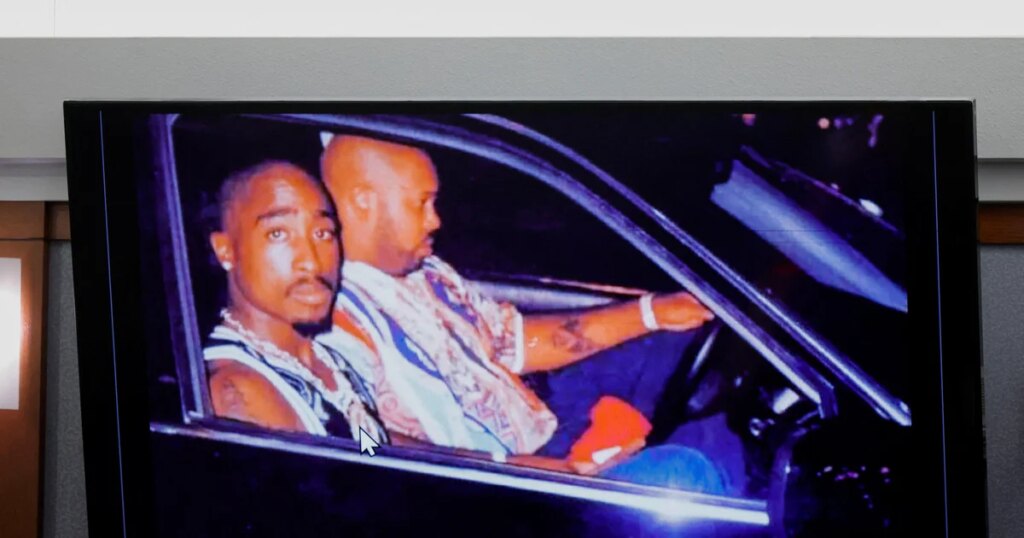
The murder trial of Duane “Keffe D” Davis, accused in the 1996 killing of hip-hop legend Tupac Shakur, has now entered its final stages as the defense concluded its case. Testimony from three former Las Vegas police officers marked the end of a nine-day evidence presentation. The jurors are anticipated to return on Monday for closing arguments, igniting anticipation surrounding the only prosecution linked to the murder of Shakur, a pivotal figure in music history.
Davis, who is currently 63, did not testify in his own defense during the trial. Prosecutors allege that he orchestrated the murder to exact revenge for a previous altercation involving Shakur, while the defense argues that he has fabricated his claims for personal gain. This high-profile case continues to captivate public interest as it delves into the mysterious circumstances surrounding the iconic rapper’s death.
| Article Subheadings |
|---|
| 1) Background of the Case and Tupac’s Legacy |
| 2) Key Testimonies and Evidence Presented |
| 3) The Role of Law Enforcement Investigations |
| 4) Defense’s Strategy and Arguments |
| 5) Implications of the Trial’s Outcome |
Background of the Case and Tupac’s Legacy
Tupac Shakur, an influential artist known for his potent lyricism and social commentary, was shot on September 7, 1996, in Las Vegas while a passenger in a BMW driven by Marion “Suge” Knight. The shooting occurred when a white Cadillac emerged alongside the BMW at a traffic light, unleashing a hail of gunfire. Tupac succumbed to his injuries six days later, sparking widespread mourning and outrage among fans and the music community.
The murder remained unsolved for many years, shrouded in mystery and speculation. Shakur’s impact on hip-hop and culture at large was significant, leaving a legacy that continues to influence artists and activists alike. As a result, inquiries into his untimely death persisted, with various theories emerging about possible motives and perpetrators over the decades.
In the years following the incident, interest in the case intensified, leading to a resurgence in investigations. The trial of Duane Davis epitomizes this renewed effort, thrusting the unresolved issues surrounding Tupac’s murder back into the public eye. Davis’s public statements over the years have fueled further scrutiny, bringing forth new revelations about the circumstances of the murder.
Key Testimonies and Evidence Presented
The trial saw an array of testimonies, culminating in the defense resting its case after presenting accounts from three former Las Vegas police officers, including Dan Long, a retired homicide detective. The prosecution rested earlier with a total of 24 witnesses, establishing key evidence aimed at correlating Davis to the crime.
Prosecutors assert that Davis not only had a role in the murder but actively orchestrated it as an act of retaliation against Shakur for a brutal altercation that involved his nephew, Orlando “Baby Lane” Anderson. The testimony of former officers was crucial as they provided context regarding the shooting’s timeline and the moments leading up to it.
One notable point of contention arose regarding whether Orlando Anderson sought medical treatment at a Las Vegas hospital following the earlier casino fight. Despite Davis’s claims, detective Long could not verify any hospital records confirming Anderson’s alleged visit, which undermines parts of Davis’s account. Other aspects of the evidence included discussions about the vehicle used in the shooting—uncovering potential leads regarding a rented white Cadillac.
The Role of Law Enforcement Investigations
Law enforcement has faced scrutiny over their handling of the Tupac Shakur case throughout the years. Initial investigations yielded little to no solid leads, and many theorists suggest missed opportunities that could have brought the actual perpetrators to justice much earlier. The lengthy delay in prosecuting any suspects highlighted systemic issues within the Las Vegas police force.
The testimonies from retired officers shed light on the complexities of the case’s investigation. Detective Long revealed that after his interview with Davis in 2009, he believed there was sufficient cause to seek an arrest warrant for murder, citing probable cause based on Davis’s confessions. However, prosecutors at that time advised Long to refrain from any further action, stalling the progression towards accountability.
As the case drew renewed interest because of Davis’s memoir and public statements, investigators began to reassess prior leads. This desire for justice for Shakur has manifested in a more rigorous examination of past evidence, illustrating law enforcement’s dual role as both protectors and potential impediments to justice.
Defense’s Strategy and Arguments
The defense has mounted a vigorous strategy to challenge the prosecution’s narrative surrounding Davis. Defense attorney Michael Sanft emphasized that Davis had no objective corroborating evidence to substantiate his claims. During the trial, Sanft posited that Davis fabricated or embellished his accounts for personal gain—citing a desire for fame and financial opportunity.
Sanft sought to bring doubt to the jurors’ minds, arguing that the evidence against Davis is built on dubious foundations. He asserted that many details provided by Davis remained unverified, leading to a narrative that lacks credible support. A critical point made during cross-examinations highlighted how previous statements made by Davis didn’t align with the investigative findings.
The defense’s argument rests heavily on the notion that without definitive evidence, the jury must not accept the prosecution’s claims. By positioning Davis as a target of circumstance rather than the orchestrator of a high-profile murder, Sanft aims to dismantle the prosecution’s strategy and evoke reasonable doubt among jurors.
Implications of the Trial’s Outcome
The outcome of this trial holds significant implications not only for Davis and the Shakur family but for the broader hip-hop community as well. If convicted, Davis could face life in prison—a sentence that would mark a pivotal moment in a case that has languished in inactivity for over 25 years. Such a verdict would symbolize a long-overdue step toward resolving one of the most notorious gang-related murders in U.S. history.
Conversely, an acquittal would further entrench the notion that the murder mystery remains unsolvable, perpetuating the unsolved narrative around one of the greatest musical figures. This case serves as a reminder of the far-reaching consequences of violence within artistic circles and the ongoing need for respect towards the legacy of cultural icons such as Tupac Shakur.
| No. | Key Points |
|---|---|
| 1 | The trial marks a significant moment in the only prosecution related to Tupac Shakur’s murder. |
| 2 | Defense claims that Davis’s accounts are financially motivated and uncorroborated. |
| 3 | Key police testimonies highlighted difficulties in verifying Davis’s statements. |
| 4 | The implications of the trial extend beyond Davis, affecting cultural narratives surrounding Tupac. |
| 5 | Jurors are expected to deliberate after closing arguments are presented. |
Summary
The ongoing trial of Duane “Keffe D” Davis reveals intricate layers behind one of hip-hop’s most infamous murders, intertwining themes of accountability, legacy, and justice. As both sides prepare for closing arguments, the court’s decision will reshape public perception of a case that has eluded resolution for decades. The verdict could provide closure to a tragedy that forever altered the landscape of rap and hip-hop culture.
Frequently Asked Questions
Question: What charges does Duane Davis face in relation to Tupac Shakur’s murder?
Duane Davis is charged with murder with a deadly weapon with the intent to promote, further, or assist a criminal gang.
Question: What has been the role of law enforcement in the Shakur case over the years?
Law enforcement’s role has been criticized for slow initial responses and missed opportunities to investigate leads that could have led to an arrest shortly after the murder.
Question: How has public interest impacted the trial and the investigation?
The public’s fascination with Tupac Shakur and his unsolved murder has kept the case in the spotlight, prompting renewed investigations and interest in the circumstances surrounding the events.