
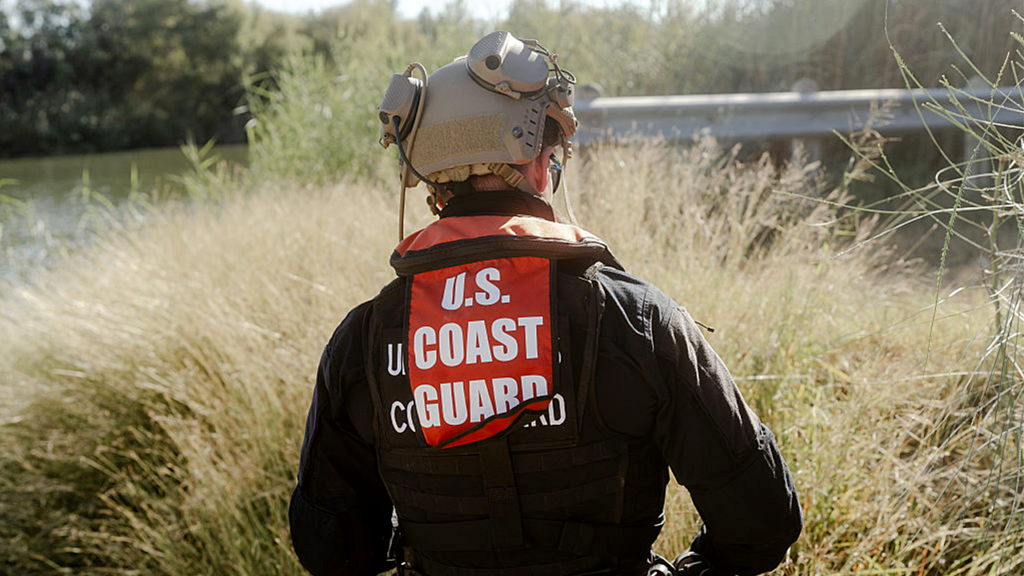
In a tense encounter on September 26, Coast Guard personnel engaged in a gunfire exchange with unidentified individuals on the Mexican side of the U.S.-Mexico border while intercepting migrants crossing the Rio Grande River. This incident is part of a broader increase in illegal activities observed in the area, prompting the U.S. military to reposition troops and equipment in Texas’s Rio Grande Valley. Meanwhile, Mexican forces are also being deployed to enhance security along the border.
| Article Subheadings |
|---|
| 1) Incident Overview and Initial Reactions |
| 2) Coordination Between U.S. and Mexican Authorities |
| 3) The Role of Operation River Wall |
| 4) Expected Impact on Border Security |
| 5) Conclusion and Future Considerations |
Incident Overview and Initial Reactions
On September 26, a significant incident occurred near Garceno, a small town situated along the Texas-Mexico border, when Coast Guard personnel exchanged gunfire with individuals on the Mexican side of the border. During operations aimed at intercepting unauthorized migrants traversing the Rio Grande River, the Coast Guard faced an unanticipated attack, forcing them to return fire. While the initial shots fired by the unidentified individuals remain unclear, officials have stressed that although gunfire was exchanged, there were no injuries reported among the Coast Guard or other personnel involved in the incident.
In the immediate aftermath of the exchange, a detailed investigation was launched by the Coast Guard in collaboration with various federal partners. This investigation aims to uncover the specific circumstances surrounding the confrontation, including the identity of those who fired the shots and the motives behind the incident. The U.S. military later noted that such incidents reflect an upward trend in illegal activities occurring in the border regions, emphasizing the need for enhanced security measures across the area.
Coordination Between U.S. and Mexican Authorities
To address the escalating situation at the border, U.S. Ambassador to Mexico, Ronald Johnson, indicated that diplomatic channels are being activated to ensure effective coordination between U.S. and Mexican military forces. Following the shooting, Johnson mentioned that the embassy is actively aiding in the deployment of Mexican military personnel to patrol the border area where the gunfire incident transpired.
According to Johnson, Mexican military commanders plan to communicate directly with U.S. forces to carry out joint operations on both sides of the border. This partnership aims to secure their shared borders, protect local communities, and disrupt the activities of criminal organizations that operate in the region. Any threats from criminal entities from either side of the border will be addressed swiftly as part of this collaborative effort.
The Role of Operation River Wall
The Coast Guard’s proactive stance to enhance border security is highlighted by the launch of Operation River Wall in October 2025. This operation involves deploying additional personnel, boats, and other maritime assets to patrol approximately 260 miles of the Rio Grande that demarcates the U.S.-Mexico boundary. The initiative signifies a concerted effort to deter illegal crossings and illicit activities along this critical stretch of the border.
As part of this operation, the Coast Guard has been collaborating closely with entities such as the U.S. Border Patrol, the Department of Defense, and the Texas Military Department. Their joint mission focuses on securing the border, disrupting illegal activities, and safeguarding American citizens. Through this multi-layered and integrated strategic approach, officials hope to bolster their collective response to counter any illicit activities threatening national security and community safety.
Expected Impact on Border Security
In light of the September 26 incident, the U.S. military announced the deployment of hundreds of troops and equipment to the Rio Grande Valley as part of a broader strategy to mitigate illegal activities. Officials pointed out that the escalation of incidents signifies a concerning trend that necessitates more robust measures to enhance safety and security in the border regions. This initiative is particularly critical during historically observed seasonal increases in attempts at illegal crossings, as noted officers from Joint Task Force-Southern Border.
The increased presence of U.S. forces, along with the operational enhancements provided by the Coast Guard, signifies an acknowledgment of the complex challenges faced at the border. It indicates that federal agencies are not only responding to incidents as they occur but are also taking preventive measures aimed at deterring potential threats ahead of time. The collaboration with Mexican authorities is poised to create a unified front against these challenges, thereby ensuring a safer border environment for both countries.
Conclusion and Future Considerations
In summary, the recent gunfire exchange involving the Coast Guard at the U.S.-Mexico border reflects a critical juncture in the ongoing challenges of border security. With heightened illegal activity and increasing threats from criminal organizations, the necessity for coordinated actions between U.S. and Mexican authorities has never been more apparent. The deployment of additional military resources and the strategic initiatives like Operation River Wall aim to underscore a commitment to securing the borders, protecting communities, and enhancing safety on both sides.
As the situation continues to develop, it will be crucial to monitor the effectiveness of these measures in addressing the challenges posed by illegal crossings and armed confrontations near the border. The implications of these efforts will not only shape the current landscape of border security but also set a precedent for future cooperative undertakings between the United States and Mexico.
| No. | Key Points |
|---|---|
| 1 | Coast Guard personnel exchanged gunfire with individuals on the Mexican side of the border while intercepting migrants. |
| 2 | U.S. and Mexican authorities are coordinating to enhance security in response to the incident. |
| 3 | Operation River Wall involves deploying personnel and assets along the Rio Grande to deter illegal activities. |
| 4 | The U.S. military has dispatched additional troops to tackle increased illegal activities at the border. |
| 5 | The collaborative efforts aim to ensure border security, protect communities, and swiftly address threats. |
Summary
In light of the recent gunfire incident involving the Coast Guard, the unfolding events underscore a significant evolution in border security dynamics between the United States and Mexico. Enhanced military presence, strategic cooperation, and a steadfast commitment to mitigating illegal activities reflect the urgency to address the growing security concerns in the region. As federal authorities continue to adapt their approaches, the importance of efficient coordination and proactive measures becomes paramount to maintaining safety for communities straddling this critical border.
Frequently Asked Questions
Question: What led to the gunfire exchange at the U.S.-Mexico border?
The gunfire exchange occurred when Coast Guard personnel were intercepting migrants crossing the Rio Grande River and faced an unexpected attack from individuals on the Mexican side of the border.
Question: How are U.S. and Mexican authorities collaborating in the aftermath of the incident?
U.S. Ambassador to Mexico Ronald Johnson stated that efforts are in place to coordinate deployments of Mexican forces to the border area and promote communication between U.S. and Mexican military commanders.
Question: What is Operation River Wall?
Operation River Wall is a Coast Guard initiative launched to increase maritime patrols along the Rio Grande, aiming to deter illegal crossings and enhance border security.