
A devastating earthquake struck Colombia earlier this week, leaving a trail of destruction and despair in its wake. The 7.4 magnitude quake, which hit the western region of the country, has resulted in significant loss of life and extensive damage to infrastructure. As the nation grapples with this catastrophe, both the government and international partners have mobilized to assist affected communities and continue the search for survivors trapped beneath the rubble.
| Article Subheadings |
|---|
| 1) President De la Espriella’s Response |
| 2) Rescue Operations: An Urgent Mission |
| 3) The Challenge of Aftershocks |
| 4) International Aid Efforts |
| 5) Community Resilience and Support |
President De la Espriella’s Response
In the wake of the earthquake, Abelardo de la Espriella, Colombia’s newly inaugurated president, has faced immediate challenges in responding to the devastation. Speaking at a press conference, he reported that at least 265 people have lost their lives due to the temblor, with approximately 500 individuals still unaccounted for. However, unofficial databases suggest that the number of missing persons could exceed 4,100.
President De la Espriella has emphasized that the government’s primary focus right now is on locating and rescuing those who remain trapped under the rubble. He acknowledged the vulnerability of impacted communities, stating that over 25,800 families have been affected by the disaster. The government is working tirelessly, along with civil society organizations, to deliver immediate aid and support to those in need.
Rescue Operations: An Urgent Mission
Rescue teams have been deployed to several cities, including Cali, Pereira, Manizales, and Quibdo, where the earthquake’s impact has been most severe. The critical first 48 to 72 hours for finding survivors remain at the forefront of the efforts. Many reports indicate that those trapped underneath the debris may have access to food and water, extending the window of opportunity for successful rescue operations.
In an interview with reporters, Alejandro Eder, the mayor of Cali, urged that time is of the essence. He stated, “The next 20 hours are the most critical to find and rescue people alive.” As rescue teams sift through layers of concrete and steel, scenes of both triumph and tragedy continue to emerge. For instance, social media footage depicted volunteers rescuing a baby and a woman from the wreckage after a complex and nail-biting 12-hour effort.
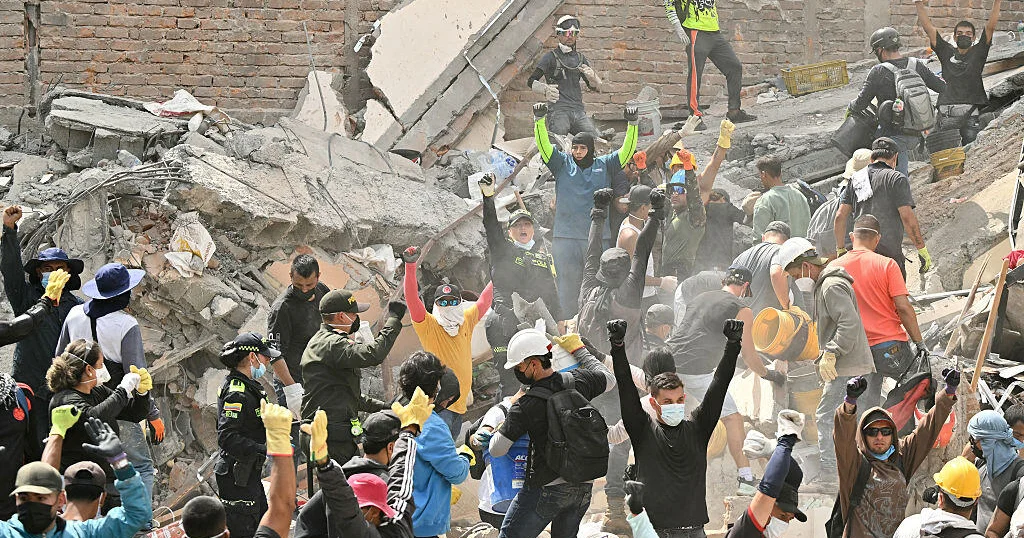
As efforts progressed, onlookers formed human chain brigades to swiftly pass chunks of debris out of rescue zones, striving for silence to listen for any signs of life. The emotional strains of rescue operations often lead to moments of heartbreaking loss amidst the significant milestones that highlight community resilience and heroism.
The Challenge of Aftershocks
As the rescue operations unfolded, fears of aftershocks loomed large in the hearts of residents across the affected regions. Colombia’s geological service reported no less than 130 aftershocks following the initial quake. Many citizens, traumatized by the events, found themselves unable to return home, opting instead to sleep in makeshift shelters established in public spaces such as parks and school gymnasiums.
Residents expressed their worries regarding the structural integrity of their homes, as some had sustained damage during the quake. Edith Penagos, a 48-year-old woman living in a temporary shelter, stated, “We have the most important things: a roof over our heads, food, water, and, in my case, medical care.” Meanwhile, seismologist Rodrigo León Loya cautioned the public by explaining that while the probability of similar magnitudes is low, it remains essential to prepare for the possibility of future seismic activity.
International Aid Efforts
International aid has begun to arrive in Colombia, with numerous organizations and countries stepping up to assist in relief efforts. Humanitarian workers who were already on the ground due to ongoing conflicts have swiftly pivoted towards disaster relief efforts.
Colombia’s UN resident coordinator,María José Torres, affirmed that their presence on the ground has enabled more efficient and effective assistance. Additionally, the U.S. State Department declared that disaster response teams started arriving immediately following the earthquake, with an offer of over $15 million in aid to support the recovery operations.
Countries like Mexico and El Salvador have also joined the response. Mexico has dispatched military aircraft carrying essential supplies and specialists, while El Salvador has prepared to send planes loaded with aid. Even Pope Leo XIV expressed solidarity with the victims, calling for prayer and support for those affected during a public address.
Community Resilience and Support
The aftermath of the earthquake reflects not only the immense challenges facing Colombia but also portray the spirit, resilience, and resolve of its communities. Volunteers have come together from across the nation to assist in rescue operations and overall humanitarian support.
Community leaders are playing a pivotal role in organizing assistance, marshaling resources, and providing shelter for those displaced. The efforts are inspired by a collective philosophy of solidarity, emphasizing the importance of working collectively to alleviate the suffering of affected community members.
As local residents grapple with their new reality, goodwill and community spirit serve as crucial indicators of hope. Concerts featuring popular artists scheduled in the weeks to come are anticipated to further support both local and international aid efforts while raising awareness about continuing humanitarian needs.
| No. | Key Points |
|---|---|
| 1 | Over 265 people have died as a result of the 7.4 magnitude earthquake. |
| 2 | Emergency rescue operations are focused on locating survivors within the critical first 72 hours. |
| 3 | Authorities report over 130 aftershocks, intensifying fears among residents. |
| 4 | International aid is pouring in from various countries and organizations to support relief efforts. |
| 5 | Community resilience and solidarity are evident as volunteers rally to assist affected individuals. |
Summary
The powerful earthquake in Colombia has brought both tragedy and a unified response from local and international communities. As emergency teams navigate the challenges of rescue operations amidst fears of aftershocks, the government and humanitarian organizations are mobilizing resources to aid those impacted. The situation remains fluid, but the spirit of resilience shines through as citizens band together in support efforts, providing a glimmer of hope amidst the devastation.
Frequently Asked Questions
Question: What are the main areas affected by the earthquake?
The earthquake primarily impacted cities such as Cali, Pereira, Manizales, and Quibdo.
Question: How can individuals help with relief efforts?
People can contribute by donating to reputable organizations focused on disaster relief, participating in local fundraising events, or volunteering their time.
Question: What is the significance of the first 48 to 72 hours post-quake?
This time frame is critical for rescue operations to locate and save survivors before the likelihood of survival diminishes.