
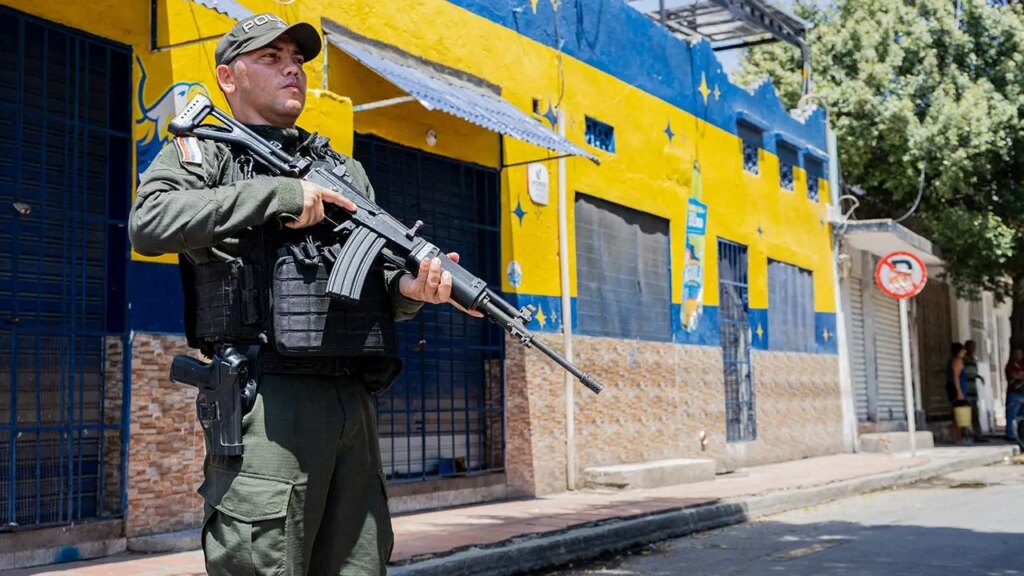
The Colombian Vice President José Manuel Restrepo recently expressed Colombia’s commitment to joining the United States in a new security initiative aimed at strengthening collaboration across the Western Hemisphere. While supporting the initiative proposed by former President Donald Trump during a meeting at the United Nations General Assembly, Restrepo emphasized that Colombia’s military forces would lead operations against local armed groups, rather than U.S. troops. This announcement follows a shift in Colombia’s political landscape, which reflects a broader trend of rightward movement across Latin America amid rising concerns over crime and economic instability.
| Article Subheadings |
|---|
| 1) Implications of the Shield of the Americas |
| 2) Colombia’s Strategic Position in Regional Security |
| 3) Domestic Challenges for the New Colombian Government |
| 4) Former Policies Under Scrutiny |
| 5) Future Engagement with International Partners |
Implications of the Shield of the Americas
The Shield of the Americas, championed by former President Trump, seeks to establish a formidable alliance for economic and national security within the region. Announcing this initiative at the UN, Trump labeled the collaboration as a significant step towards combating shared threats, notably those posed by drug cartels, which he referred to as “narco terrorists.” The vision is one of collective security where member nations share resources and intelligence to counteract organized crime and bolster regional stability.
During discussions, Restrepo underscored that while Colombia welcomes U.S. support, it will maintain primary control over military operations against domestic threats. The dichotomy is clear: U.S. forces will support Colombia through technology and intelligence, yet will not engage directly in operations on Colombian soil. This delineation of responsibility reflects Colombia’s sovereignty and its intent to lead its security initiatives. Restrepo stated,
“The United States helps us on security, helps us information, helps us on technology, but the public forces of Colombia are those who are going to act in those places.”
The prospect of enhanced military capabilities and support could bolster Colombia’s efforts against increasingly aggressive armed groups operating within its borders.
Colombia’s Strategic Position in Regional Security
Colombia’s geographical and strategic position places it at the forefront of regional security dynamics. The nation serves as a critical partner for the United States and other regional actors in the fight against transnational crime and drug trafficking. Following recent electoral victories of like-minded leaders in countries such as Argentina and Chile, the political landscape across Latin America is shifting towards governance models that prioritize security and economic stability. Colombians are keenly aware of the issues stemming from gang violence and drug cultivation, thus amplifying popular support for policies that promise a tougher stance against such elements.
Restrepo expressed that, “Colombia is a new partner. In my opinion, it’s one of the most important partners for the United States in the region.” This statement reflects a mutual recognition of the symbiotic nature of U.S.-Colombian relations, where Colombia’s commitment to advancing democratic values and combating illegal activities aligns closely with U.S. interests in the hemisphere.
Domestic Challenges for the New Colombian Government
The transition to a more aggressive security posture comes against the backdrop of increasing violence from armed groups and ongoing drug trafficking challenges. Following an incident involving the Autodefensas Conquistadoras de la Sierra Nevada, an armed group known for its drug trafficking activities, Colombia’s President Abelardo De La Espriella ordered military deployments to critical regions like Santa Marta, reflecting a decisive shift in governance. This sudden escalation is characterized by the mobilization of over 500 soldiers and 600 police officers to restore order in areas impacted by violence and threats from organized crime syndicates.
De La Espriella’s administration aims to capitalize on a perceived wave of momentum in the region, as countries across Latin America pivot towards more conservative, law-and-order focused politics. Despite these ambitions, Colombia’s new government faces significant hurdles, notably maintaining security in areas long neglected by the state, where a reported 30% of regions have lacked effective control. The government’s approach includes enhancing law enforcement capabilities and fostering community trust, which has historically been a challenging aspect of Colombian governance.
Former Policies Under Scrutiny
A change in power typically necessitates a reassessment of previous policies. Under former President Gustavo Petro, Colombia pursued a “total peace” policy with various armed organizations to negotiate peace. De La Espriella’s administration, however, is set to dismantle key aspects of this strategy. The new government explicitly rejects the notion of negotiation and seeks to actively combat groups it categorizes as terrorists. Restrepo criticized the precedent set by the previous administration, which he claims fostered a culture of impunity by seeking to negotiate rather than confront.
Reacting to rising violence by armed groups, De La Espriella aims to restart arrest warrants for these individuals, signaling a policy pivot towards more aggressive enforcement mechanisms. This approach is a marked departure from negotiations seen as ineffective and a conciliatory stance that failed to deliver the expected results in peacekeeping and social stability. Such shifts may face backlash in local communities disillusioned by years of conflict.
Future Engagement with International Partners
To bolster its efforts, Colombia is not only focusing inward but is also calling for broader international cooperation. During his address at the UN, Restrepo emphasized the need for enhanced global counter-terrorism frameworks and better intelligence-sharing among states. He expressed hopes that the UN could play a more active role in providing a unified definition of terrorism, which has long eluded consensus among member states.
The decision to suspend diplomatic relations with Iran underscores Colombia’s strategy to align its foreign policy with a focus on national and hemispheric security, especially in the face of perceived threats from connections between the Iranian government and international terrorism. Such actions signal Colombia’s intent to solidify its alliances within the Americas while distancing itself from nations that may pose risks to its security interests.
| No. | Key Points |
|---|---|
| 1 | Colombian Vice President José Manuel Restrepo emphasizes Colombian sovereignty in security operations amid U.S. support. |
| 2 | The Shield of the Americas initiative focuses on collective security against drug cartels deemed “narco terrorists.” |
| 3 | Colombia’s new government plans to confront armed groups more aggressively, reversing previous peace-oriented strategies. |
| 4 | Suspension of diplomatic relations with Iran signals a strong stance against suspected ties to terrorism. |
| 5 | Calls for a unified global definition of terrorism highlight Colombia’s push for increased international cooperation. |
Summary
Colombia’s recent political developments reflect a significant shift towards more aggressive security measures to combat crime and violence associated with powerful drug cartels and armed groups. With the backing of the United States, particularly through initiatives like the Shield of the Americas, Colombia aims to reclaim territory and enhance its military capabilities against increasingly bold threats. As this new strategy unfolds, the effectiveness of these measures remains uncertain, particularly given the historical challenges of governance in areas plagued by violence and the legacy of past policies focusing on negotiation over confrontation.
Frequently Asked Questions
Question: What is the Shield of the Americas?
The Shield of the Americas is an initiative proposed to strengthen security collaboration across the Western Hemisphere, focusing on combating threats posed by organized crime and drug cartels.
Question: How does Colombia plan to combat drug trafficking?
Colombia aims to confront drug trafficking through enhanced military operations led by Colombian forces, supported by U.S. intelligence and technology, while reversing previous policies focused on negotiation with armed groups.
Question: Why did Colombia suspend diplomatic relations with Iran?
Colombia suspended diplomatic relations with Iran due to perceived links between the Iranian government and international terrorist groups that pose a threat to Colombia’s national security.