
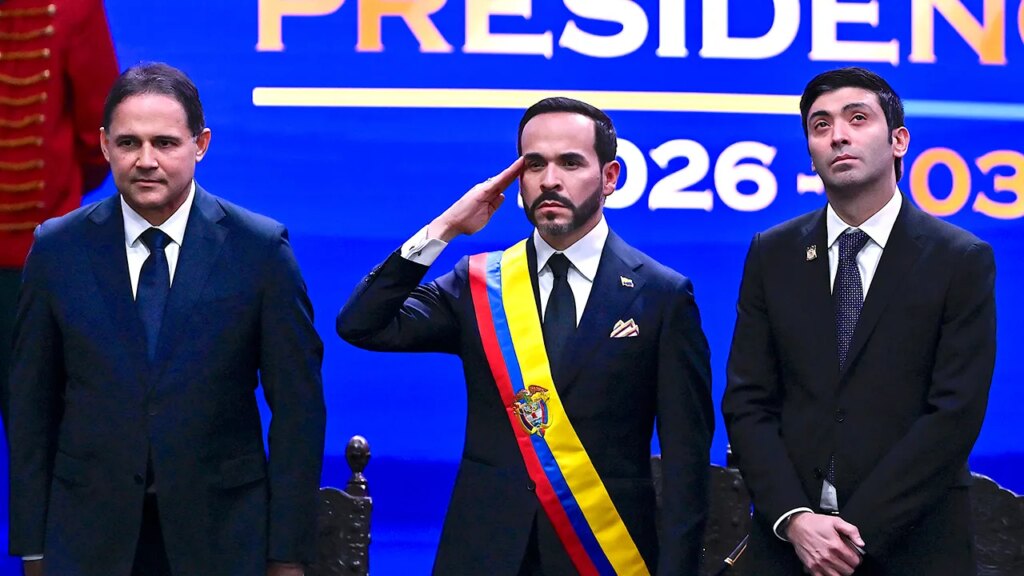
Colombia has officially entered a new political era with the inauguration of conservative President Abelardo de la Espriella, who was sworn in on August 7, 2026. In his address, he emphasized a commitment to reversing the leftist policies of former President Gustavo Petro and fortifying the country’s security and economic strategies. As De La Espriella sets to redefine Colombia’s role on the global stage, he faces a myriad of challenges, especially in economic health, crime, and political divisiveness that could limit the implementation of his ambitious plans.
| Article Subheadings |
|---|
| 1) Overview of the Inauguration and Political Landscape |
| 2) De la Espriella’s Promises and Challenges Ahead |
| 3) Economic Conditions and Fiscal Pressures |
| 4) Security Issues and Criminal Violence |
| 5) Navigating Political Divides in Congress |
Overview of the Inauguration and Political Landscape
President Abelardo de la Espriella‘s inauguration marked a significant shift in Colombia’s political landscape. On a day filled with ceremony, conservatives from across Latin America gathered to witness the historic event. Present were notable political figures such as Javier Milei, the President of Argentina, and Daniel Noboa, the Ecuadorian President, underscoring the regional implications of De la Espriella’s ascent to power. He vowed to turn the page from Gustavo Petro‘s presidency, which embraced left-wing policies, including the controversial “Total Peace” strategy aimed at achieving a negotiated settlement with various armed groups.
“I have come to close a long chapter of national resignation and, together with the people, embark on the most profound transformation of our destiny,” De la Espriella stated during his inauguration at the Pichincha Battalion military base. His message emphasized a return to order, authority, and freedom, indicating a robust shift in governance aimed at addressing the socio-political challenges posed by the Petro administration.
De la Espriella’s Promises and Challenges Ahead
De la Espriella aims to translate his campaign promises into pragmatic governance. One of his first significant actions included joining the “Shield of the Americas,” an initiative that aims to bolster security cooperation with the United States, continuing Colombia’s longstanding alliance as Washington’s closest security partner in South America. This initiative is coupled with a pledge to confront the authoritarian regimes of Venezuela, Cuba, and Nicaragua, signaling a tougher foreign policy approach.
However, the ambitious agenda faces substantial hurdles. Analysts caution that the country’s dire economic conditions, characterized by a predicted GDP deficit hovering around 6.5-6.7%, could inhibit his ability to deliver on his promises. Financial constraints mean that the government will need to prioritize spending while also managing public expectations. De la Espriella’s administration has been forewarned that the immediate aftermath, particularly the first hundred days, will require not just action but a calculated approach to restore credibility amidst profound fiscal challenges.
Economic Conditions and Fiscal Pressures
Colombia’s economic landscape presents daunting challenges for the newly inaugurated president. The International Monetary Fund (IMF) forecasts modest growth of 2.3% in the current year accompanied by elevated inflation rates, evidence that the fiscal environment is somewhat in precarious condition. Political analysts have pointed to a substantial financing gap of approximately $34 billion, making it imperative for de la Espriella to develop a robust fiscal adjustment plan quickly.
Furthermore, addressing the nation’s economic state will require deft negotiation within a politically fragmented Congress. The Defensores de la Patria party, which de la Espriella leads, holds only a handful of seats, forcing the administration to depend on centrist and other traditional parties to secure support for fiscal and security reforms. Understanding the scope of his commitments will require a careful balance, as implementing any major changes relies on the collaboration of a political landscape that has been historically polarized.
Security Issues and Criminal Violence
One of de la Espriella’s most pressing challenges is the deterioration of security in various regions of Colombia. Worryingly, 2026 has already witnessed record-high homicide rates for any first half of the year since the past decade, coupled with a spike in extortion and activities from armed groups that have grown in influence since 2022. Analysts assert that restoring security is pivotal for achieving long-term results in governance and rebuilding trust with the public.
As de la Espriella embarks on this journey, it is crucial to recognize that substantial changes in security typically unfold over years rather than months. There may be immediate visible shifts, such as operations and captures, but structural reforms will demand further time and resources. For many observers, the success of his presidency may ultimately hinge on his capacity to combat the escalating violence effectively through well-funded and strategic initiatives.
Navigating Political Divides in Congress
The fragmented nature of Colombian politics presents another formidable barrier for de la Espriella’s administration. While he won the presidency, he faces a Congress dominated by other parties, particularly Petro’s Historic Pact, which remains the largest political group. Constructive negotiations will be essential to move forward with legislative initiatives, including those related to public security and economic reforms.
Political analysts highlight the importance of building a broad coalition in Congress to facilitate governance. De la Espriella’s team will need to craft legislative proposals capable of garnering bipartisan support to avoid legislative gridlock. The political reality on the ground suggests that while ambitious change is necessary, the means of achieving it will involve fine-tuned strategy and an acute awareness of the competing interests within the legislative body.
As the first three months unfold, wise political maneuvering may reveal a clearer picture of the administration’s effectiveness in managing conflicting agendas within Congress—an incompetent coalition could jeopardize crucial initiatives moving forward.
| No. | Key Points |
|---|---|
| 1 | Inauguration of President Abelardo de la Espriella signifies a notable shift in Colombia’s political environment. |
| 2 | De la Espriella pledges to dismantle the policies of former President Gustavo Petro, focusing on security and economic reform. |
| 3 | Economic forecasts are challenging, with a significant deficit and minimal growth projected. |
| 4 | Colombia faces escalating crime rates, complicating the security landscape and public trust. |
| 5 | The president must navigate a divided Congress, requiring negotiation and coalition-building. |
Summary
The inauguration of President Abelardo de la Espriella ushers in a challenging period marked by the need for financial reforms, security reinvigoration, and political collaboration. Amid his intentions to redirect Colombia’s course away from the leftist policies of Gustavo Petro, de la Espriella faces significant trials in delivering on his promises. The outcomes of these efforts will likely influence the nation’s socio-political fabric for years to come, making careful governance essential in the immediate future.
Frequently Asked Questions
Question: Who is Abelardo de la Espriella?
Abelardo de la Espriella is the newly inaugurated President of Colombia, known for leading a conservative agenda opposed to the former left-wing administration of Gustavo Petro.
Question: What are the major challenges facing de la Espriella’s administration?
De la Espriella’s administration faces challenges including fiscal constraints, escalating crime rates, and a fragmented Congress that may complicate the passage of legislative reforms.
Question: What is the significance of the ‘Shield of the Americas’ initiative?
The ‘Shield of the Americas’ initiative is aimed at strengthening security cooperation between Colombia and the United States, reaffirming Colombia’s role as a key ally in the fight against crime and narcotics trafficking in South America.