
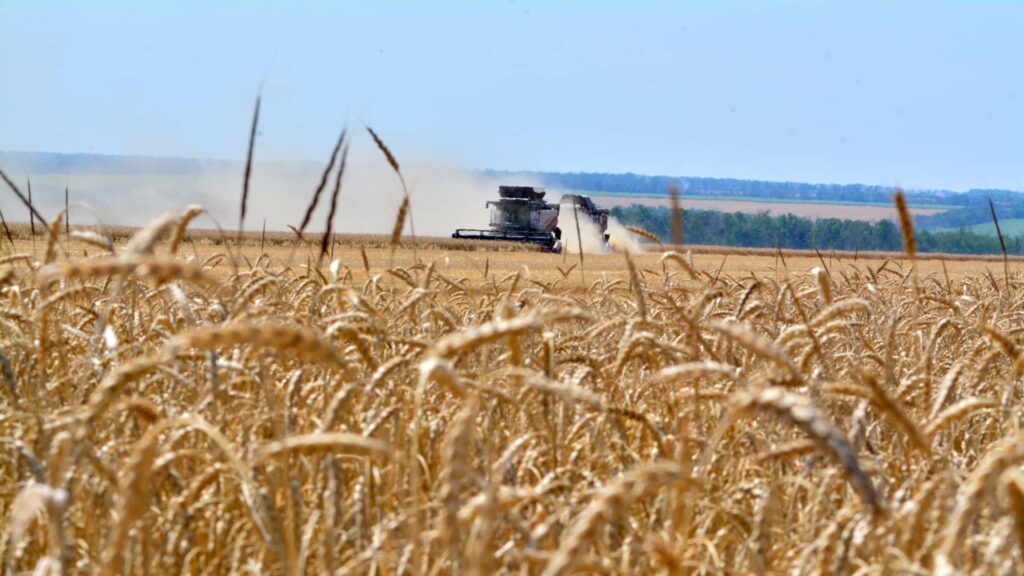
In a significant development within the agricultural commodities market, prices for corn and wheat have surged to their highest levels in over three years, driven by distinct factors. As of the latest reports, wheat futures reached $7.84 per bushel, marking a robust increase amid rising tensions between Russia and Ukraine. At the same time, corn prices have been buoyed by concerns over U.S. supply and demand dynamics, alongside constrained exports from Ukraine, making for a complex market landscape.
| Article Subheadings |
|---|
| 1) Current Market Trends for Corn and Wheat |
| 2) Factors Influencing Corn Prices |
| 3) The Role of Global Events on Wheat Supply |
| 4) Weather Impacts on Crop Production |
| 5) Market Dynamics and Investor Behavior |
Current Market Trends for Corn and Wheat
Corn and wheat prices have reached notable highs recently, with specific market figures underscoring their trajectories. Wheat futures settled at 784 cents per bushel, marking a substantial 3.1% rise after experiencing a peak of 790.25 cents. This surge represents a significant weekly incline of 12.1%, the highest since March 2022, contributing to a year-to-date increase of over 54.5%. Meanwhile, corn futures settled slightly higher at 536.5 cents per bushel, tracking a 5.5% increase for the week, suggesting strong trading activity amid heightened global demand and limited supply projections.
The market dynamics suggest that both crops are experiencing pressures geared toward a realistic understanding of supply vs demand scenarios. With corn up 21.8% year-to-date, growing apprehensions regarding the state of the U.S. crop, coupled with constraints on Ukrainian exports, have created an elevated trading environment. Observers note that the corn market may see its best month since April 2021, predominantly due to declining supply expectations and the lingering effects of the conflict in Ukraine.
Factors Influencing Corn Prices
Key drivers are contributing to the upward trend in corn prices, primarily centered around U.S. production expectations. Recent reports from the U.S. Department of Agriculture (USDA) have indicated decreases in yield forecasts, reducing the estimates by 2.3 bushels per acre to a projected 180.7 bushels. This revision came as a surprise to traders who anticipated a more robust yield, revealing that pre-month assumptions were overly optimistic.
Further complicating the outlook, the Pro Farmer’s Crop Tour provided disappointing observations about crop conditions, highlighting the toll of severe weather on this year’s expected yields. As outlined by William Osnato, director of commodity data research and analysis at Barchart, production was hampered during critical growing stages of the corn—particularly due to excessive rainfall and fungal issues that have arisen as a consequence of prolonged extreme heat.
Corporate sentiment has shifted; Jim McCormick, from AgMarket.Net, pointed out that previously dominant expectations of U.S. supply as a fallback in the global market have become questionable. As doubts grow surrounding U.S. crop volumes, pricing strategies are transitioning to align with rationing considerations, reflecting broader shifts in agricultural commodity markets.
The Role of Global Events on Wheat Supply
Conversely, the rally in wheat prices emphasizes the ramifications of geopolitical tension, notably involving Russia and Ukraine. This region is critical for wheat exports, accounting for over 25% of the global supply. Significant disruptions in maritime trade have raised alarms, navigating prices upwards due to fears surrounding the integrity of grain supply chains.
As highlighted by Osnato, the conditions in the Black Sea region have created a precarious atmosphere for transport and export. Recent military engagements, including strikes on grain export facilities and maritime trade routes, have led to a stark decline in expected Russian wheat shipments. The inability to navigate these waters with reliable logistics has contributed to a tightening of supplies globally.
The prospects for wheat production are further challenged by unfavorable weather patterns, including droughts affecting key states like Texas and Oklahoma. These multifaceted pressures illustrate the volatility in the wheat market, driven largely by supply-side challenges against a backdrop of heightened demand.
Weather Impacts on Crop Production
Weather patterns can significantly sway agricultural productivity and market expectations. This year has been particularly severe for crop conditions, as heatwaves and drought have extended impacts on both corn and wheat outputs. Severe conditions resulted in an estimated loss of 8 to 10 million tons in European wheat production as reported by analysts, further straining global supplies.
For corn, the situation is compounded by a multi-faceted approach to crop health, where extended periods of excessive moisture in some regions have led to the development of diseases that add another logistical burden to farming operations. The USDA’s acknowledgment of a weak outlook due to weather conditions has underscored the need for adaptive strategies within commodity markets.
Market Dynamics and Investor Behavior
The current fluctuations in corn and wheat prices are also driven by investment behaviors, with systematic traders becoming more active as market prices approach multi-year highs. According to Osnato, when trading contracts achieve significant price milestones, they often attract increased speculative trading, creating momentum that can lead to further price enhancements.
The interplay of fundamental supply concerns with trading behaviors paints a complex picture of the agricultural market landscape. As traders respond to changing conditions, volatility becomes the norm, necessitating astute monitoring of both market news and weather patterns to navigate these challenging environments effectively.
| No. | Key Points |
|---|---|
| 1 | Wheat prices surged to 784 cents per bushel due to geopolitical tensions and decreased supply expectations. |
| 2 | Corn prices rallied on concerns regarding U.S. crop yields and reduced forecasts, with year-to-date increases of 21.8%. |
| 3 | The USDA report indicates lower yield estimates for corn, citing adverse weather conditions impacting production. |
| 4 | Geopolitical instability in Ukraine has severely disrupted wheat supply chains and export capabilities. |
| 5 | Droughts and extreme weather patterns in Europe are negatively impacting wheat production and adding pressure on global markets. |
Summary
The recent surges in corn and wheat prices reveal critical intricacies within the agricultural commodities market, highlighted by varying influences and pressures. As geopolitical disruptions continue alongside domestic supply challenges, market observers will need to monitor developments closely. With significant fluctuations expected in response to climate and geopolitical events, strategies will have to adapt to these emerging realities to effectively handle commodity demands.
Frequently Asked Questions
Question: What are the primary factors driving corn prices upward?
The primary drivers include decreased yield forecasts from the USDA that indicate a lower crop output than previously expected, alongside strong global demand and constraints on Ukrainian exports, which are affecting the overall supply.
Question: Why is wheat pricing so volatile currently?
Wheat pricing is highly volatile due to geopolitical tensions in the Black Sea region, which have disrupted export capabilities, along with adverse weather conditions impacting production levels, causing a strain on the global supply chain.
Question: How do weather conditions impact agricultural commodities?
Weather conditions, such as droughts or excessive rain, can severely affect crop yields, ultimately influencing market expectations and commodity prices. Adverse weather can lead to decreased production forecasts, which increases competition among buyers for the limited supply available.