
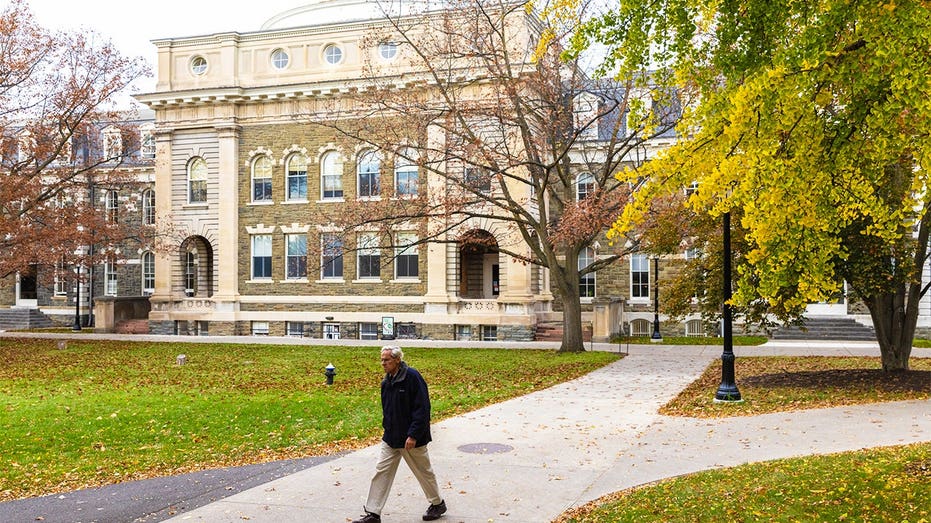
Cornell University President Michael Kotlikoff said the university must improve its handling of sexual assault allegations involving seven former fraternity members. The allegations concern an incident at a fraternity house in Ithaca, New York, in October 2024. An independent review and a criminal investigation by the New York Attorney General’s Office are examining the case. Kotlikoff said Cornell would begin making changes before those reviews are complete.
The allegations were made by Jane Doe, who was a 20-year-old Cornell undergraduate at the time. In a 101-page lawsuit, she alleges that former Chi Phi members drugged and sexually assaulted her. The men deny wrongdoing. Some say the sexual activity was consensual, while others deny participating. No criminal charges have been filed.
| 1) | Cornell leadership acknowledges failures |
|---|---|
| 2) | Allegations center on a fraternity-house incident |
| 3) | Investigations move to state authorities |
| 4) | University promises immediate policy changes |
| 5) | Transparency and Greek-life oversight face scrutiny |
Cornell leadership acknowledges failures
In a video statement, Kotlikoff said the allegations had deeply affected Cornell and required a candid assessment of the university’s conduct. He said the case raised questions about sexual violence prevention, alcohol and drug use, campus party culture, and the investigation that followed the report.
Kotlikoff said Cornell did not have all the answers but was committed to finding them. He said administrators and students shared responsibility for addressing the conditions surrounding the allegations.
“I believe we as an administration, and we as a community must do better,” Kotlikoff said.
Allegations center on a 2024 fraternity-house incident
The allegations concern a night in October 2024 at the Chi Phi fraternity house on Cornell’s Ithaca campus. Doe alleges that seven former fraternity members drugged and sexually assaulted her.
The defendants have disputed the allegations. Some maintain that the sexual activity was consensual, while others deny taking part. The claims remain allegations, and no criminal court has determined responsibility. The lawsuit also names Cornell and other entities, extending the dispute to institutional response and accountability.
Investigations move to state authorities
The case returned to public attention after Matthew Van Houten, the Tompkins County district attorney, said his office had not received the full transcript of Doe’s November 2024 interview with Cornell University Police before prosecutors initially decided not to pursue charges. Van Houten reopened the investigation after that issue emerged.
New York Gov. Kathy Hochul appointed the Office of the New York Attorney General as special prosecutor. Attorney General Letitia James said her office was conducting an active criminal investigation. Cornell has also welcomed an outside law firm’s independent review of its handling of the allegations.
University promises immediate policy changes
Kotlikoff said Cornell would not wait for the reviews or criminal investigation to finish before acting. The university plans to examine prevention and education programs, student support, mental health services, substance-use resources, and investigative procedures.
The goal is to improve prevention, support for students who report allegations, and internal inquiries. Kotlikoff did not provide a timetable or identify which procedures would change first. He also said Cornell would support efforts to change New York’s sexual assault laws, including broader policy discussions about intoxication and consent.
“We will act,” Kotlikoff said.
Transparency and Greek-life oversight face scrutiny
Cornell has faced frustration over how it communicated its response. Kotlikoff said the university would make a greater effort to explain its actions and provide context while recognizing legal and privacy limits on disclosure.
Cornell will also reexamine the role of fraternities and sororities, including how Greek organizations operate, whether party environments require changes, and how they are overseen. Kotlikoff said the allegations should not become a temporary controversy that fades without action.
“You have my commitment that this will not be a moment that passes,” Kotlikoff said.
| Number | Key Point |
|---|---|
| 1 | Cornell’s president said the university must improve its response. |
| 2 | The allegations involve seven former Chi Phi members and an October 2024 incident. |
| 3 | The New York Attorney General’s Office is conducting an active criminal investigation. |
| 4 | An independent review is examining Cornell’s handling of the case. |
| 5 | Cornell says it will strengthen prevention, support, investigation, and transparency efforts. |
Summary
Cornell faces legal, investigative, and institutional scrutiny over its response to allegations involving former fraternity members. The university has acknowledged shortcomings, backed independent and state reviews, and pledged to make changes before those processes conclude. The criminal investigation and civil litigation remain unresolved.
Frequently Asked Questions
What allegations are being investigated?
The allegations concern an October 2024 incident at the Chi Phi fraternity house involving Doe and seven former fraternity members. Doe alleges that she was drugged and sexually assaulted.
Who is conducting the criminal investigation?
The Office of the New York Attorney General, led by Letitia James, is conducting the investigation after being appointed special prosecutor by Gov. Kathy Hochul.
What changes has Cornell promised?
Cornell has promised to review prevention and education, student support, mental health and substance-use resources, investigative processes, communication, and Greek-life oversight.