
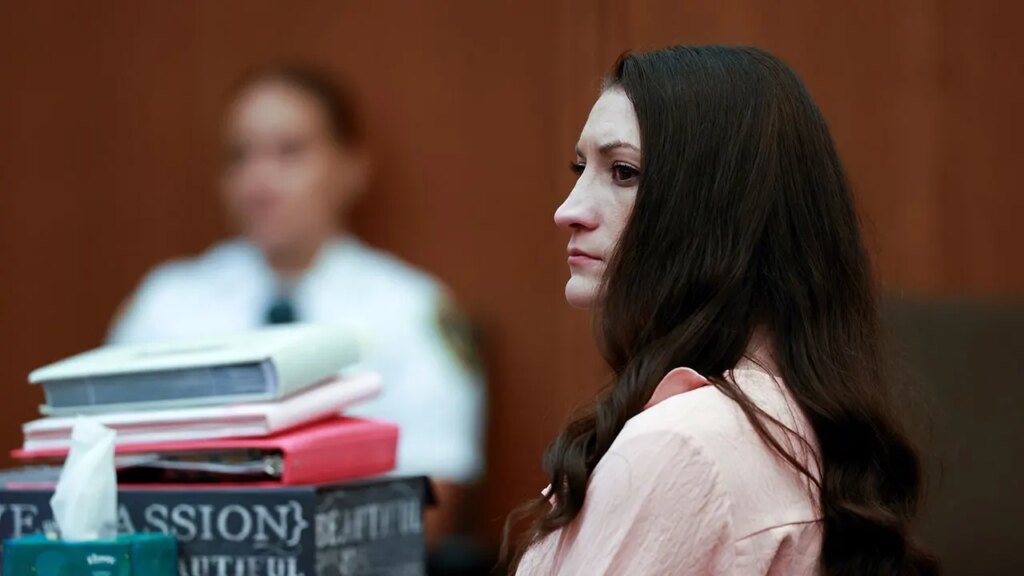
In a significant legal development in the Lindsay Clancy case, a Massachusetts judge is scheduled to consider arguments regarding a double jeopardy motion on Tuesday. This marks Clancy’s first appearance in court since the trial ended in a deadlock, prompting a mistrial declaration on September 4. The case has captured national attention, with accusations directed at a juror who held out for a guilty verdict, raising questions about the potential for a retrial.
| Article Subheadings |
|---|
| 1) Legal Proceedings: The Status of Lindsay Clancy’s Case |
| 2) Investigating the Holdout Juror: Challenges Faced |
| 3) Potential Outcomes: What a New Hearing Might Reveal |
| 4) The Implications of a Mistrial and Double Jeopardy |
| 5) What’s Next for Clancy and the Justice System |
Legal Proceedings: The Status of Lindsay Clancy’s Case
In the ongoing legal saga surrounding Lindsay Clancy, a judge in Plymouth, Massachusetts, is set to deliberate on a crucial motion related to double jeopardy. This motion arises after a jury was unable to reach a unanimous decision regarding Clancy’s guilt, leading to the declaration of a mistrial on September 4. Clancy, who has been the center of intense media scrutiny, is expected to appear in court physically for the first time since the deadlock.
The nature of the trial, which centers around severe allegations against Clancy, has kept it a focal point of public interest since its inception. The prosecution has been muted in terms of communicating their plans for a potential retrial, with Tim Cruz, the Plymouth County District Attorney, remaining somewhat tight-lipped about their strategy moving forward. For now, the legal spotlight is on the double jeopardy argument that could determine the trajectory of Clancy’s legal future.
Investigating the Holdout Juror: Challenges Faced
The situation is complicated by allegations made by Clancy’s defense attorney, Kevin Reddington, concerning a juror identified as Michael Desronvil. Reddington has suggested that Desronvil’s dissenting opinion—being the only juror favoring a guilty verdict—compromised the integrity of the jury process. Both the defense team and the prosecution have agreed to put the investigation into Desronvil on hold due to limitations on access to essential materials that would allow the holdout juror to respond to their claims.
Desronvil’s attorney, Edward Paltzik, pointed out that an adjournment was agreed upon so the juror’s new counsel could adequately prepare a defense. Reddington had labeled Desronvil as “the obstructionist juror,” fueling a public discussion about the integrity of juror deliberation in high-profile cases like Clancy’s. Paltzik has mounted a defense against the allegations, calling into question the motives of those seeking to investigate further.
Potential Outcomes: What a New Hearing Might Reveal
If the court agrees to proceed with a Fidler hearing—named after a California case involving jurors—the potential exists for Judge William Sullivan to question Desronvil about his deliberation process. Legal experts assert that such a hearing could yield valuable insights into juror behavior and whether external factors influenced the deadlock. Retired Massachusetts Judge Carol Erskine explained that multiple phases could unfold during such inquiries, leading to potential ramifications for how the prosecution may approach a retrial.
Moreover, the discussion of double jeopardy interplays significantly with the broader legal principles at stake. Should the court establish a strong basis for manifest necessity—essentially confirming that the mistrial was unavoidable—a retrial may still be viable. Reddington’s actions seem geared towards thwarting any further prosecution attempts by emphasizing the jurors’ documented uncertainties during the previous proceedings.
The Implications of a Mistrial and Double Jeopardy
The concept of double jeopardy, constituting the legal principle that prevents an individual from being tried twice for the same crime, raises complicated challenges in this case. If the court rules that the mistrial was improperly declared, there is a risk for the prosecution to face substantial backlash from the public and legal community should they pursue another trial given the divided jury outcome.
Reddington has framed his argument around the idea that the jury deliberation failed to meet the standards of justice. His assertions reflect a broader concern about judicial fairness and public trust in the legal process. The complexity of jury dynamics—especially in a case with such significant emotional and societal ramifications—underscores the importance of ensuring due process and protecting the rights of all parties involved.
What’s Next for Clancy and the Justice System
As the forthcoming court date approaches, questions of what lies ahead for Clancy loom large. Legal analysts suggest that the prosecution may reassess their strategy, particularly given the criticisms leveled against their case during the previous trial. Their preparation for a retrial would require new tactics to establish credible assertions against Clancy, including fortifying their expert testimony to counteract defense claims effectively.
Moreover, the public is keenly observing how both the prosecution and defense will navigate the delicate landscape of a reshuffled legal battle. With Reddington at the helm for the defense, his reputation as a seasoned attorney capable of crafting robust legal strategies may play a compelling role in future proceedings. The outcome may not only impact Clancy’s case but could also set legal precedents regarding juror privacy and the integrity of deliberations in the American judicial system.
| No. | Key Points |
|---|---|
| 1 | The Lindsay Clancy case has generated nationwide interest due to its complex legal proceedings. |
| 2 | The double jeopardy motion will be discussed in court, determining the potential for retrial. |
| 3 | Controversy surrounds juror Michael Desronvil, who opposed the majority verdict. |
| 4 | Reddington’s allegations against Desronvil could affect the future of the prosecution’s case. |
| 5 | The proceedings highlight essential issues regarding judicial integrity and juror privacy. |
Summary
The Lindsay Clancy case remains under intense scrutiny as ongoing legal developments unfold in the aftermath of a mistrial declaration. With the double jeopardy motion set to be discussed in court, the coming weeks will likely prove critical for Clancy, the prosecution, and the legal framework surrounding juror conduct. The attention surrounding this case encapsulates broader societal themes of justice, integrity, and the responsibilities of those operating within the legal system, ultimately shaping public perceptions of judicial processes.
Frequently Asked Questions
Question: What is double jeopardy?
Double jeopardy is a legal principle that prohibits an individual from being tried twice for the same crime, ensuring that a person cannot be subjected to multiple trials for an alleged offense after being acquitted or convicted.
Question: Why did Lindsay Clancy’s trial end in a mistrial?
Lindsay Clancy’s trial ended in a mistrial due to a deadlocked jury, meaning that the jurors were unable to reach a unanimous verdict regarding her guilt or innocence.
Question: What role does juror conduct play in a trial?
Juror conduct is pivotal in ensuring that a fair and unbiased decision is reached in a trial. Issues like juror dissent or external influences can significantly impact a trial’s outcome, leading to complications such as mistrials or retrials.