
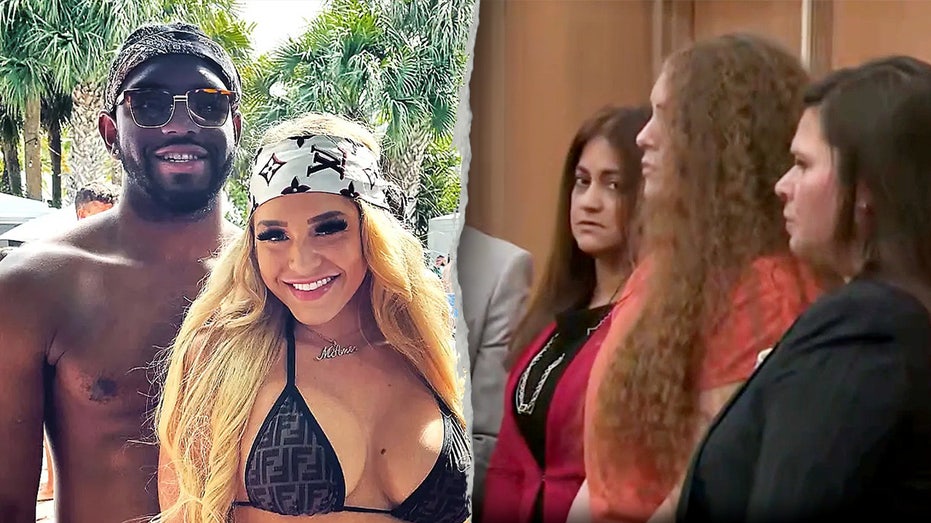
Former OnlyFans model Courtney Clenney was sentenced to six years in prison after pleading guilty to first-degree manslaughter with a deadly weapon in the 2022 death of her boyfriend, Christian Obumseli. The agreement replaces her previous second-degree murder charge and includes five years of probation after incarceration. Clenney has received credit for nearly four years already spent in custody, potentially leaving about two years before her release and transition to probation. The case has drawn competing claims from Clenney’s defense and Obumseli’s family about violence within their relationship.
| 1) | Plea agreement and sentence |
| 2) | Credit for time served and post-release conditions |
| 3) | Obumseli family’s response |
| 4) | Civil lawsuit and financial restrictions |
| 5) | Disputed account of the relationship |
Plea agreement and sentence
Courtney Clenney, 30, appeared in a Miami courtroom on Monday, August 10, 2026, and accepted a negotiated resolution in the death of Christian Obumseli, 27. She pleaded guilty to first-degree manslaughter with a deadly weapon and was sentenced to six years in prison. The plea resolves a case that had previously been filed as second-degree murder after Obumseli was fatally stabbed in the Miami apartment the couple shared on April 3, 2022.
The agreement was formally presented after Clenney’s attorneys announced on July 31 that a deal had been reached. Its terms required the court’s approval before becoming final. The negotiated charge and sentence brought the criminal proceedings toward a conclusion without a trial on the earlier murder allegation.
Credit for time served and post-release conditions
Clenney has remained in custody since her August 2022 arrest, giving her credit for nearly four years of time served. Based on that credit, she could leave prison in approximately two years, although the precise timing depends on correctional and legal calculations. Her prison term will be followed by five years of probation.
After release, Clenney will be required to undergo mental health and substance abuse evaluations and complete any treatment ordered under the terms of supervision. The conditions reflect requirements included in the plea agreement and are intended to continue oversight after her incarceration ends.
Obumseli family’s response
Members of Christian Obumseli’s family addressed the court at the sentencing hearing, describing the lasting effect of his death and the absence he has left in their lives. They said he loved deeply and remained in what they characterized as a destructive relationship despite earlier incidents of violence.
“No sentence, no plea can bring back my son to me,” his mother said.
A family representative told the court that Obumseli’s future and the opportunity for his family to grow with him had been taken away. The family has maintained that Obumseli was the victim of domestic violence, a position that conflicts with the defense account of the relationship.
Civil lawsuit and financial restrictions
After Clenney’s arrest, Obumseli’s estate filed a civil lawsuit against her and companies connected to the couple’s condominium. The suit alleged battery and claimed that the condominium association, property management and security defendants failed to provide adequate protection despite circumstances the estate said made the fatal attack foreseeable.
The estate filed a notice of settlement involving Clenney on December 3, 2025, and the claims against her were voluntarily dismissed with prejudice on March 4, 2026. The civil case continued against other defendants. Separately, prosecutors said they would support efforts by the Florida attorney general’s office to prevent Clenney from financially benefiting from the killing.
“We do believe that nobody should benefit financially from murdering somebody,” Assistant State Attorney Shawn Abuhoff told the court.
Disputed account of the relationship
Clenney’s attorneys have argued that Obumseli was abusive and described her as a battered partner who acted in self-defense. Obumseli’s family has rejected that characterization and has said he experienced domestic violence. The former Miami-Dade state attorney, Katherine Fernandez Rundle, previously described the relationship as “tempestuous and combative,” beginning in November 2020.
The competing accounts shaped the case from the 2022 arrest through the plea hearing. The guilty plea establishes the criminal resolution and sentence, while the statements from both sides show that the circumstances surrounding the relationship remain deeply contested by the parties.
| Number | Key Point |
|---|---|
| 1 | Clenney pleaded guilty to first-degree manslaughter with a deadly weapon. |
| 2 | She received six years in prison and five years of probation. |
| 3 | Nearly four years of custody will count toward the prison sentence. |
| 4 | The Obumseli estate settled its claims against Clenney, while the broader civil case continued against other defendants. |
Summary
The plea agreement ends the murder prosecution against Courtney Clenney with a manslaughter conviction, six-year prison sentence and subsequent probation. Her time in custody since 2022 substantially reduces the remaining prison term. The case also leaves unresolved personal disagreements over the couple’s relationship, while civil claims involving the apartment property and related companies have followed a separate path.
Frequently Asked Questions
What sentence did Courtney Clenney receive?
She was sentenced to six years in prison followed by five years of probation after pleading guilty to first-degree manslaughter with a deadly weapon.
How much time could Clenney have left to serve?
She received credit for nearly four years already spent in custody and could be released from prison in about two years, subject to official calculations.
What happened to the civil claims against Clenney?
The estate’s claims against Clenney were settled and dismissed with prejudice in 2026. The civil lawsuit continued against other defendants connected to the condominium.