
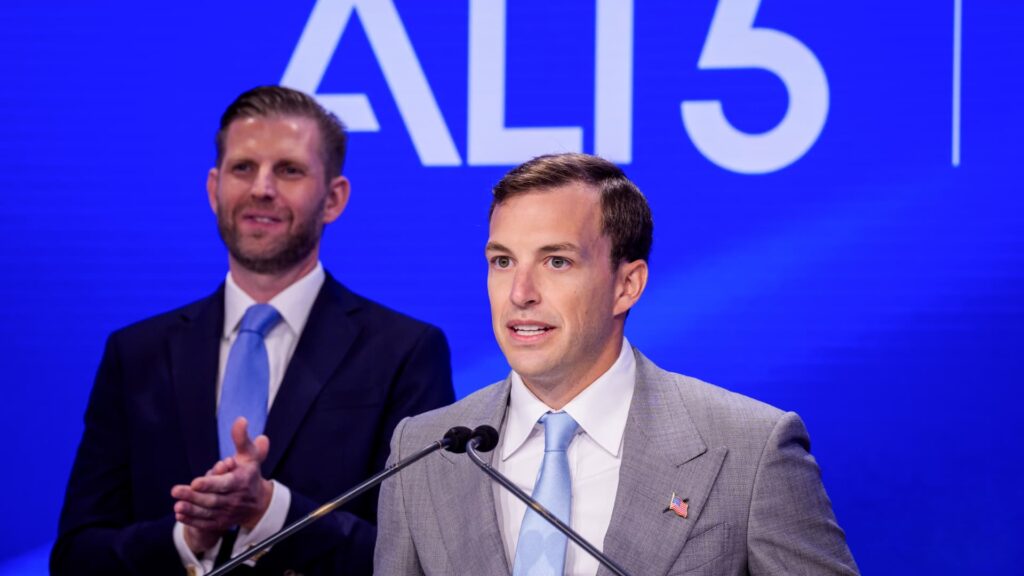
In a significant move within the finance and cryptocurrency sectors, a federal financial regulator has conditionally approved a bank charter application for World Liberty Trust Co., an entity affiliated with the crypto firm World Liberty Financial. This company, which has ties to President Donald Trump‘s family, intends to capitalize on the issuance of stablecoins. With the approval coming from the Office of the Comptroller of the Currency (OCC), the development is being scrutinized, particularly given the political controversy surrounding Trump’s business interests. The approval process, however, is ongoing and hinges on several additional steps that World Liberty must complete.
| Article Subheadings |
|---|
| 1) Overview of the Bank Charter Approval |
| 2) Implications of Stablecoin Issuance |
| 3) Political Reactions and Controversy |
| 4) The Approval Process and Requirements |
| 5) Future of Cryptocurrency Regulations |
Overview of the Bank Charter Approval
The Office of the Comptroller of the Currency accepted World Liberty Trust Co.’s application for a national trust bank, marking a pivotal moment for the crypto sector. The OCC’s conditional approval was granted on a Friday, signaling a new opportunity for World Liberty Financial, a firm that claims it is partially owned by an entity linked to President Donald Trump. The trust bank’s charter will allow it to operate with enhanced financial capabilities, particularly in issuing stablecoins.
As a part of the approval process, World Liberty must fulfill certain conditions which include an increase in capital and compliance with existing regulatory frameworks. The timeline for fulfilling these requirements remains unclear, but the company has expressed optimism about gaining full charter status, which would enable them to tightly integrate stablecoin services into their operations.
Implications of Stablecoin Issuance
Stablecoins are digital currencies pegged to the value of traditional fiat currencies, such as the U.S. dollar. The approved charter will empower World Liberty to issue its own stablecoins, which are backed by secure reserve assets like U.S. Treasuries. This capability is not merely a financial necessity; it represents a strategic move to enhance profitability and market presence. By internalizing stablecoin issuance, the firm can create a more agile operation without the dependence on external services, such as the current partnership with BitGo for stablecoin transactions.
The stablecoin market has seen explosive growth and presents lucrative prospects for enterprises in crypto. There is a growing demand for stable alternatives to volatile digital currencies, as businesses and consumers alike seek more predictable financial instruments. By entering this sector, World Liberty aims to carve a niche amid increasing competition and capitalize on the expanding market for decentralized finance (DeFi) solutions.
Political Reactions and Controversy
The conditional approval of World Liberty’s bank charter has not escaped the ire of political figures, particularly from Congressional Democrats. Notably, Senator Elizabeth Warren has been vocal against the approval, criticizing the situation as “the most brazen act of self-dealing our financial system has ever seen.” Warren and her colleagues have emphasized the potential ethical implications of allowing a sitting president to maintain financial interests in a banking institution. She has called for legislative measures to inhibit presidents and high-ranking officials from owning or controlling banks, citing concerns over conflicts of interest and regulatory favoritism.
The fallout from such approvals under the Trump administration raises questions about the integrity of financial regulations and oversight. The ongoing discourse suggests that the intersection of finance and politics will continue to provoke significant debate, especially in light of the unique circumstances surrounding this approval. Warren’s push for stricter regulations aims to address these concerns and restore faith in a system that many perceive as compromised.
The Approval Process and Requirements
The OCC’s process for charter applications includes a thorough vetting by career staff, who analyze the applicant’s capacity to meet regulatory obligations. Despite having received a notable volume of applications, particularly from crypto-related entities during the Trump administration, the process remains stringent. The approval granted to World Liberty comes with explicit conditions that require the company to raise capital and demonstrate compliance with ongoing regulatory standards before fully acquiring its charter.
Despite the complexities involved, World Liberty CEO Zach Witkoff has affirmed the company’s commitment to transparency and regulatory compliance. As he stated, “We welcome continuous scrutiny from Federal regulators for many years to come.” This readiness to undergo additional regulatory oversight highlights a willingness to navigate the intricate landscape of financial services, particularly in an environment increasingly characterized by stringent regulatory conditions.
Future of Cryptocurrency Regulations
The conditional approval of World Liberty’s charter is reflective of broader trends influencing the cryptocurrency regulatory landscape in the United States. As both consumers and investors become more interested in cryptocurrency assets, regulators are faced with the challenge of developing a framework that ensures both innovation and consumer protection. The OCC itself has seen an uptick in charter applications, indicating that many firms are looking to enter the banking space with a focus on digital currencies.
Looking ahead, the potential for revamped regulations is promising yet fraught with challenges. Senators such as Elizabeth Warren are pushing for measures that would enforce stricter oversight of cryptocurrency ventures, particularly those with close ties to political figures. The evolving dynamics among financial firms, regulatory bodies, and lawmakers reveal that the future of cryptocurrency in the mainstream financial system will rely heavily on how well these stakeholders can collaborate to achieve a balanced regulatory framework.
| No. | Key Points |
|---|---|
| 1 | The OCC has conditionally approved a bank charter application for World Liberty Trust Co. tied to World Liberty Financial. |
| 2 | The charter will allow the issuance of stablecoins, backed by reserve assets for increased financial stability. |
| 3 | Political figures, notably Senator Elizabeth Warren, have raised concerns about the ethical implications of this approval. |
| 4 | The approval process includes additional steps, such as capital raising and compliance with regulations. |
| 5 | The future of cryptocurrency regulations is uncertain, with potential for increased scrutiny from lawmakers and regulators. |
Summary
The conditional approval of World Liberty Trust Co.’s bank charter marks a significant development in the evolving landscape of cryptocurrency, intertwining financial services and political implications. With the potential for stablecoin issuance, the company aims to enhance its operations while navigating a complex regulatory environment. However, political scrutiny, particularly from figures like Senator Elizabeth Warren, underscores ongoing concerns about conflicts of interest and the need for rigorous regulatory oversight as the cryptocurrency sector continues to mature.
Frequently Asked Questions
Question: What is a bank charter?
A bank charter is a legal authorization granted by a regulatory authority that allows a financial institution to operate as a bank and provides the framework under which it must operate.
Question: What are stablecoins?
Stablecoins are digital currencies that are designed to maintain a stable value by being pegged to reserve assets such as fiat currencies.
Question: Why is there controversy surrounding World Liberty Financial’s charter approval?
The controversy stems from the connections between World Liberty Financial and President Trump, with concerns about potential conflicts of interest and ethical implications associated with the approval.