
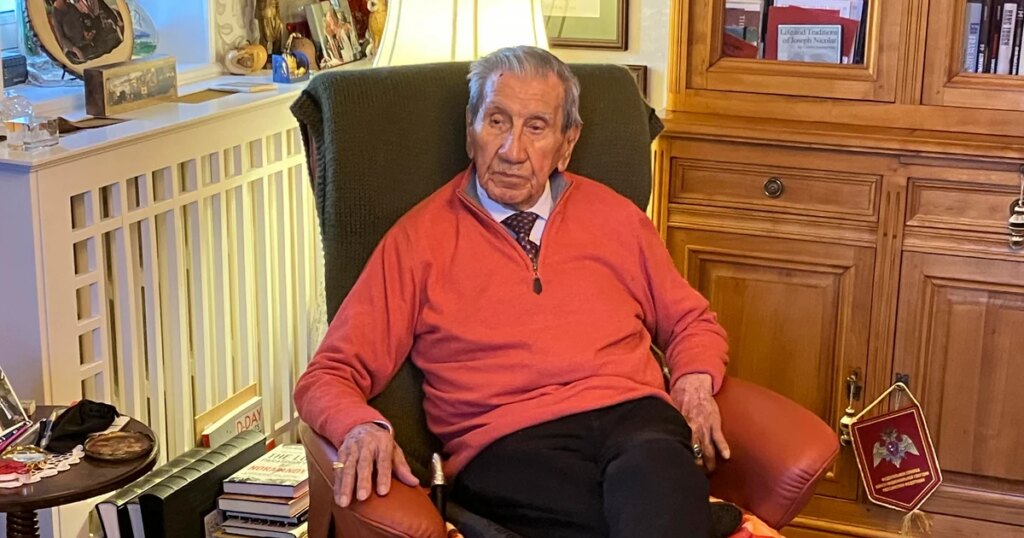
In a poignant moment for history, Charles Shay, a celebrated Native American veteran and respected figure known for his heroism during D-Day, has passed away at the age of 101. Shay, who was a 19-year-old medic when he landed at Omaha Beach on June 6, 1944, died peacefully in his home in Bretteville-L’Orgueilleuse, Normandy. His remarkable contributions during World War II and subsequent efforts to preserve the memory of his fellow soldiers have earned him enduring admiration.
| Article Subheadings |
|---|
| 1) D-Day and Charles Shay’s Heroic Actions |
| 2) A Life Dedicated to Service |
| 3) Legacy and Memorialization |
| 4) The Effects of War on a Veteran’s Life |
| 5) Reflections on Peace Amidst Conflict |
D-Day and Charles Shay’s Heroic Actions
On June 6, 1944, known as D-Day, the Allied forces launched a massive invasion on the beaches of Normandy during World War II. Charles Shay, a young medic, was among nearly 160,000 troops from various nations, including the U.S., Canada, and the United Kingdom, who landed on Omaha Beach. The operation, which ultimately became a critical turning point in the war, was beset by fierce German resistance resulting in significant casualties on both sides. Shay’s bravery was remarkable; he was awarded the Silver Star for repeatedly risking his life to save critically wounded American soldiers.
Shay recalled the chaos that unfolded as artillery shells rained down, and medics like him desperately worked to provide aid amid horrific circumstances. Despite the overwhelming danger, Shay’s resolve was unwavering. “I was prepared to give my life if I had to,” he reflected years later, illustrating the selflessness that characterized his actions during the battle. His determination to fulfill his duties amid terrifying conditions not only saved countless lives but also exemplified the courage that defined a generation of soldiers.
A Life Dedicated to Service
After World War II, Shay’s commitment to service continued. He reenlisted in the military, citing a desire to address the dire situation faced by Native Americans in his home state of Maine. His return to military life was motivated by the systemic issues of poverty and discrimination facing his community. It serves as a powerful reminder of how veterans often shoulder the burden of not just their experiences in combat but also the societal challenges that persist long after the guns have fallen silent.
Beyond his military service, Shay was involved in the U.S. nuclear testing program in the Marshall Islands and eventually took a position with the International Atomic Energy Agency in Vienna, Austria. Throughout his life, Shay remained a steadfast advocate for peace, yet it wasn’t until recent years that he began to openly share his harrowing experiences from World War II. He began attending D-Day commemorations in 2007, where he used his testimony to spread messages of reconciliation and remembrance.
Legacy and Memorialization
The Charles Shay Memorial group, dedicated to honoring the sacrifices of Native Americans who served in the Normandy invasion, expressed their sorrow over Shay’s passing, noting, “our hearts are deeply saddened.” This reflects the community’s deep appreciation of his life and the legacy he leaves behind. Shay has not only become an icon for courage and honor within the Native American community but also a symbol for the broader sacrifice of all soldiers who fought in World War II.
During his time in Normandy, Shay took part in rituals that honored his fallen comrades. This included a sage-burning ceremony he performed overlooking Omaha Beach, emphasizing a tradition of respect and remembrance. His legacy will live on as the monument that bears his name continues to inspire future generations to recognize the cost of war and the sacrifices required to secure peace.
The Effects of War on a Veteran’s Life
Shay’s experiences during World War II left an indelible mark on him. Living through the terror of combat and witnessing the devastation of war shaped his life in profound ways. Although he initially chose to remain silent about his experiences for over six decades, the emotional weight he carried was evident. When he began speaking about his past, he highlighted not only the horrors of battle but also the importance of collective memory in healing.
His reflections on those lost during D-Day and the obligation to remember those who fell demonstrate a need for understanding in the aftermath of conflict. Shay believed that sharing stories of sacrifice could help bridge divides and foster dialogue on peace. His insights underscore the complex relationship veterans have with their service, often marked by trauma yet also imbued with a quest for a just and peaceful future.
Reflections on Peace Amidst Conflict
Even in his final years, Charles Shay remained attuned to the world’s turmoil. Following Russia’s full-scale invasion of Ukraine in early 2022, Shay expressed deep sadness at witnessing renewed violence in Europe. “In 1944, I landed on these beaches, and we thought we’d bring peace to the world. But it’s not possible,” he was quoted as lamenting the ongoing conflicts that pervade the globe.
This sentiment resonated not just within his personal narrative but also within a broader context of ongoing battles for peace worldwide. Shay’s unwavering belief in dialogue and understanding serves as a lesson for future generations, reinforcing the need for continued efforts toward conflict resolution. He remained a voice of wisdom and reflection for those seeking to comprehend the path laid by previous wars.
| No. | Key Points |
|---|---|
| 1 | Charles Shay was a veteran medic during D-Day, recognized for his extraordinary bravery. |
| 2 | He served as an advocate for Native American issues and continued to serve in different capacities after WWII. |
| 3 | The Charles Shay Memorial group honors his legacy and those of Native Americans who served in France. |
| 4 | Shay reflected on the lasting effects of war and the importance of remembering fallen soldiers. |
| 5 | His concerns about ongoing global conflicts highlight the need for continued efforts toward peace. |
Summary
The passing of Charles Shay marks the end of an era and serves as a stark reminder of the sacrifices made during World War II. His life embodied valor, compassion, and an enduring commitment to peace. As the world continues to confront various conflicts, his legacy encourages reflection on the lessons learned from the past, pushing for a collective responsibility to foster understanding and prevent future wars. Charles Shay will long be remembered not only as a hero but as a voice for peace and reconciliation.
Frequently Asked Questions
Question: What were Charles Shay’s notable achievements during World War II?
Charles Shay was awarded the Silver Star for his bravery in rescuing wounded soldiers during the D-Day invasion at Omaha Beach. He also received France’s highest honor, the Legion of Honor, in recognition of his service.
Question: How did Shay express his commitment to peace after the war?
Shay became an influential figure in veterans’ circles, using his experiences to advocate for peace and remembrance at D-Day commemorations and other events, sharing his powerful testimony and messages of reconciliation.
Question: What does the Charles Shay Memorial group do?
The Charles Shay Memorial group honors the legacy of Native Americans who served in the Normandy invasion, celebrating their contributions and ensuring their sacrifices are remembered in history.