
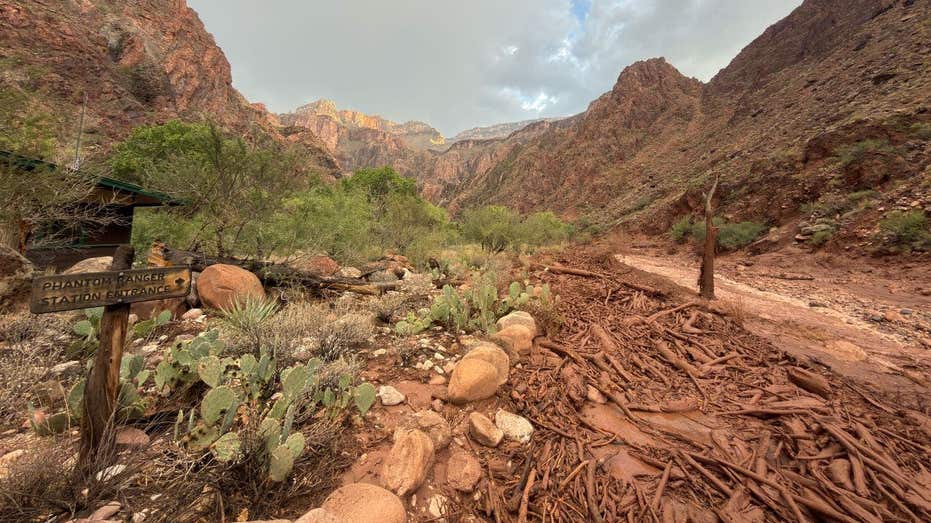
Severe flash flooding in the Grand Canyon killed at least one person, damaged critical infrastructure and triggered an urgent search for as many as 15 missing hikers. The flooding on Aug. 29 destroyed or heavily damaged the Transcanyon Waterline and nearly all footbridges across Bright Angel Creek. The National Park Service has evacuated at least 62 people and will impose the park’s highest level of water restrictions.
Officials recovered the body of a 46-year-old man from the Colorado River on Sunday night, but his identity has not been released. Search and recovery operations are continuing in Bright Angel Canyon, the Phantom Ranch area and along the Bright Angel Creek corridor.
| Number | Subheading |
|---|---|
| 1) | Flooding causes deaths and widespread damage |
| 2) | Search expands for missing hikers |
| 3) | Water restrictions take effect across the park |
| 4) | Rescue teams coordinate evacuations and recovery |
| 5) | Officials assess damage to historic and natural sites |
Flooding causes deaths and widespread damage
The flash flooding struck Bright Angel Canyon and the Phantom Ranch area on Saturday, Aug. 29. Fast-moving water damaged infrastructure throughout the inner canyon, including nearly all footbridges spanning Bright Angel Creek. The National Park Service said the damage was extensive and affected the Transcanyon Waterline, a central system that supplies water to the park.
A 46-year-old man was found in the Colorado River on Sunday night and pronounced dead. Officials have not publicly identified him. The flooding also affected the area near the Phantom Ranger Station, where water and debris reshaped sections of the canyon and disrupted access routes.
Search expands for missing hikers
Park officials estimate that 15 people may still be missing, although they emphasized that the figure could change as investigators obtain more information. The National Park Service is asking anyone who knows of hikers or backpackers in the inner canyon along the Bright Angel Creek corridor on Aug. 29 to contact its investigative services branch.
Officials are also seeking information about people who held campground reservations in the affected corridor. The request is intended to help authorities determine who was in the area when the flooding occurred, identify people who have safely left the canyon and focus search teams on those who remain unaccounted for.
“The National Park Service is asking anyone who knows of hikers or backpackers who were in the inner canyon along the Bright Angel Creek corridor on August 29, as well as anyone who had a campground reservation in the affected corridor, to provide information.”
Water restrictions take effect across the park
The park will begin stage four water restrictions at noon Monday because the damaged waterline cannot support normal operations. The restrictions apply across the park and include mandatory dry camping, meaning visitors will not have access to water spigots at campsites.
Overnight lodging has been temporarily closed, and fires are prohibited in the South Rim and inner canyon areas. The measures are designed to conserve remaining water supplies while crews assess the system and work to restore essential infrastructure. Visitors in affected areas must plan without normal access to water services.
Rescue teams coordinate evacuations and recovery
At least 62 people have been evacuated since the flooding. Rescue personnel have used aircraft and other emergency resources to remove hikers from damaged areas, while ground teams and investigators continue searching for those who may be missing.
Katie Hobbs, Arizona’s governor, said state emergency officials are working with the National Park Service and Coconino County Emergency Management. “My heart is with the families and loved ones of every person unaccounted for after the flash flooding at the Grand Canyon,” Hobbs said. She added that the Arizona Division of Emergency Management was coordinating support for search and recovery operations.
Officials assess damage to historic and natural sites
The flooding caused more than immediate disruption to trails and water services. Officials said the physical damage includes a historic lodge near the bottom of the Grand Canyon, along with extensive environmental changes in the affected corridor.
Adrian Fontes, Arizona’s secretary of state, described the flooding as devastating and thanked first responders involved in evacuations and the search. He said the damage included the lodge and “untold environmental upheaval,” underscoring the scale of the impact as authorities begin documenting conditions in the canyon.
| Number | Key Point |
|---|---|
| 1 | One 46-year-old man was recovered dead from the Colorado River. |
| 2 | Officials estimate that 15 people may be missing. |
| 3 | At least 62 people have been evacuated. |
| 4 | The Transcanyon Waterline and most Bright Angel Creek footbridges were damaged. |
| 5 | Stage four water restrictions include dry camping, closed lodging and a no-fire rule. |
Summary
The Grand Canyon flooding created a combined rescue, recovery and infrastructure emergency. With one confirmed death, up to 15 people unaccounted for and major damage to the park’s water system and access routes, authorities are relying on public information and coordinated emergency operations. The highest-level water restrictions will remain an important measure while officials assess damage and determine how to safely restore services.
Frequently Asked Questions
When did the Grand Canyon flooding occur?
The severe flash flooding occurred on Saturday, Aug. 29, 2026, in Bright Angel Canyon and the Phantom Ranch area.
How many people are missing?
Park officials estimate that 15 people may be missing, but they said the number is not definitive and are seeking information from the public.
What do the stage four water restrictions require?
The restrictions require dry camping without access to water spigots, temporarily close overnight lodging and prohibit fires in the South Rim and inner canyon areas.
What infrastructure was damaged?
The flooding damaged the Transcanyon Waterline, nearly all footbridges across Bright Angel Creek and other infrastructure, including a historic lodge near the bottom of the canyon.