
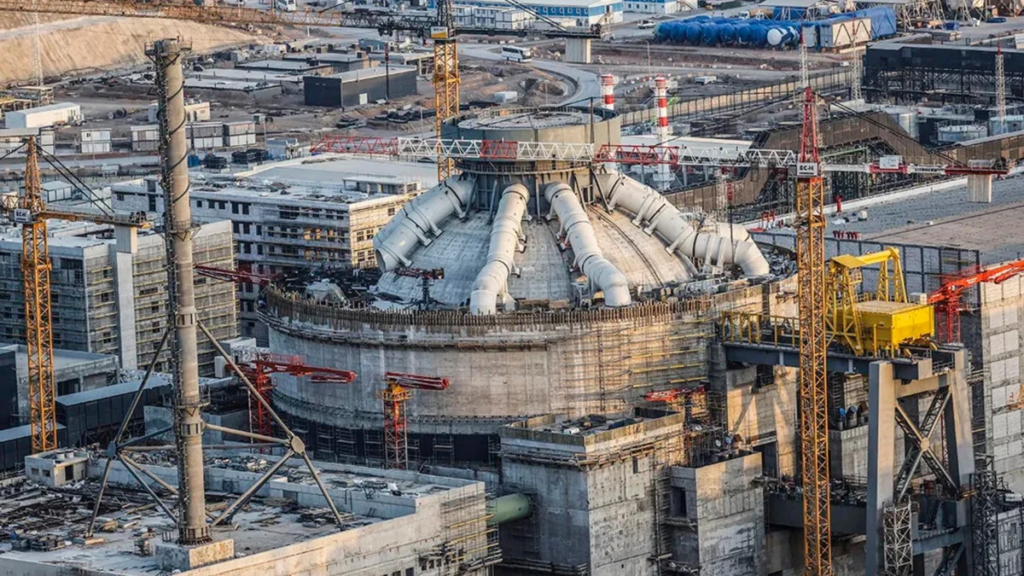
The Turkish government has recently enacted a new regulation on Green Taxonomy under its efforts to address climate change and align with European Union standards. While aimed at promoting sustainable activities, the regulation has attracted criticism for including fossil fuels and nuclear energy as acceptable practices within its framework. Key experts have voiced concerns that these inclusions undermine Turkey’s commitments to achieve net-zero emissions by 2053, particularly as the country prepares to host the 31st United Nations Climate Change Conference (COP31).
| Article Subheadings |
|---|
| 1) Overview of Turkey’s Green Taxonomy Regulation |
| 2) The Impact of Including Nuclear Energy |
| 3) Fossil Gas in the Green Taxonomy |
| 4) Gaps in Reporting and Oversight |
| 5) Conclusion: The Road Ahead for Turkey |
Overview of Turkey’s Green Taxonomy Regulation
The Regulation on the Green Taxonomy of Turkey officially took effect following its publication in the Official Gazette on September 24. Formulated by officials from the Directorate of Climate Change under the Ministry of Environment, Urbanization and Climate Change, this regulation serves as a critical framework for classifying activities that align with Turkey’s goal of achieving net-zero emissions by 2053. However, the regulation’s provisions have sparked controversy, particularly regarding the classification of fossil gas and nuclear energy as sustainable practices.
According to environmental experts, the regulation is designed to prevent ‘greenwashing’ by clearly delineating sustainable practices from those that are not. Its objectives include mitigating greenhouse gas emissions, adapting to climate change, and protecting biodiversity, among others. Despite these noble objectives, the nuances surrounding the inclusion of contentious energy sources have raised significant concerns among climate advocates.
The Impact of Including Nuclear Energy
The decision to include nuclear energy in Turkey’s Green Taxonomy has drawn sharp criticism from environmental experts and scientists. They argue that categorizing nuclear energy as a transitional activity contradicts the essence of sustainable development. The classification not only includes the construction of new nuclear power plants but also integrates the electricity generated from existing facilities into its framework.
Ümit Şahin, a climate scientist affiliated with the İstanbul Policy Center, characterized the regulation’s approach to nuclear energy as “completely illogical.” He points out that a nuclear facility typically operates for 60 years, questioning how such long-term installations can be labeled as transitional.
“How can a nuclear energy facility that will produce electricity for 60 years be considered a transition? It is completely illogical,”
he contended. Critics maintain that when assessing the environmental implications, nuclear energy poses significant risks, including environmental pollution and health hazards that cannot be ignored.
Furthermore, the inclusion of nuclear energy compromises Turkey’s planned transition to more renewable energy sources. As Prof. Dr. Murat Türkeş from Boğaziçi University noted, nuclear energy’s inherent risks, coupled with its environmental footprint, dilute the integrity of the Green Taxonomy while jeopardizing global perceptions of Turkey’s commitments to sustainability.
Fossil Gas in the Green Taxonomy
The regulation also includes provisions for fossil gas under the category of ‘fossil fuel activities.’ The inclusion raises significant ethical questions given that fossil gases contribute to atmospheric pollution while attributing to climate change. Critics argue that the strategy of treating fossil gas as a transition fuel is misleading and poses a long-term risk of infrastructural lock-in.
More specifically, the regulation has been criticized for allowing activities such as electricity generation from fossil gas as a transition practice. Ümit Şahin remarked on this point, stating,
“There is no point in excluding other fossil fuels from the Green Taxonomy while including gas. Fossil gas is also a fossil fuel. It is not green either.”
This statement underscores a growing consensus among environmental advocates that including fossil gas in sustainability initiatives undermines the actual goal of reducing reliance on fossil energy sources.
Gaps in Reporting and Oversight
Essentially, the regulation currently lacks sufficient mechanisms for accountability and oversight. A provisional article within the regulation allows certain financial institutions to forego mandatory reporting until January 1, 2029. This exemption raises alarms regarding Turkey’s capability to monitor compliance with ecological standards effectively.
Concerns regarding transparency and enforcement have been highlighted as critical gaps in the regulation. Ömür Yaşayan, head of the İstanbul Branch of the Chamber of Environmental Engineers, emphasized the inadequacy of mandatory reporting obligations, stating that
“If the share of compliant activities is below 10 percent, the option not to report is provided.”
This leniency could inadvertently encourage greenwashing practices, where corporations portray unsustainable actions as eco-friendly.
Conclusion: The Road Ahead for Turkey
Looking ahead, experts stress the need for Turkey to reevaluate its approach to sustainability, especially regarding fossil fuel dependency. They argue that genuine commitment to sustainable practices must not only include rethinking the Green Taxonomy but also enforce transparency and accountability across all sectors. As Turkey prepares to host COP31, the effectiveness of these regulations will be scrutinized nationally and internationally.
Prof. Dr. Türkeş has called for stricter adherence to the “do no significant harm principle” and cautioned against relaxing existing criteria. He stated that,
“Without transparency and technical verification, greenwashing inspections will remain only on paper.”
This sentiment encapsulates a broader concern among environmental advocates: that Turkey’s ambitious climate targets could be eroded by lax regulations and inadequate oversight.
| No. | Key Points |
|---|---|
| 1 | Turkey’s Green Taxonomy regulation includes fossil fuels and nuclear energy. |
| 2 | Experts criticize the classification due to its environmental implications. |
| 3 | Current regulations lack sufficient accountability and oversight mechanisms. |
| 4 | Concerns are raised about greenwashing in the absence of strict reporting obligations. |
| 5 | Experts urge Turkey to strengthen regulations ahead of COP31. |
Summary
In summary, Turkey’s recent enactment of the Green Taxonomy regulation has sparked significant debate regarding its implications for the government’s environmental agenda. While the regulation aims to align Turkey with EU standards, the inclusion of fossil fuels and nuclear energy questions its authenticity in pursuing sustainable development. Experts agree that without rigorous accountability and transparent reporting mechanisms, the objective of achieving net-zero emissions by 2053 may be jeopardized. As the country stands on the brink of hosting COP31, these regulatory decisions will remain a focal point for environmental scrutiny and international dialogue.
Frequently Asked Questions
Question: What is Turkey’s Green Taxonomy aimed at?
Turkey’s Green Taxonomy aims to classify and encourage activities that align with its net-zero emissions target and broader environmental goals, seeking to prevent greenwashing in investment practices.
Question: Why is the inclusion of fossil gas controversial?
The inclusion of fossil gas is controversial because it contradicts the goals of reducing fossil fuel dependency, as fossil gas contributes to greenhouse gas emissions and climate change.
Question: What gaps exist in the enforcement of the Green Taxonomy regulation?
Significant gaps in enforcement include the lack of mandatory reporting obligations until 2029 for certain financial institutions, which raises concerns about accountability and the potential for greenwashing practices.