
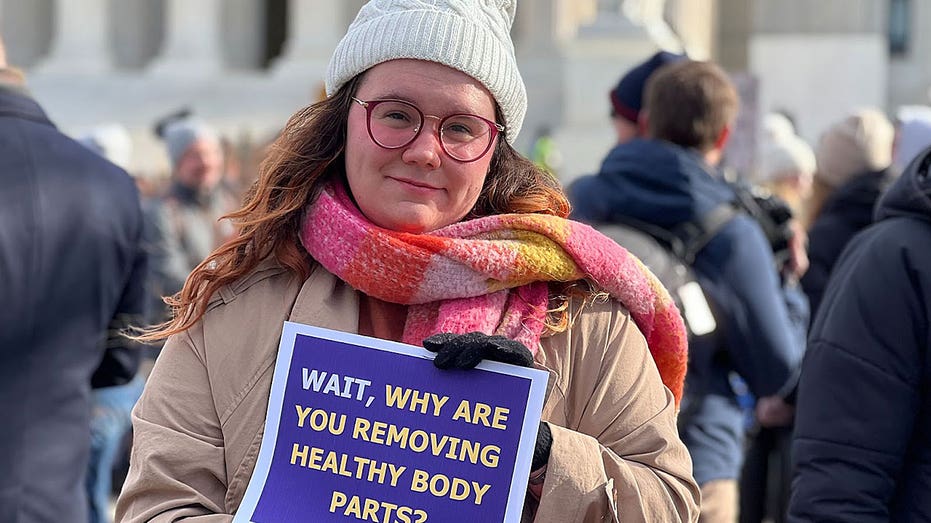
Prisha Mosley, a North Carolina woman who detransitioned after receiving hormone therapy as a minor and undergoing a double mastectomy at 18, is taking her medical malpractice case to an appeals court. Her lawsuit against doctors and other medical providers was dismissed on statute-of-limitations grounds. A 2025 North Carolina law extended the filing period for certain claims involving gender transitions, allowing Mosley to pursue an appeal. The state Court of Appeals is scheduled to hear oral arguments on Sept. 29, 2026.
| Article Subheadings | |
|---|---|
| 1) | Appeal follows dismissal of malpractice lawsuit |
| 2) | North Carolina law changes filing deadlines |
| 3) | Mosley describes treatment and alleged misrepresentation |
| 4) | Personal realization led to detransition |
| 5) | Case could test access to a jury |
Appeal follows dismissal of malpractice lawsuit
Mosley, now 28, sued the doctors and other medical providers who counseled her before she began hormone therapy at 17 and underwent a double mastectomy at 18. She alleges that the providers committed fraud and medical malpractice by misleading her about the effects of treatment and the possibility of changing sex.
A North Carolina trial court initially dismissed the lawsuit as untimely under the applicable statute of limitations. After a later dismissal in August 2025, Mosley’s lawyers appealed. The Court of Appeals is expected to hear arguments on Sept. 29, giving the judges an opportunity to consider whether the case may proceed.
North Carolina law changes filing deadlines
North Carolina lawmakers passed HB 808 in 2025, following an earlier version identified as HB 805. The legislation, described in the article as the Protect Children and Women’s Act, extended the statute of limitations for civil claims brought by people who had undergone gender transitions.
The measure was enacted in July 2025 after lawmakers overrode a veto by Democratic Gov. Josh Stein. Mosley said the law also covered cases that had already been filed or were pending in court. Despite the change, a trial judge dismissed her case during a special session in August 2025, denied her attorneys’ request to reinstate the claims and granted summary judgment to the defendants.
Mosley describes treatment and alleged misrepresentation
Mosley says she was told that medical treatment could enable her to become male and undergo male puberty. She argues that those representations were false and that the providers used reassuring medical terminology to describe harmful effects and complications.
“I consented to quote unquote top surgery, and I was under the impression that top surgery was the surgery that turned a female chest into a male chest, and that’s simply not what happened to me.”
She said she experienced pain, acne and other problems after treatment, while doctors attributed the effects to male puberty. Mosley also said the surgery caused complications and that she later concluded the procedures had not produced the outcome she believed had been promised. The defendants’ legal representatives were contacted for comment, according to the original account.
Personal realization led to detransition
Mosley said she began questioning her transition while still identifying as male. She described a moment involving her fiancé’s young daughter, who repeatedly called her “mommy,” as a turning point in her understanding of her identity and treatment.
She now says that the surgery and hormones did not resolve an underlying medical problem and that she regrets undergoing them. Her account places the appeal within a wider debate over medical care for gender-questioning minors, informed consent and the legal responsibilities of providers.
Case could test access to a jury
Mosley argues that legal deadlines prevented her claims from reaching a jury, even after the legislature changed the filing rules. She said an earlier court decision had found that her fraud allegations had merit, while the malpractice claims remained affected by the statute of limitations.
She also cited a recent New York judgment involving detransitioner Fox Varians, who, according to the account, won $2 million after suing a psychologist and plastic surgeon. Mosley said that detransitioner malpractice cases have generally been stopped by procedural barriers before trial. The North Carolina appeal will determine whether her own claims can move forward, not whether her allegations have been proven.
| Number | Key Point |
|---|---|
| 1 | The North Carolina Court of Appeals is scheduled to hear Mosley’s arguments on Sept. 29, 2026. |
| 2 | The lawsuit concerns hormone therapy, a double mastectomy and alleged fraud and malpractice. |
| 3 | A 2025 state law extended filing deadlines for certain transition-related civil claims. |
| 4 | The appeal addresses whether Mosley’s case can proceed, not whether the allegations are ultimately valid. |
Summary
Mosley’s appeal combines a personal challenge to her past medical treatment with a legal dispute over North Carolina’s revised statute of limitations. The appellate court’s ruling could decide whether her claims receive consideration in the trial court. It will not by itself establish liability or determine the accuracy of her allegations.
Frequently Asked Questions
Why was Mosley’s lawsuit initially dismissed?
A trial court dismissed the case as untimely under North Carolina’s statute of limitations for medical malpractice claims.
What changed after the lawsuit was dismissed?
North Carolina enacted a 2025 law extending the filing period for certain civil cases involving people who underwent gender transitions. Mosley’s attorneys appealed after the trial court dismissed the case again.
When will the appeal be heard?
The North Carolina Court of Appeals is scheduled to hear oral arguments on Sept. 29, 2026.
What does Mosley allege?
She alleges that medical providers misled her about changing sex, the effects of hormone therapy and the outcome of her double mastectomy. Those allegations remain disputed and have not been resolved at trial.