
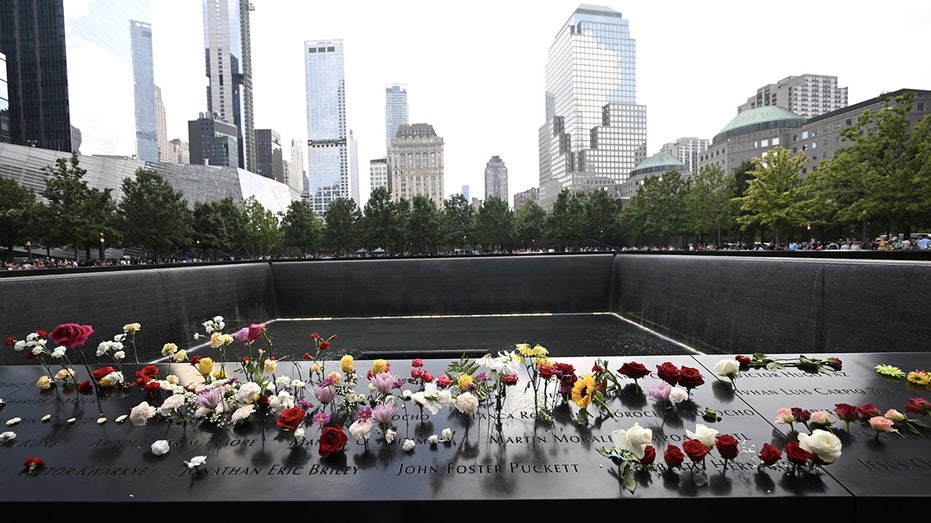
New York City investigators have identified a woman killed in the World Trade Center attacks nearly 25 years after September 11, 2001. The breakthrough used forensic investigative genetic genealogy, a technique combining specialized DNA analysis with family-history research. The woman’s name is being withheld at her family’s request. Her identification brings the number of identified World Trade Center victims to 1,654.
The announcement came as the 25th anniversary of the attacks approaches, while officials continue efforts to identify remains and provide answers to families. About 1,099 World Trade Center victims, or roughly 40% of those killed, remain unidentified.
| 1) | DNA and genealogy produce a new identification |
| 2) | A nearly 25-year wait for the family |
| 3) | How forensic investigative genetic genealogy works |
| 4) | Officials continue identification efforts |
| 5) | The continuing scale of the identification challenge |
DNA and genealogy produce a new identification
New York City officials announced the identification on Sunday, nearly 25 years after the terrorist attacks at the World Trade Center. The adult woman was identified through a collaboration between the city’s Office of Chief Medical Examiner and the NYPD’s Investigative Genetic Genealogy Squad.
Investigators used specialized DNA analysis together with genealogy research to generate possible family connections. Those leads were then evaluated and confirmed through forensic testing, allowing authorities to establish the woman’s identity from remains recovered after the attacks.
A nearly 25-year wait for the family
The woman’s relatives requested that her name remain private. Her identification gives the family an answer after decades of uncertainty and adds another confirmed identity to the record of those killed in New York City on September 11, 2001.
A total of 2,753 people were killed in New York City during the attacks. The latest identification is the first World Trade Center victim newly identified since August 2025, officials said.
“As we approach the 25th anniversary of the horrific September 11 attacks, we honor the nearly 3,000 people whose lives were stolen that day. We remain committed to the families who have spent 25 years waiting for answers.”
The statement was issued by New York City Mayor Zohran Mamdani as officials described the identification effort as an ongoing commitment to victims’ families.
How forensic investigative genetic genealogy works
Forensic investigative genetic genealogy is increasingly used in cold cases where traditional investigative methods have not produced an identification. The process analyzes DNA recovered from evidence or remains and uses genealogical information to locate potential relatives and construct family connections.
Investigators then use conventional forensic testing to confirm whether the genetic lead matches the remains. In this case, the method provided a new tool for examining World Trade Center remains that had not previously been linked to an identified victim.
“This sacred commitment is propelled by our dedication to apply the most innovative scientific techniques. FIGG represents a promising new addition to our toolkit.”
Chief Medical Examiner Jason Graham said the technique could strengthen the city’s long-running work to identify those killed in the attacks.
Officials continue identification efforts
The medical examiner’s office and the NYPD are continuing to examine recovered remains. Officials said their work includes renewed outreach to families and additional DNA retesting, both of which can provide information needed to connect remains with victims.
The approach combines scientific advances with information supplied by relatives. Family outreach can help investigators obtain reference DNA or clarify potential relationships, while retesting may yield results as laboratory methods improve.
The continuing scale of the identification challenge
Despite the latest breakthrough, the identification process remains incomplete. Approximately 1,099 World Trade Center victims have yet to be identified, representing about 40% of those killed in the New York City attacks.
The latest case illustrates both the persistence of the effort and the potential of newer forensic methods. As the anniversary approaches, investigators remain focused on converting previously inconclusive evidence into confirmed identities while families continue to await answers.
| Number | Key Point |
|---|---|
| 1 | A woman killed at the World Trade Center was identified nearly 25 years after the attacks. |
| 2 | The identification used forensic investigative genetic genealogy and confirmatory DNA testing. |
| 3 | The woman’s name is withheld at her family’s request. |
| 4 | The identification brings the total number of identified victims to 1,654. |
| 5 | About 1,099 World Trade Center victims remain unidentified. |
Summary
A new application of DNA analysis and genetic genealogy has identified another victim of the September 11 attacks. The result provides a long-awaited answer for one family and demonstrates how evolving forensic methods can support the continuing identification of World Trade Center remains. City officials said the effort will continue through family outreach, DNA retesting and additional scientific analysis.
Frequently Asked Questions
Who was identified?
An adult woman killed at the World Trade Center was identified. Her name is being withheld at her family’s request.
What method led to the identification?
Investigators used forensic investigative genetic genealogy, which combines specialized DNA analysis with genealogy research, followed by forensic testing to confirm the result.
How many World Trade Center victims have been identified?
The latest case brings the number of identified victims to 1,654. About 1,099 victims remain unidentified.
Which agencies conducted the work?
The effort involved New York City’s Office of Chief Medical Examiner and the NYPD’s Investigative Genetic Genealogy Squad.