
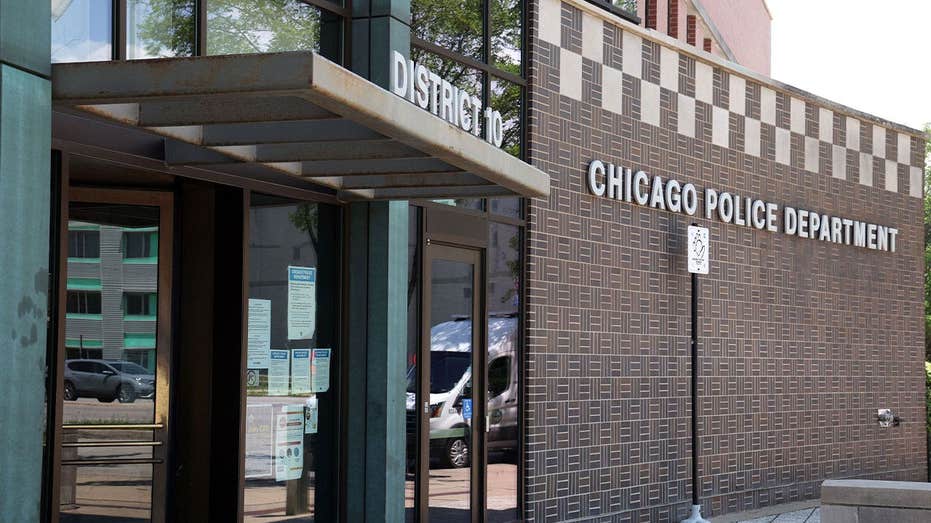
Chicago police say former homicide detective Thomas F. McInerney Jr. has been identified as the killer of 8-year-old Gloria Kowalewicz, who disappeared on her way to church in 1960. Investigators used advances in DNA analysis and a fingerprint preserved from the crime scene to connect McInerney to the long-unsolved case. McInerney died in 2006 without facing charges, and authorities are now reviewing whether he may have been involved in other cases.
Gloria vanished on Nov. 12, 1960, after leaving her home in Chicago shortly before 8 a.m. for morning Mass. Her body was found about four hours later in a ditch at a forest preserve southwest of the city.
The investigation included interviews with more than 1,300 people and door-to-door inquiries across the area, but the case remained unresolved for more than six decades. Evidence preserved from the scene ultimately gave investigators an opportunity to apply forensic methods that were unavailable in 1960.
| Article Subheadings | |
|---|---|
| 1) | The 1960 disappearance and murder |
| 2) | Evidence preserved for future testing |
| 3) | The identification of a former detective |
| 4) | A review of other possible cases |
| 5) | The family’s long wait for answers |
The 1960 disappearance and murder
Gloria disappeared from Chicago on Nov. 12, 1960, while walking from her home to St. Mary of Mt. Carmel Church for morning Mass. The church was only a few blocks away. Investigators found her body roughly four hours later in a ditch at a forest preserve southwest of Chicago. She had been shot and killed.
Police responded with an extensive search and inquiry, speaking with more than 1,300 people and knocking on hundreds of doors. Despite the scale of the effort, investigators could not identify a suspect, leaving Gloria’s killing unsolved for more than 65 years.
Evidence preserved for future testing
Investigators retained several pieces of evidence connected to the killing, including a bullet, Gloria’s coat and shoes, and a white communion purse. The purse contained her prayer book, and police recovered a fingerprint from its strap.
The preserved material became significant as forensic science advanced. Investigators later used DNA technology, together with the fingerprint, to compare evidence from the case with information associated with a potential suspect. The work involved Chicago police, the FBI and Illinois State Police.
The identification of a former detective
Authorities identified Thomas F. McInerney Jr. through the combined DNA and fingerprint evidence, according to Chicago police. McInerney joined the Chicago Police Department in 1959, one year before Gloria’s murder, and later became a detective assigned to investigate violent crimes. He remained with the department until retiring in 1987.
McInerney later worked for the Federal Public Defender’s Office in Nevada and retired from that position in 2004. He died in 2006 at age 70. Because he died before the identification was made, he was not charged in Gloria’s murder.
“McInerney should never have worn the CPD star, and it is devastating to accept that he was never identified and held accountable while he was alive.”
A review of other possible cases
The Cook County State’s Attorney’s Office is working to determine whether McInerney may have been involved in other cases during or after his law enforcement career. The review reflects the possibility that evidence from additional investigations could warrant renewed examination.
Authorities have not announced conclusions about any other case. The current identification concerns Gloria’s 1960 killing and is based on the forensic evidence preserved from that investigation.
The family’s long wait for answers
Gloria’s parents died before learning who killed their daughter. Police said they hoped the identification would provide some measure of closure to Gloria’s relatives and others who remembered her.
The case demonstrates how physical evidence preserved for decades can be reassessed with newer technology. Although the identification came too late for a criminal prosecution against McInerney, it resolved the central question of who authorities say was responsible for Gloria’s death.
| Number | Key Point |
|---|---|
| 1 | Gloria Kowalewicz disappeared while walking to church on Nov. 12, 1960. |
| 2 | Her body was found about four hours later at a forest preserve. |
| 3 | DNA and a preserved fingerprint linked the case to former detective Thomas F. McInerney Jr. |
| 4 | McInerney died in 2006 without facing charges. |
| 5 | Authorities are examining whether he may have been connected to other cases. |
Summary
Modern forensic testing has brought an official identification in the 1960 murder of Gloria Kowalewicz. Police say the evidence links the killing to former detective Thomas F. McInerney Jr., who died before investigators reached that conclusion. Authorities are preserving the integrity of the identification while reviewing whether other cases could merit additional scrutiny.
Frequently Asked Questions
Who was Gloria Kowalewicz?
Gloria Kowalewicz was an 8-year-old Chicago girl who disappeared while walking to church on Nov. 12, 1960. Her body was found later that morning at a forest preserve.
How was the case solved?
Investigators used modern DNA technology and a fingerprint preserved from Gloria’s communion purse to link the evidence to former detective Thomas F. McInerney Jr.
Was McInerney charged?
No. McInerney died in 2006 at age 70, before authorities identified him in connection with the murder.
Are other cases being investigated?
The Cook County State’s Attorney’s Office is working to identify other cases that may have involved McInerney. No additional conclusions were announced.