
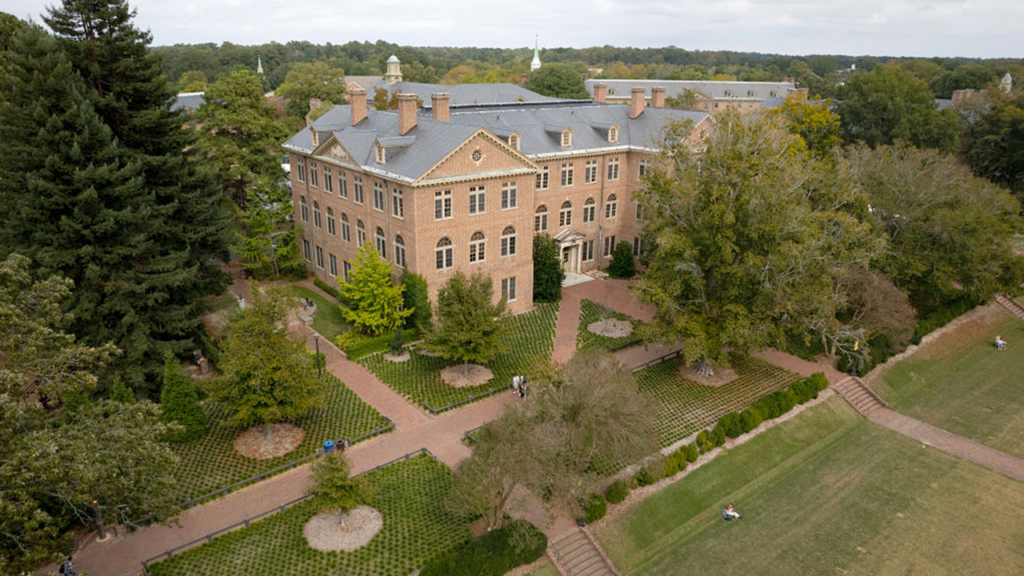
The Department of Justice (DOJ) announced on Monday that it has initiated an investigation into the College of William & Mary, focusing on potential violations of race-based criteria in its scholarship and student benefit programs. This compliance review targets whether the university’s offerings adhere to Title VI of the Civil Rights Act of 1964, which prohibits discrimination based on race, color, or national origin. The DOJ’s action marks a continuation of scrutiny from the Trump administration regarding educational institutions and their handling of diversity-related programs.
| Article Subheadings |
|---|
| 1) Investigation Overview and Purpose |
| 2) Specific Programs Under Review |
| 3) Implications of Title VI Violations |
| 4) Institutional Response and Compliance Measures |
| 5) Broader Context of DOJ Investigations |
Investigation Overview and Purpose
The recent investigation by the DOJ centers on the College of William & Mary, initiated as part of a broader examination into the potential existence of race-based preferences in university scholarships and benefits. The Civil Rights Division of the DOJ stated that this review falls under compliance with Title VI of the Civil Rights Act of 1964, which ensures that no individual is discriminated against based on race, color, or national origin in programs or activities that receive federal assistance. This governmental move reflects rising tensions and disputes surrounding affirmative action and diversity initiatives in higher education.
The ongoing examination into William & Mary specifically seeks to determine whether the college’s scholarship programs contribute to racial discrimination tacitly by favoring certain racial or ethnic groups. The Assistant Attorney General for Civil Rights, Harmeet Dhillon, stated, “Awarding scholarships or offering coveted opportunities to students based on the color of their skin is illegal and offends the guarantees of our color-blind Constitution.” This investigation comes amid a larger trend of scrutiny directed at educational institutions across the nation by the DOJ.
Specific Programs Under Review
Several specific programs at William & Mary are under the microscope during this investigation. One of these is the W&M Scholars program aimed at first-year undergraduate students, which offers scholarships that cover at least the full cost of in-state tuition and fees. Though not explicitly limited to any racial group, the program awards top consideration to those applicants who express an “interest in diverse people and perspectives.” This vague phrasing has raised alarms, as it implies a potential preference for certain demographic backgrounds.
In addition to undergraduate offerings, the Martha L. Muguira Fellowship for graduate students, which gives financial assistance to Hispanic or Latino women, is also being scrutinized. The DOJ has noted that this scholarship explicitly grants preference based on race and gender, which could be construed as a violation of Title VI. Furthermore, the W&M School of Education’s Holmes Scholars program aims to provide support specifically to “future education leaders of color,” involving activities such as mentorship and professional development opportunities, thus raising further concerns regarding compliance with federal law.
Implications of Title VI Violations
The implications of discovering Title VI violations are significant for educational institutions. If the DOJ concludes that William & Mary is indeed in violation, the college could face severe consequences, including the termination of federal financial assistance. This would not only affect the institution’s funding but also potentially impact the students who rely on such programs for their education. Historically, Title VI proceedings have led to formal actions from the DOJ, resulting in legal action against colleges and universities.
During this compliance review, the DOJ has requested various documents from William & Mary by a set deadline, intending to evaluate the institution’s practices critically. This process aims to secure compliance through “informal voluntary means,” a strategy that highlights the department’s preference for resolving such issues amicably. However, the statement also underscores the possible gravity of the situation, should formal proceedings be deemed necessary.
Institutional Response and Compliance Measures
In response to the DOJ’s investigation, William & Mary has publicly reiterated its commitment to creating nondiscriminatory learning environments and compliance with all relevant laws. Representatives of the institution emphasized their dedication to ensuring equal opportunity for all students, irrespective of their background. While the university has not yet disclosed the specifics of its compliance measures, ongoing dialogues about transparency and accountability have gained momentum among campus administrators.
Officials at William & Mary may need to reassess and potentially reform their scholarship programs to align with federal regulations more closely. This could include modifying eligibility criteria, revising program descriptions, and ensuring that all student benefit programs provide equal opportunity for applicants without regard for race or ethnicity. The outcome of this investigation will not only set a precedent for William & Mary but may also influence practices at other educational institutions across the country.
Broader Context of DOJ Investigations
The initiation of this investigation into the College of William & Mary is part of a larger trend of scrutiny that educational institutions face from the DOJ under the Trump administration. This scrutiny has focused significantly on issues related to race-based admissions, scholarships, and various diversity, equity, and inclusion initiatives. The DOJ’s actions represent a critical pivot towards a more stringent enforcement of civil rights legislation concerning race and educational opportunity.
The investigations are seen by some as a mechanism to challenge what critics perceive as unwarranted preferences that disadvantage other groups of students. With heightened national conversations surrounding race, inclusivity, and social justice, the outcomes of such investigations could redefine how universities approach diversity measures. The landscape of higher education in the U.S. is poised for scrutiny as more institutions may face similar investigations in the future.
| No. | Key Points |
|---|---|
| 1 | The DOJ has launched an investigation into potential race-based criteria in scholarships at William & Mary. |
| 2 | The compliance review pertains to Title VI of the Civil Rights Act, which prohibits racial discrimination in federally assisted programs. |
| 3 | Specific scholarship programs like W&M Scholars and the Martha L. Muguira Fellowship are being scrutinized for favoring certain racial groups. |
| 4 | Implications of violations could result in the loss of federal funding for the institution. |
| 5 | William & Mary has pledged compliance with federal laws while assessing its scholarship offerings. |
Summary
The DOJ’s investigation into the College of William & Mary highlights a critical intersection of civil rights enforcement and higher education policy regarding race-based scholarships. As the college navigates this federal examination, the outcomes will not only affect its scholarship programs but also potentially set precedents for practices across numerous educational institutions. The focus on race and discrimination in higher education continues to provoke national discussions, making it imperative for universities to ensure compliance and promote equal opportunity for all students.
Frequently Asked Questions
Question: What prompted the DOJ’s investigation into William & Mary?
The investigation was prompted by concerns regarding race-based criteria in the college’s scholarship and benefit programs, potentially violating Title VI of the Civil Rights Act of 1964.
Question: How could Title VI violations affect William & Mary’s funding?
If violations are found, the DOJ could terminate federal financial assistance to the institution, which might significantly impact the college’s funding and its ability to support students.
Question: What specific programs are under scrutiny in this investigation?
Programs such as the W&M Scholars program and the Martha L. Muguira Fellowship are being scrutinized for potentially favoring certain racial or ethnic groups in their scholarship offerings.