
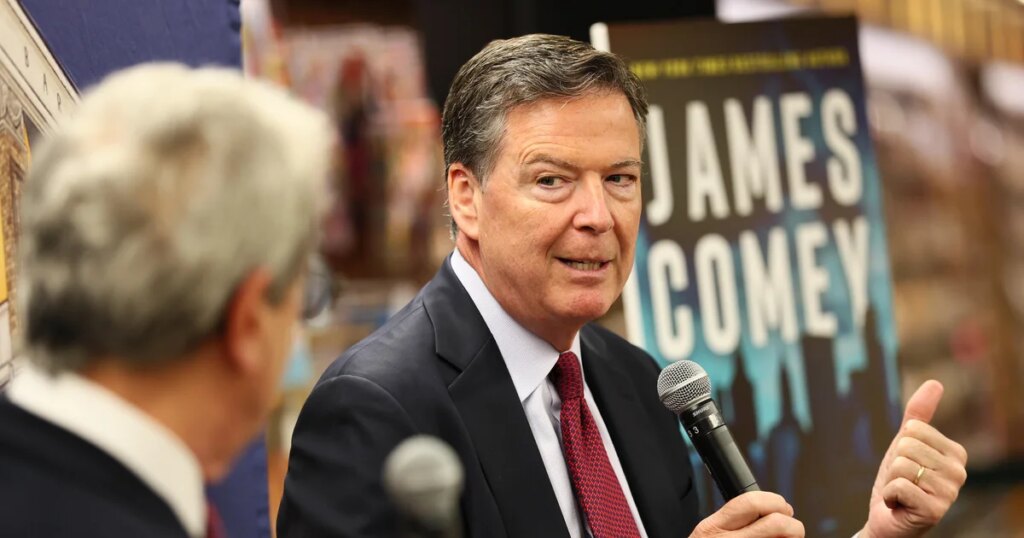
The Justice Department is moving ahead with plans to charge former FBI Director James Comey with leaking classified information, marking its third attempt to bring criminal allegations against him. Legal filings indicate prosecutors are seeking two counts under the Espionage Act, citing Comey’s involvement in disseminating national defense information to unauthorized individuals. This case raises significant questions regarding the propriety of the charges and reflects the continuing tensions between Comey, the Justice Department, and former President Donald Trump.
| Article Subheadings |
|---|
| 1) Legal Grounds for Charges Against Comey |
| 2) Legal Procedures and Implications |
| 3) History of Investigations Into Comey |
| 4) Political Tensions and Reactions |
| 5) Summary of Charges and Future Outlook |
Legal Grounds for Charges Against Comey
The Justice Department is attempting to charge James Comey with two counts of violating the Espionage Act. This legal framework allows for prosecution when an individual transmits national defense information to someone not authorized to receive it. The information at the center of this case reportedly relates to Comey’s discussions with a New York Times reporter regarding classified matters from October 2016. His attorney, Patrick Fitzgerald, has asserted that Comey “steadfastly maintains his innocence,” challenging the legitimacy of these charges.
The prosecution’s move indicates that evidence has allegedly been uncovered suggesting that Comey directed staff to address what he deemed misinformation published by Reuters. This culminates in an allegation that he communicated sensitive information for clarification purposes. The specific details involve a New York Times article that referenced unauthorized surveillance allegations against Yahoo, which cited unnamed government officials. This has raised eyebrows about the boundaries between press engagement and national security protocols.
Legal Procedures and Implications
The unique aspect of this case lies in the filing method—prosecutors have opted to use a criminal information filing rather than seeking a grand jury indictment. This procedural difference is significant because a criminal information does not necessitate a grand jury’s approval or a judicial finding of probable cause. According to a spokesperson for the Justice Department, this filing was primarily to “preserve the statute of limitations,” indicating concerns about the timing of the potential charges.
Moreover, legal experts have described this approach as unusual, especially in felony cases. Former prosecutors have expressed surprise at this maneuver, suggesting it circumvents typical judicial practices and could set a concerning precedent. As a result, tensions surrounding the Justice Department’s actions are growing, especially regarding the implications for other similar cases.
History of Investigations Into Comey
This latest attempt isn’t the first time that the Justice Department has scrutinized James Comey’s conduct. Two prior investigations were conducted concerning the leak of classified information associated with the 2016 article, one of which was overseen by former U.S. Attorney John Durham. His investigation concluded that there was no basis for prosecution against anyone involved, including Comey. Similar outcomes occurred during a subsequent investigation conducted by the U.S. Attorney’s Office for the District of Columbia, which also led to no charges.
Both investigations, which took place in the backdrop of significant national political upheaval, have contributed to skepticism about the motivations behind renewed legal scrutiny. The historical context complicates both the charges and public perception, as the investigations followed a politically charged narrative involving Trump and Comey that dates back to Comey’s firing in 2017.
Political Tensions and Reactions
The relationship between Donald Trump and James Comey has been fraught since the President dismissed Comey from his role as FBI Director. Trump has labeled Comey a “dirty cop” and has continuously implied that he should face criminal repercussions, thus framing the discourse around this case within a broader narrative of political revenge. Comey’s legal team has consistently argued that the charges he now faces are driven by political motivations rather than legitimate legal concerns.
Comey himself has publicly asserted that the charges reflect a misuse of the Justice Department for vendetta rather than accountability. His statements emphasize a belief in the integrity of the judicial process, even as he faces renewed legal challenges. Meanwhile, Trump’s current administration has maintained that the prosecutions arise independently of political pressure, despite growing skepticism from the public and legal commentators.
Summary of Charges and Future Outlook
As the Justice Department presses forward with its plans to charge Comey, the critical questions revolve around the evidence being utilized and the broader implications of this case. The legal team representing Comey is challenging the prosecution on multiple fronts, focusing on procedural discrepancies and the character of the allegations themselves. The outcome of this battle will likely have significant ramifications, not just for Comey and Trump but also for the perception of the Justice Department’s independence.
Looking ahead, the role of the courts in interpreting these charges and assessing the legal validity of the information will be pivotal. As judicial proceedings continue, scrutiny from both the public and legal experts will remain, given the undercurrents of political tension that have defined this case since its inception. Regardless of the outcome, it represents a critical juncture in the relationship between federal law enforcement and the political landscape.
| No. | Key Points |
|---|---|
| 1 | The Justice Department plans to charge James Comey under the Espionage Act. |
| 2 | Prosecutors are using a criminal information filing rather than a grand jury indictment. |
| 3 | Previous investigations into Comey did not result in any charges. |
| 4 | Trump has criticized Comey and has indicated support for the charges against him. |
| 5 | The procedures followed by the Justice Department have raised concerns among legal experts. |
Summary
Overall, the developments concerning Former FBI Director James Comey signal a noteworthy intersection of law, politics, and public perception. The Justice Department’s move to charge him under the Espionage Act exemplifies the complexities of handling classified information in a politically charged environment. As these proceedings unfold, they not only affect Comey personally but also influence broader discussions on the independence of judicial processes amidst potential political ramifications.
Frequently Asked Questions
Question: What legal statue is Comey accused of violating?
Comey is accused of violating the Espionage Act by allegedly transmitting national defense information to unauthorized individuals.
Question: Why does the Justice Department use a criminal information filing?
A criminal information filing is used to preserve the statute of limitations without needing a grand jury, allowing prosecutors to move forward with charges before the deadline expires.
Question: What have prior investigations concluded about Comey’s actions?
Prior investigations into Comey’s actions have concluded without charges, indicating no sufficient basis for prosecution.