
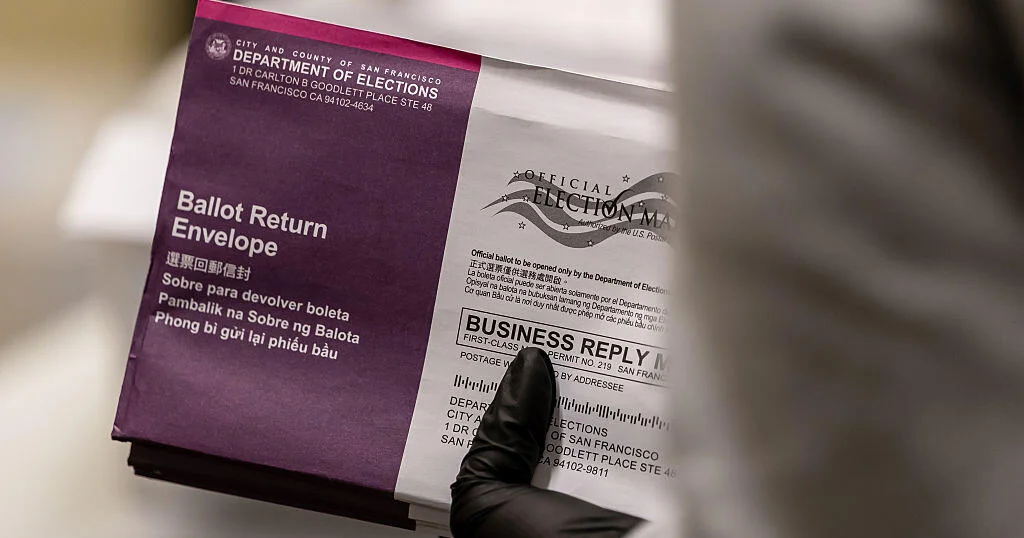
The U.S. Department of Justice has mandated California to examine a list of individuals believed to have received mail-in ballots for the upcoming November elections despite not being U.S. citizens. This directive follows a letter from acting Deputy Attorney General Trent McCotter, which set a 48-hour deadline for the review. The situation has intensified the ongoing debates over voter eligibility and election integrity, with critiques emerging regarding the federal government’s intervention in state election processes.
| Article Subheadings |
|---|
| 1) Background of the Justice Department’s Directive |
| 2) Response from California Officials |
| 3) Legal Implications and Federal Authority |
| 4) Voter Fraud Allegations and Findings |
| 5) Public Reaction and Potential Consequences |
Background of the Justice Department’s Directive
In a letter dated October 13, acting Deputy Attorney General Trent McCotter communicated with California state officials regarding concerns over voter registration integrity. The letter included a request to review an attached list of individuals suspected of receiving mail-in ballots despite possibly lacking U.S. citizenship. The timeframe imposed by McCotter was notably tight, allowing California only 48 hours to substantiate the citizenship status of those listed.
The federal concerns reportedly stem from information provided during a previous communication by Secretary of Homeland Security Markwayne Mullin, who expressed suspicion regarding the presence of noncitizens on California’s voter rolls. This directive is part of a broader effort by the Justice Department, which has been under scrutiny for its methods in addressing purported voter fraud, particularly in states governed by Democratic officials.
Response from California Officials
California Secretary of State Shirley Weber confirmed the receipt of the letter from the Justice Department but expressed significant concerns about the approach taken by federal officials. In her statement, she asserted that the federal government had not provided the list of alleged noncitizens directly to her office.
Weber criticized the Justice Department’s actions, labeling them as attempts to undermine public trust in electoral systems. “The USDOJ’s relentless efforts to unlawfully gain access to states’ protected voter data and purge voter rolls serve only to cause chaos and fuel public distrust in our elections,” Weber remarked, highlighting the contentious nature of federal and state relationships regarding election oversight.
Meanwhile, Dean Logan, the registrar-recorder/county clerk of Los Angeles County, also acknowledged receipt of the letter. However, he indicated that his office had not yet accessed the USB drive containing the records due to concerns over data privacy and information security protocols, reflecting the cautious stance taken by California officials in navigating this politically charged issue.
Legal Implications and Federal Authority
The implications of McCotter’s letter extend beyond logistical concerns to encompass debated legal authorities regarding voter data management. Both federal and state laws delineate the processes through which voter eligibility is verified. Legal experts argue that any action taken to dismiss a voter’s eligibility must be grounded in strictly verifiable information. As highlighted by Logan, “Federal and state laws are clear on how voter eligibility is established — and any action to remove a voter from eligibility must be based on verifiable information, not assertions of unconfirmed data matching.”
The Justice Department’s interventions have raised questions about federal overreach and whether the federal government possesses the authority to mandate states to conduct reviews of their voter rolls. This tension has been particularly pronounced in light of the Civil Rights Division’s history under the current administration, which has filed numerous lawsuits against states to access voter data under claims of maintaining the integrity of electoral processes.
Voter Fraud Allegations and Findings
The United States has been embroiled in a contentious debate over the existence and impact of voter fraud, with the current administration continually suggesting that significant numbers of noncitizens are registered to vote. Despite these assertions, numerous studies have repeatedly shown that actual instances of voter fraud are exceedingly rare. According to a report by Reuters published recently, states have possibly included over 30,000 self-declared noncitizens on voter rolls since the year 2000—largely as a result of administrative errors and software glitches during the processing of driver’s licenses and state ID applications.
This figure is notably small compared to the overall number of registered voters, particularly as census data indicated about 174 million individuals were registered to vote for the 2024 elections. Critics continue to argue that inflating claims of voter fraud without substantial evidence undermines the electoral process and public trust in governance.
Public Reaction and Potential Consequences
The federal government’s directive and subsequent responses from California officials have prompted varied public reactions. Critics of the Justice Department’s approach have raised alarm bells, asserting that such measures could disenfranchise eligible voters based on unproven allegations. Some civic advocacy groups have mobilized to defend voter rights, emphasizing the need for transparent processes grounded in fact rather than conjecture.
Moreover, as the allegations continue to fringe on the boundaries of legality and ethics, scholars and advocates are urging for a reassessment of the methods employed to secure electoral integrity. The potential consequences of these actions extend beyond immediate electoral impacts; they could reshape public perceptions of federal involvement in state elections and lead to lasting changes in voter engagement and trust in democratic institutions.
| No. | Key Points |
|---|---|
| 1 | The Justice Department issued a directive to review voter registration in California. |
| 2 | California officials expressed concern over the legality and methodology of the federal intervention. |
| 3 | Federal claims of widespread voter fraud are contested by studies showing minimal incidents. |
| 4 | The response from California illustrates the increasing tension between state and federal authorities on election matters. |
| 5 | Public reactions indicate a growing concern over potential disenfranchisement based on unverified data. |
Summary
The latest actions taken by the Justice Department against California regarding the possible presence of noncitizens on voter rolls bring to the forefront significant issues surrounding electoral integrity and state-federal relations. While officials like Shirley Weber and Dean Logan advocate for adherence to established legal frameworks, the federal government’s aggressive stance risks sowing discord and public anxiety around an already contentious electoral landscape. As debates continue over the actual prevalence of voter fraud, the implications for voter confidence and participation are critical to observe in the upcoming elections.
Frequently Asked Questions
Question: What actions did the Justice Department take against California?
The Justice Department ordered California to review a list of individuals believed to be noncitizens and to take steps to verify their citizenship status concerning mail-in ballots.
Question: How did California officials respond to the Justice Department’s directive?
California Secretary of State Shirley Weber and other officials criticized the federal approach, expressing concerns about legality and the potential for creating public distrust in elections.
Question: What does the research indicate about voter fraud in the U.S.?
Research consistently shows that incidents of voter fraud are extremely rare, often dismissed as negligible relative to the total number of registered voters.