
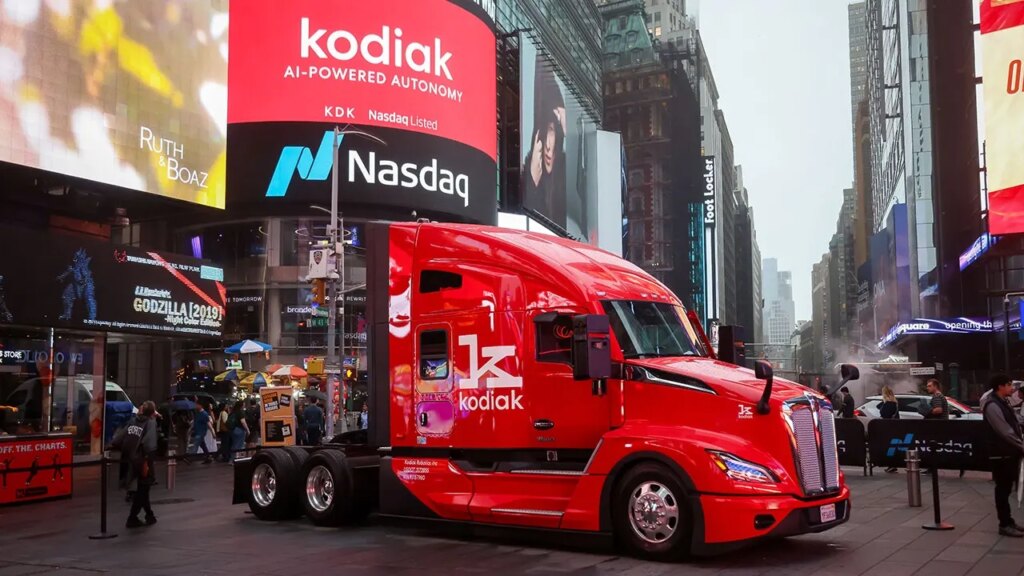
Atlas Energy Solutions is making significant strides in the realm of autonomous trucking by expanding its Kodiak-powered driverless fleet across Texas and New Mexico. Plans are in motion to increase the fleet from 28 to 100 trucks by mid-2027, with further aspirations to operate on public highways starting in 2027. The move indicates a pivotal step towards changing the logistics landscape, offering a glimpse into how autonomous vehicles may transform freight operations in the near future.
| Article Subheadings |
|---|
| 1) Expanding Operations with Two Depots |
| 2) Growth of the Fleet from 28 to 100 |
| 3) Planned Public Highway Operations |
| 4) Safety Measures Against Extreme Weather |
| 5) Addressing Potential Problems In Operation |
Expanding Operations with Two Depots
Atlas Energy Solutions is taking a bold step in its autonomous trucking operations by launching from not just one but two operational depots, situated roughly 90 minutes apart, one in Texas and the other in New Mexico. This strategic expansion allows the company to increase its reach across the Permian Basin, where it can respond more rapidly to the demands of customers needing sand delivered to oil and gas well sites. The new operational structure also integrates with Atlas’ 42-mile Dune Express conveyor system, which aids in swiftly moving sand closer to well sites before the driverless trucks complete the final delivery.
The CEO of Kodiak, Don Burnette, highlighted the implications of this expansion, stating,
“Together, Atlas and Kodiak have deployed the world’s largest fleet of driverless big-rig trucks. We’ve demonstrated that autonomous trucking is delivering meaningful results today.”
This ambitious development signifies a blueprint for transforming logistics through enhanced efficiency and productivity, while also delivering substantial value for customers.
Growth of the Fleet from 28 to 100
As of the end of March 2026, the Atlas driverless program operated 28 autonomous trucks across 15 routes, collectively having transported around 7,000 loads and over 450,000 tons of sand. The fleet logged more than 23,500 driverless hours during the first quarter, indicating promising operational viability. Notably, on July 20, the trucks set a new daily record by delivering 176 loads in just one day.
Innovation remains at the forefront of this initiative, as earlier in 2026, Kodiak and Atlas unveiled a driverless truck capable of towing three connected trailers, achieving a combined loaded weight exceeding 135 tons. This design posed fundamental questions regarding the safety and operational integrity of these heavy vehicles once they transition from private to public roads.
Planned Public Highway Operations
With an optimistic outlook, Kodiak plans to initiate its driverless highway operations by the end of 2026, with Atlas following closely in 2027. This aligns with increasing trends in autonomous trucking, as another company successfully completed a 230-mile commercial delivery in Texas featuring a fully autonomous truck.
Despite the potential for expanded operations, both companies maintain that existing trucks already operate safely on highways with a safety driver overseeing the system. Burnette assured the public, saying
“The Kodiak Driver is engineered to be a safe and cautious driver and to follow normal driving etiquette.”
However, this transition to driverless vehicles on public roads is bound to elicit a mix of apprehension and curiosity among everyday drivers.
Safety Measures Against Extreme Weather
The challenges of operating autonomous trucks in the harsh conditions of the Permian Basin—characterized by extreme temperatures, dust storms, and dense fog—are well acknowledged by Kodiak. The company equips its trucks with an advanced sensor suite, featuring camera technology as well as radar and lidar support, to maintain a detailed and accurate view of the environment.
Nevertheless, as Don Burnette stated, these advanced technologies cannot guarantee safety in every weather condition. He specified that the trucks would slow down and, if necessary, safely pull over when conditions become hazardous. This proactive approach towards weather-related difficulties illustrates Kodiak’s commitment to safety and operational integrity.
Addressing Potential Problems In Operation
In the event of a mechanical failure or a communications issue, proactive measures are essential for ensuring the safety of autonomous trucks. The Kodiak Driver continuously monitors both the truck’s condition and its autonomous driving system. Should it detect a critical malfunction, it is programmed to execute a fallback maneuver, withdrawing the truck from traffic to find a safe location.
Additionally, a command center staffed by human operators maintains oversight of all Kodiak trucks. As Burnette articulated,
“The health and safety of all trucks are overseen by Kodiak’s command center, and a human can remotely provide assistance should a truck need additional help.”
These safety frameworks are paramount, especially as the technology gains traction in more public-facing roles.
| No. | Key Points |
|---|---|
| 1 | Atlas Energy Solutions is expanding its fleet of driverless trucks in Texas and New Mexico. |
| 2 | Plans are underway to increase the fleet from 28 to 100 trucks by mid-2027. |
| 3 | Public highway operations are anticipated to commence in 2027. |
| 4 | Safety measures for severe weather conditions are in place, including automated responses to hazardous situations. |
| 5 | A command center monitors the fleet, providing additional remote support if needed. |
Summary
The expansion of Atlas Energy Solutions’ Kodiak-powered driverless fleet marks a significant milestone in the shift towards autonomous trucking. With ambitious plans to increase their operational footprint and eventually transition to public highways, the logistics landscape is on the brink of transformation. Yet, as these autonomous vehicles face various challenges, from severe weather to system failures, a transparent approach to safety and technology will be essential for earning public trust and ensuring operational reliability.
Frequently Asked Questions
Question: What is the purpose of Kodiak-powered trucks?
The purpose of Kodiak-powered trucks is to autonomously transport sand and other materials to oil and gas well sites, enhancing efficiency and productivity in logistics.
Question: When are the driverless trucks expected to operate on public highways?
Public highway operations for the driverless trucks are anticipated to begin in 2027, following successful trials on private roadways.
Question: How does Kodiak ensure safety in adverse weather conditions?
Kodiak trucks are equipped with advanced sensors to monitor environmental conditions and will automatically slow down or pull over if safety becomes compromised.